
Derweil in Tschechien... 49/25
19.12.2025
From Děčín to Berlin in 2.5 hours
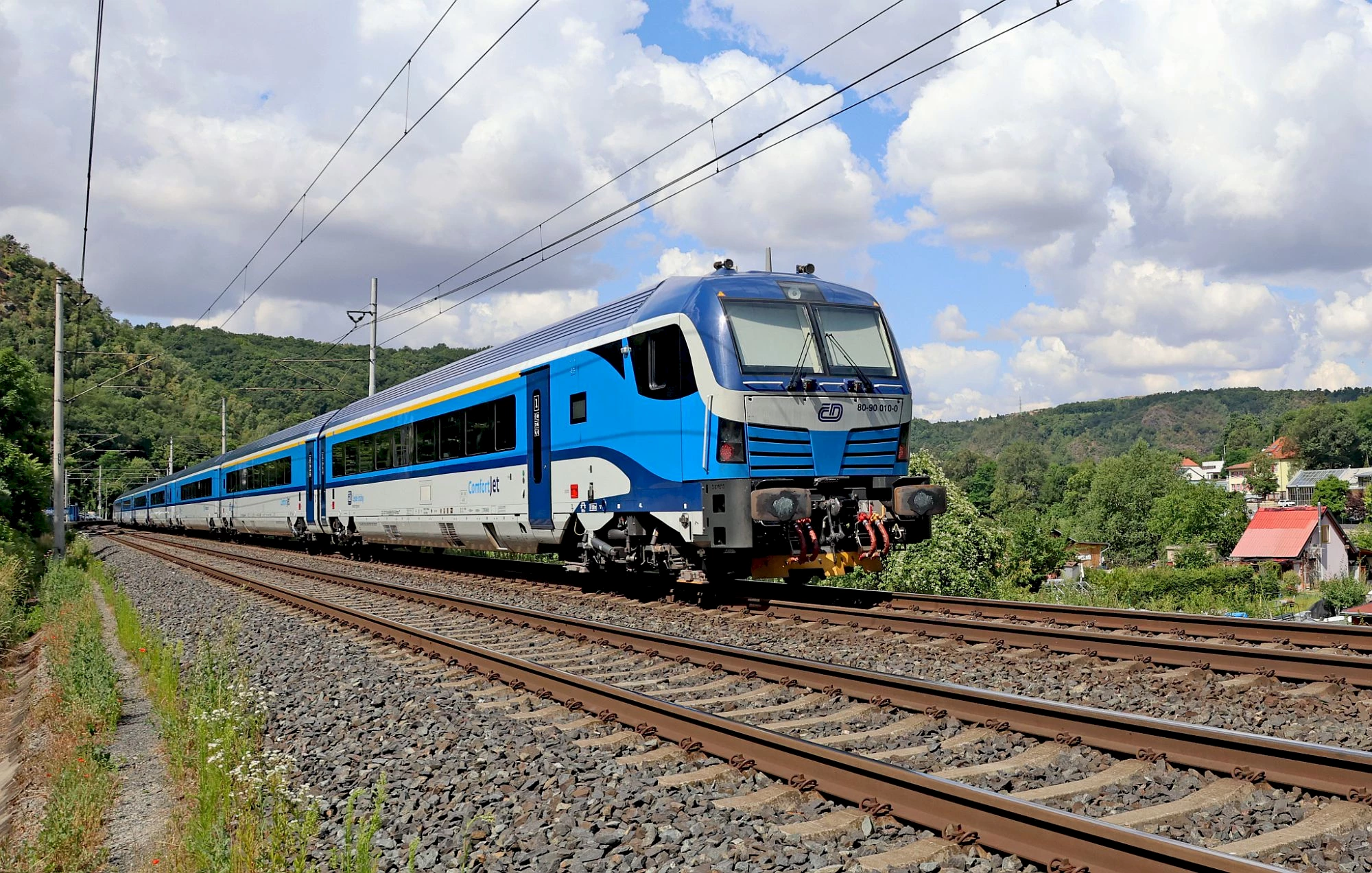
The journey time from North Bohemia to Berlin has been shortened. The new train timetable makes it possible. Since December 14, long-distance trains have been running via the so-called Dresdner Bahn in the south of Berlin. This brings not only Dresden and Prague, but also Ústí nad Labem (Aussig) and Děčín (Tetschen) around ten minutes closer to the German capital. From Ústí, the Railjet train takes just 2 hours and 45 minutes. From Děčín, the scheduled journey to Berlin takes less than 2.5 hours. The chances of this actually happening on schedule improved once again on December 17. Almost at the same time as the new timetable, the 2.5-year construction site at Bad Schandau freight station was completed, which had previously caused delays and closures, especially for S-Bahn services and occasionally also for long-distance trains.
Long-distance trains from Prague still terminate in Berlin. When the renovation of the Berlin-Hamburg line is completed in April next year, long-distance trains will continue to Hamburg and even to Copenhagen. This will give Prague, Ústí and Děčín a direct connection not only to the German capital, but also to the Danish capital. The journey time from Prague to Hamburg will then be significantly reduced by 40 minutes.
New government with many acquaintances
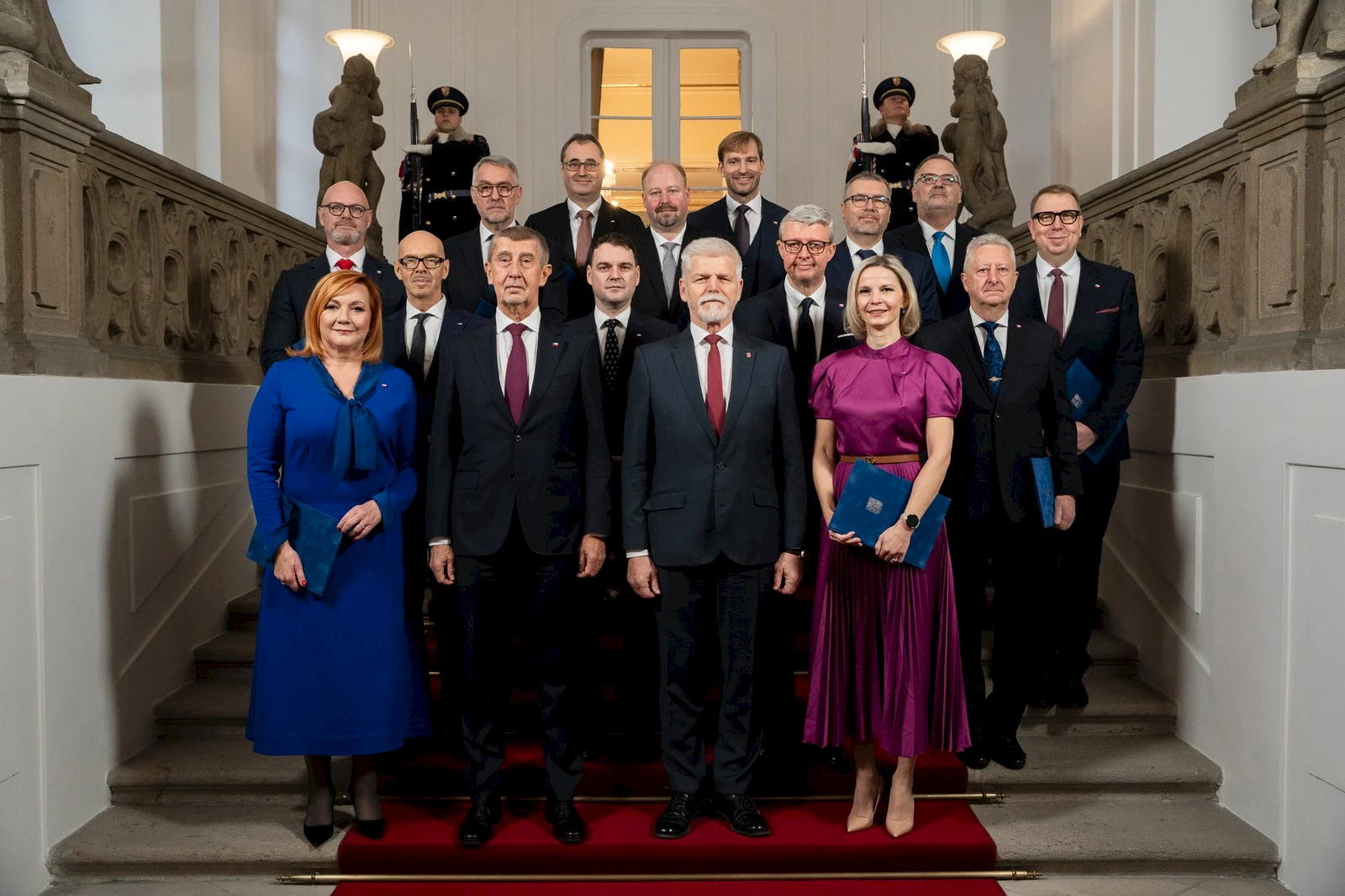
The Czech Republic has a new government. At the beginning of the week, President Petr Pavel appointed the 14 members of the new government at the suggestion of Prime Minister Andrej Babiš. The cabinet then convened for its first meeting in the Straka Academy. The building on the Lesser Town on the banks of the Vltava River is the seat of the Prime Minister. Before the first cabinet meeting, outgoing Prime Minister Petr Fiala handed over the building to his successor. Accordingly, all ministers were introduced to their ministries during the course of Monday, where their respective predecessors handed over their offices.
However, the government is not that new. Including Andrej Babiš, six of the 15 members of the government alone were already ministers, most of them in the same function. All six hold office for Babiš's ANO party. Petr Havlíček is once again Minister of Industry and Trade, as he was between 2017 and 2021 in Andrej Babiš's first government, and is now also Deputy Prime Minister. Alena Schillerová is once again Minister of Finance. Robert Plaga is again Minister of Education and Adam Vojtěch Minister of Health. Only Lubomír Metnar moved from the Ministry of Defense to the Ministry of the Interior. Almost all of them are also considered recognized experts in their fields across the coalition.
Jeroným Tejc (for ANO) as Minister of Justice and Boris Šťastný as Minister of Sport (Motorist) are also politicians who have shaped Czech politics as parliamentarians, in some cases for decades, Tejc for the Social Democrats (ČSSD) and Šťastný for the liberal-conservative ODS. A good acquaintance from the North Bohemian perspective is the Minister for Regional Development Zuzana Mrázová (ANO), who married shortly before her appointment, was previously called Zuzana Schwarz Bařtipánová and as such was the esteemed mayor of Bílina for many years.
Mrázová and Schillerová are also the only two women in the cabinet. And it is unlikely that this very unfavorable ratio will improve. At the moment, the Ministry of the Environment is still vacant and is being temporarily led by Foreign Minister Petr Macinka (Motorists). Filip Turek, the candidate originally intended for the post, canceled a meeting with President Pavel in preparation for the appointment due to illness. A new date for the meeting has now been set. However, Pavel has major reservations about his appointment due to Turek's anti-minority and inhumane statements. Either way, the post will be filled by motorists and almost certainly by a man. This party, like the other coalition party, the SPD, is an almost purely male party that has so far only appointed men to key positions.
Czech amateur theaters are a UNESCO World Heritage Site
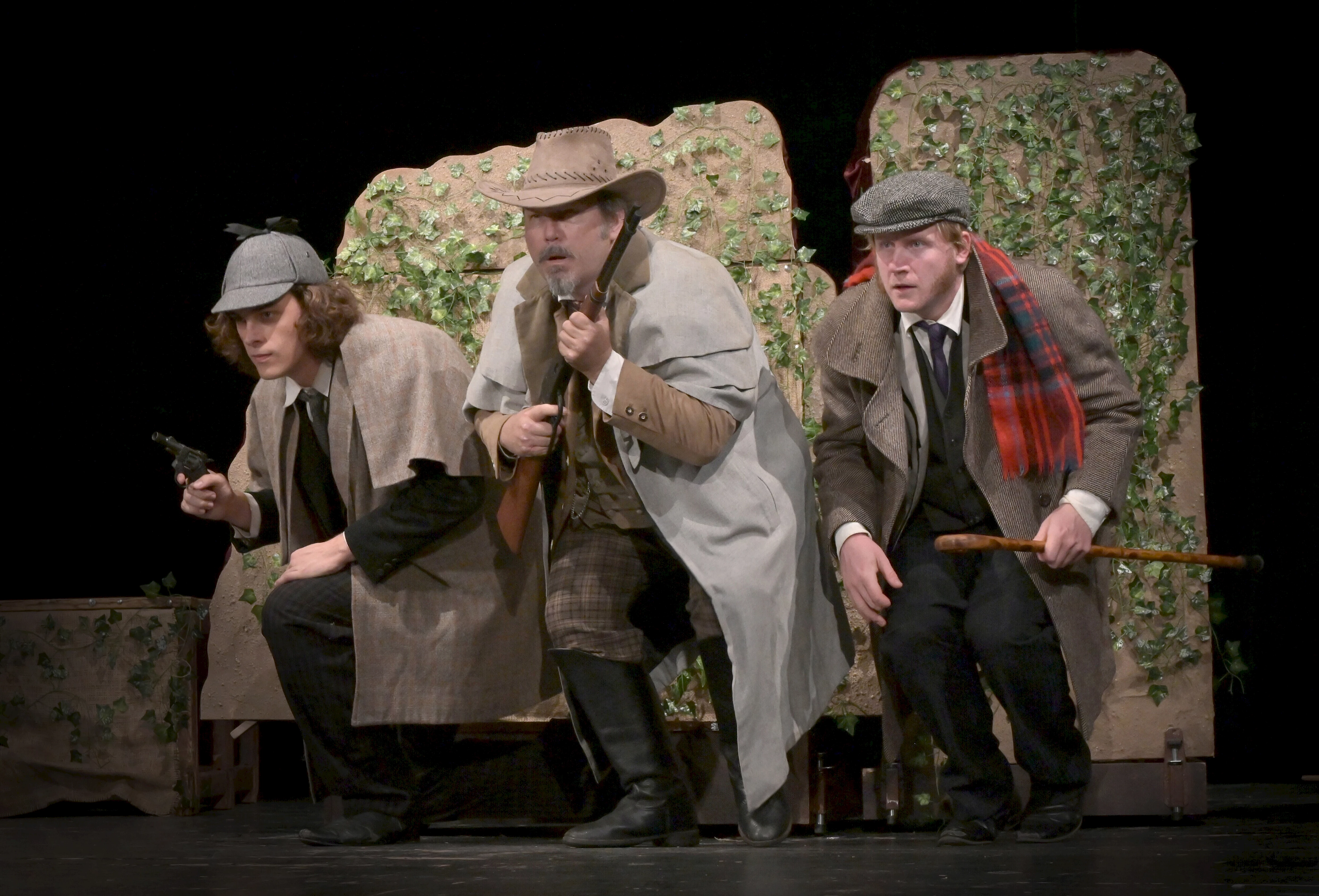
At its most recent meeting in Delhi, India, UNESCO's Intergovernmental Committee for Intangible Cultural Heritage declared Czech amateur theaters an Intangible World Heritage Site. "This is an award for a living tradition that is deeply rooted in the Czech Republic," said a delighted Martin Baxa (ODS), the outgoing Czech Minister of Culture, last week. More than 3,500 theater groups throughout the Czech Republic with around 100,000 active members are currently dedicated to the tradition of amateur theater, which has a history of over 200 years in some ensembles. Some ensembles have more than 300 members. The tradition is particularly strong in the regions, even where there is no other cultural life. UNESCO thus recognizes a typically Czech tradition that continues to produce new generations of amateur actors. The dense network of primary art schools in the Czech Republic is also an important factor in the widespread dissemination of this tradition, which is organized purely privately and cultivated in circles of friends.
For the Czech Republic, it is the entry in the UNESCO intangible world cultural heritage with the widest distribution among the population. So far, nine traditions have already been included in the Czech Republic, such as the masks and carnival parades in the Hlinsko region (East Bohemia), the scouts (Sokol), the royal horsemen in the south-east of the Czech Republic and puppetry. The most recent addition to the prestigious list was handcrafted glassmaking two years ago. This year, Czech amateur theater was added to the UNESCO Intangible Cultural Heritage together with Italian cuisine, Icelandic open-air bathing culture and the Polish basket-making tradition.
Lithium extraction still unclear
There has been talk of resuming mining in the Ore Mountains for years. The semi-state-controlled company Geomet wants to mine lithium in the Cínovec (Bohemian Zinnwald) area. The reserves on the Czech side are among the largest in Europe. However, the project is only making slow progress.
During the last meeting of the district parliament in Ústí, it became clear that crucial prerequisites for the project are still lacking. The main issue here is the lack of a feasibility study. This is a prerequisite for an environmental impact assessment. Geomet announced that it would apply for this by the end of the year and also submit the feasibility study. During this week's parliamentary session, however, Geomet was still unable to present a feasibility study, which was criticized by representatives of municipalities such as Dubí and Košťany in particular. According to them, Geomet had promised to submit the study long ago. The mayor of Košťany also expressed doubts as to whether lithium mining was even economically viable due to the drop in raw material prices. The district parliament then removed the topic from the agenda after the debate. The original intention was to vote on a change in spatial planning in favor of lithium mining. This was postponed until further notice.
Geomet, 51% of which is controlled by the coal company Severočeské doly, which in turn belongs to the semi-state-owned energy group ČEZ, has already carried out extensive test drilling in the Cínovec area, where lithium is to be extracted one day. Processing of the raw material is planned at the current power plant site in Prunéřov near Kadaň. The extracted material will be transported there partly by cable car. The Australian company EMH controls 49 percent of Geomet. The state has already pledged up to 8.8 billion crowns (around 370 million euros) in subsidies for the construction of the processing plant.
Money for the preservation of churches, synagogues and cemeteries
At its last meeting, the Board of Directors of the Czech-German Future Fund released money for the preservation and renovation of churches, synagogues and cemeteries. A total of 466,000 euros was made available for this purpose. For example, the dome of the synagogue in Děčín (Tetschen) will be renovated for the funding sum of 600,000 crowns (25,000 euros). Money will also be used to restore gravestones at the cemeteries in Chabařovice (Karbitz) near Ústí nad Labem (Aussig) and Kerhartice (Gersdorf) and Kamenický Šenov (Steinschönau) near Česká Kamenice (Böhmisch Kamnitz). The money from the Future Fund will also be used to continue the renovation of the Chapel of the Cross in Markvartice.
A total of 1.5 million euros in funding was approved. While the construction and maintenance measures are planned for the whole of next year, all other projects relate to the first quarter of 2026. The main focus is on youth and children's encounters, exchanges between children and young people, as well as cooperation between schools and internships on the other side of the border. The Gotické dvojče (Gothic Twins) gallery in Litoměřice (Leitmeritz), which supports the presentation of German and Czech artists, will also receive funding. Funding was also approved for the translation of books such as "Ungleich vereint" by sociologist Steffen Mau into Czech and the Elbe book by Luboš Palata, which he presented at the Czech-German Culture Days, into German. The Future Fund is also supporting the translation of the book about the traces of the Red Mountaineers in Saxon Switzerland and the Eastern Ore Mountains.
The most beautiful Christmas tree in North Bohemia
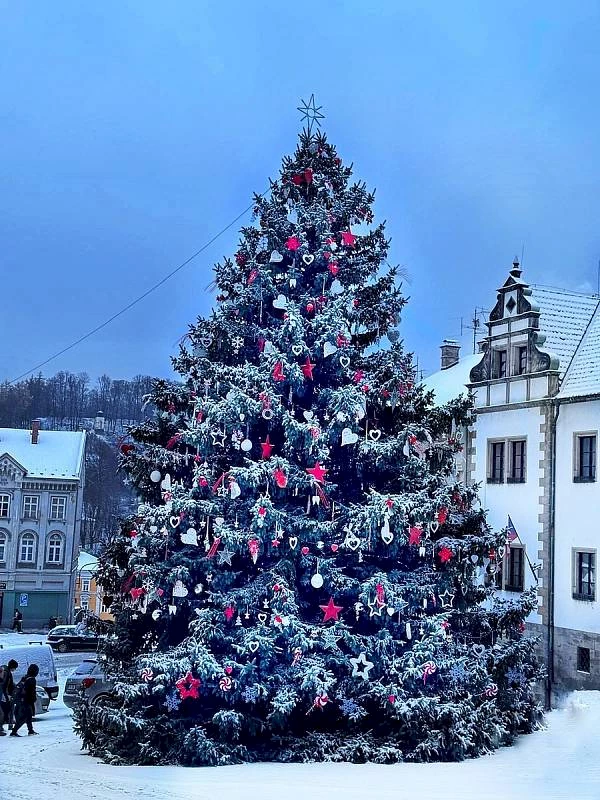
Benešov nad Ploučnicí (Bensen) has the most beautiful Christmas tree in the Ústí Region this year. This was the result of the annual survey conducted by the daily newspaper "Deník". According to the survey, Benešov won by a hair's breadth over the tree in Štětí and by a large margin over the tree in Žatec. The Christmas tree in Heidenau's twin town was a private donation from Mr. and Mrs. Klemer. It was decorated by Mrs. Michaela Soukupová; the volunteer fire department of the small town provided her with a lifting platform.
The Christmas tree had previously beaten the defending champion of the national poll from Velký Šenov (Groß-Schönau) in the Děčín district poll. The most beautiful Christmas tree in the Czech Republic even stood in Velký Šenov twice in a row. Whether its successor, Benešov, will once again come from the Děčín district will be decided in the national final, which will be held between December 19 and 22. If you would like to vote, you can do so here. The winner will receive prize money of a quarter of a million crowns (around 10,000 euros).