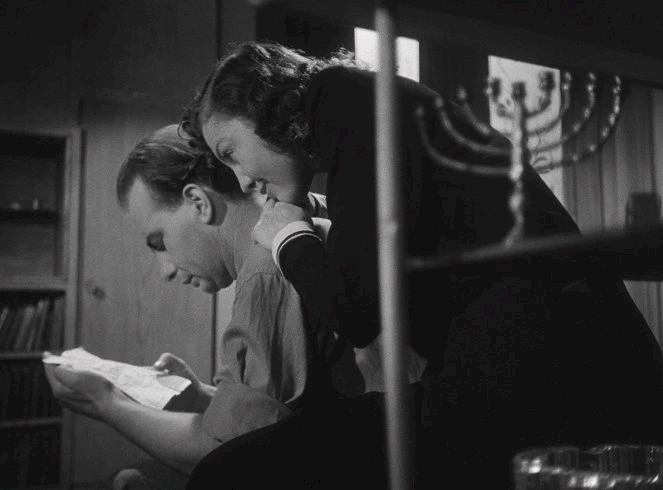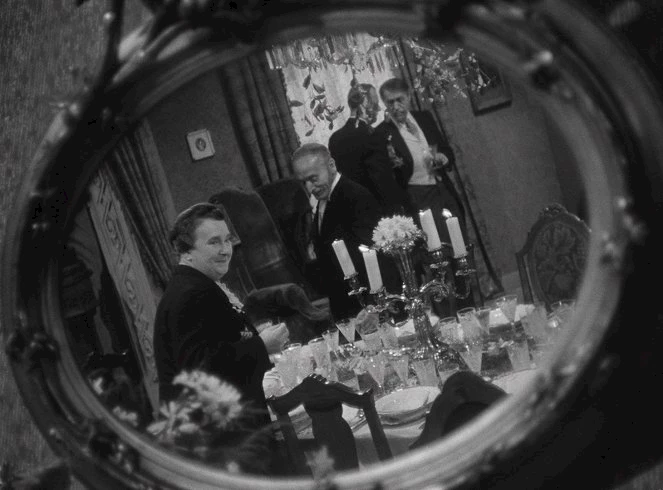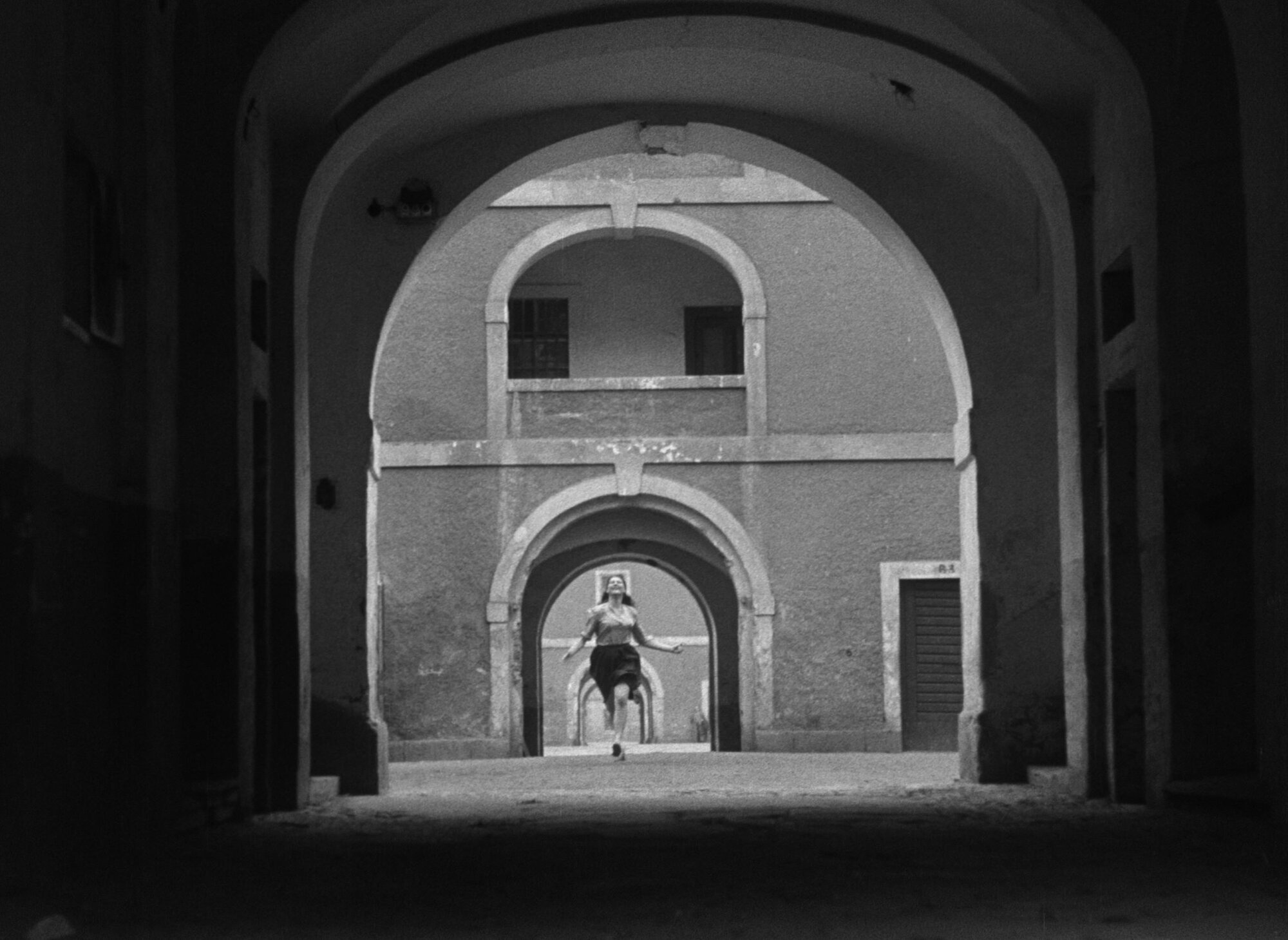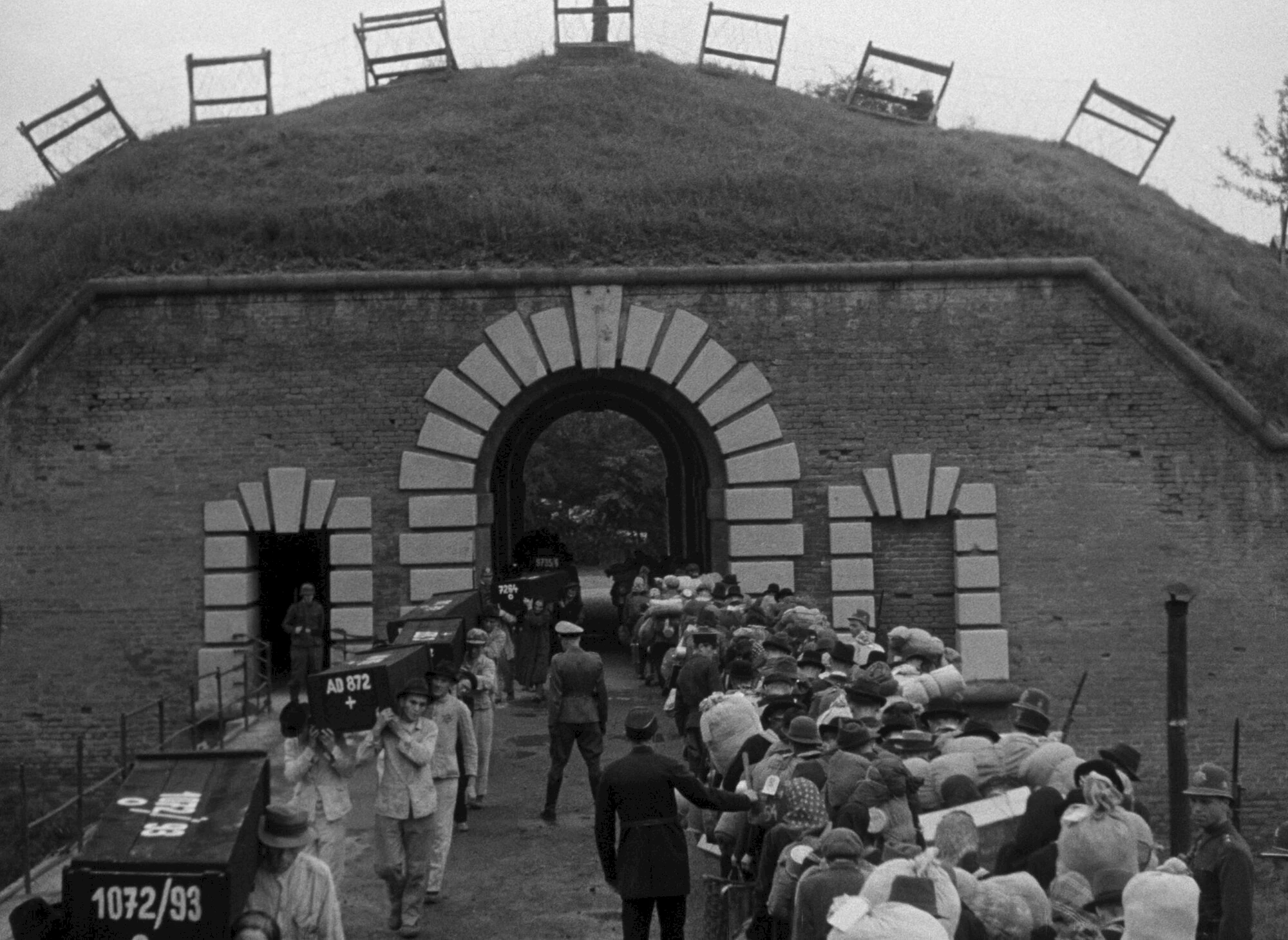

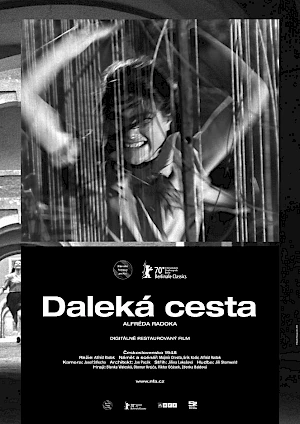
 The path of Prague's Jews to the German extermination camps, traced using the example of the Kaufmann family. Daughter Hana is a doctor and marries her non-Jewish colleague Dr. Antonín Bureš after the Nazi occupation of Czechoslovakia. However, the marriage cannot prevent Hana's parents from being deported to the Theresienstadt concentration camp. When Antonín sneaks in there, he not only has to take note of the degrading living conditions, but also the news that his parents-in-law have already been "transferred" to the East - to Auschwitz, Majdanek or Sobibor ... With Daleká cesta, Alfréd Radok, who himself was interned in a labor camp and lost close relatives in the concentration camps, has created an artistically valid depiction of the horrors of the Holocaust. Constantly interrupted by documentary film material that links the individual fates with contemporary history, the play scenes condense into a nightmarish, expressionistic "dance of death". Daleká cesta disappeared from Czech cinemas in 1949 after just a few screenings and was not shown again until 1991.
(Text from Berlinale 2020)
This film will be shown as part of the "Czech Film Wednesday" series, as always in the original version with German subtitles.
If you would like to be reminded of Film Wednesday in good time and receive further information on Czech culture in the Elbe/Labe Euroregion, you can subscribe to our cultural newsletter.