

Weekly review no. xx
14.06.2024
Think-tank elections in the Czech Republic too
The European elections in the Czech Republic also turned into a reckoning with government policy. Prime Minister Petr Fiala's Spolu alliance was still able to achieve a relatively good second place with 6 of the 21 mandates. However, the Mayor's Party and, above all, the Pirates were caught cold. Five years ago they had won three seats, but this time they only managed one.
As expected, the ANO party of former Prime Minister Andrej Babiš won and entered the EU Parliament with 7 seats. ANO benefited from the increase in voter turnout to 36.45 percent. This was an increase of almost eight percentage points. The losers also included the anti-EU right-wing nationalist SPD, which only has the abbreviation in common with the German Social Democrats. They only won 1 instead of 2 mandates. The right-wing populists led by the Czecho-Japanese Tomio Okamura usually achieve around 10 percent in parliamentary elections. This time, they barely managed to get above 5 percent.
Completely surprisingly, the electoral alliance of "Motorists and Vow" achieved over 10 percent, which is enough for two seats in the new EU Parliament. They put their faith in racing driver Filip Turek as their lead candidate, who attracted attention with some tasteless gestures and Nazi-approving rhetoric. This obviously went down well.
The electoral alliance "Stačilo!" (Enough is enough!) came in a close second. This is a similar platform to the BSW in Germany. Communist and long-standing MEP Kateřina Konečná is also rhetorically adept and is more to the right than the left on issues such as climate protection and migration. That was enough for 2 mandates.
In the Ústí district, where ANO traditionally has its stronghold, the party did significantly better than in the entire republic. The Spolu alliance had correspondingly fewer percentages. Things also looked slightly better for the motorists and Kateřina Konečná's alliance as well as the Okamura party. Mayors and Pirates were below the Republic average.
Overall, the European elections brought further gains for Eurosceptic parties. They predominantly advocate a more rigid migration policy and a weakening of the Green Deal. Their number of seats rose from around 12 to 16-17.
Exchange of old crowns ends in banks
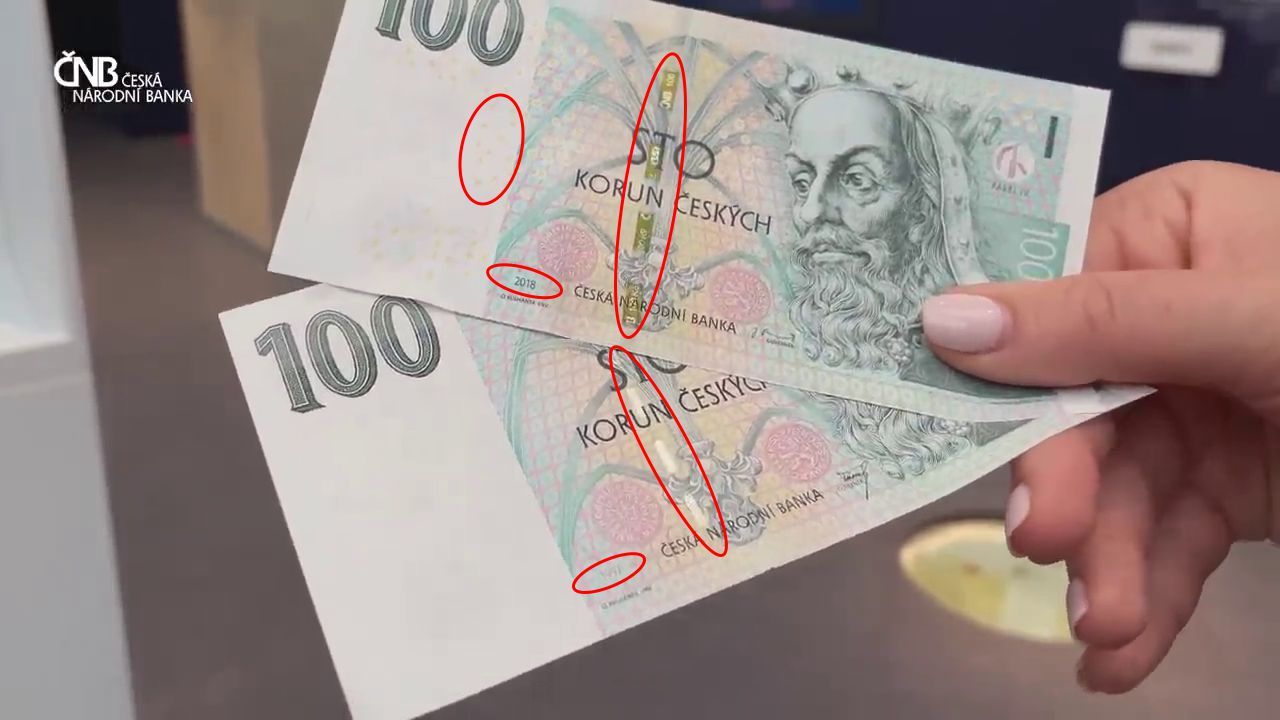
From July 1, old banknotes can only be exchanged at branches of the Czech National Bank (ČNB). These are banknotes in denominations of 100, 200, 500, 1,000 and 2,000 crowns, which were issued between 1995 and 1999. They were withdrawn from circulation at the end of June 2022. Until the end of June, every commercial bank branch will still accept them and exchange them for new bills.
The main difference between the old bills and the new banknotes is the width of the security strip. This is wider on the new bills. In addition, the color of the stripe remains unchanged when the banknote is turned over. The stripes on the new bills change color from brown-violet to green. Other features are colored dots in the white field on the left and the year of issue (see picture).
According to the central bank, around 41 million old banknotes are still in circulation. In addition to the head office in Prague, banknotes can also be exchanged in Ústí nad Labem.
Ústí district attracts film locations
There are places in North Bohemia that you think you've seen before. Namely in a movie. The small town of Úštěk near Litoměřice, for example, with its picturesque and, above all, still historic backdrop, was the setting for films such as the American tragicomedy Jojo Rabbit or the Czech Oscar winner Kolja from the 1990s. Sometimes places only appear briefly, such as the Tissa Walls in The Chronicles of Narnia or the Prebisch Gate. If you would like to find out more, we recommend the website www.filmovamista.cz.
The Ústí district would now like to expand the film business and has launched a 50 million crowns (around 2 million euros) funding program. Funding will be provided for the production of cinema films, as well as TV movies, series and documentaries. Even though the funding amounts are manageable - a maximum of 3.5 million crowns (140,000 euros) is possible per film - the district is expecting good demand. The funding comes from the "Just Transformation" fund, which was set up for regions that are phasing out coal mining. For the Ústí district alone, 15 billion crowns (600 million euros) have been earmarked in the fund.
People are aware that it takes more than money to attract film productions to North Bohemia. A film office in the Ústí region has been supporting film productions for eight years. It arranges attractive locations and takes care of communication with the relevant municipalities, authorities and institutions. The Ústí district hopes that this will generate direct income from the film business and indirectly promote tourism.
Expert conference on "homesickness tourism" of displaced persons in Teplice
How did private trips by displaced Sudeten Germans from the GDR to their old Czech homeland contribute to new friendships and reconciliation? How difficult were these trips and what conflicts stood in the way? These and other questions were the focus of a symposium organized by the Euroregion Elbe/Labe together with the Deutsche Gesellschaft e.V. in Teplice entitled "Expellees, (homesick) tourists and 'new settlers'" in the border regions of the GDR, Czechoslovakia and the People's Republic of Poland. Around 70 participants from the Czech Republic and Germany listened to presentations by 15 academics from the Czech Republic, Germany and Poland and discussed the topic from several angles in five rounds of talks. The conference was opened by Jiří Řehák, Deputy Governor of the Ústí district. The conference itself also took place in an unusual location: the premises of the Garden Restaurant of the Monopol brewery near the Šanov spa district, which was created by combining historical buildings with new construction.
If you would like to receive our weekly review regularly in your e-mail inbox, sign up for our newsletter.
To the newsletter registration
 The production of this newsletter is co-financed by tax funds on the basis of the budget approved by the Saxon State Parliament.