

Derweil in Tschechien... 31/25
15.08.2025
Prosecution for serious fire in Most
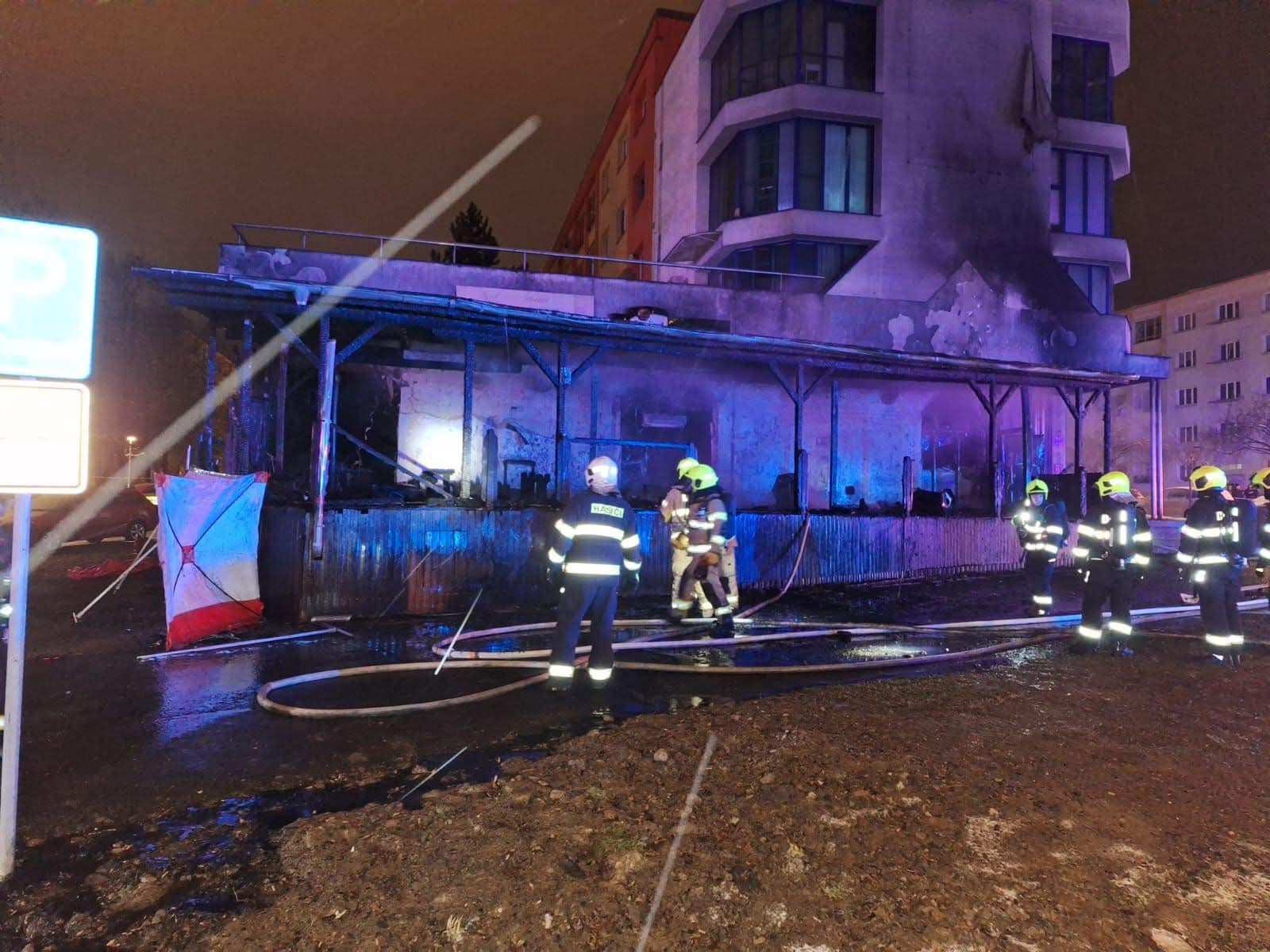
More than half a year after the tragic fire in the restaurant "U Kojota" in Most, the police have completed their investigation. Charges have been brought against two people. "The manager and the person authorized by her to run the restaurant have been charged with negligently endangering the public," said police spokesman Kamil Marek. According to the newspaper Mladá fronta Dnes, the accused are the married couple Miloslav and Jana Čech. If convicted, both face up to 10 years in prison.
The investigators also relied on several expert reports from the fields of fire protection and healthcare. According to these, the cause of the devastating fire on January 11 shortly before midnight was the accidental tipping over of a gas mushroom on the restaurant terrace by one of the guests. This damaged the seal between the valve of the pressure vessel and the heating regulator and allowed a propane-butane gas mixture to escape, which ignited on the mushroom heater. In just a few seconds, the fire spread not only to the terrace, but also to almost the entire restaurant. Unfortunately, it blocked the way to the door. A second door was locked. So those present only had a few seconds to save themselves. Six people died at the scene and a seventh later died seriously injured in hospital. Seven other people were injured, two of them seriously.
The investigators compiled a very long list of defects as reasons for the fire. "The investigation brought to light serious breaches of the obligations under the Fire Protection Act," continued police spokesman Marek. In addition, the terrace was roofed over without a valid building permit and later covered with PVC foil. The fire protection regulations should then have been adapted, which did not happen. There were no regular preventive fire safety inspections, nor was the fire protection equipment inspected. The most recent inspection took place in April 2008. The placement of a garden heater in the premises of the terrace, which had not been structurally approved, was particularly serious, as was the storage of several pressurized gas cylinders in the rooms of the restaurant, which also contradicted the operating instructions provided by the seller of the mushroom heater.
Wet weather causes later harvest

The wet weather in July delayed the harvest in the fields in northern Bohemia by a good month. At the beginning of the current warm period, only half of the grain harvest had been completed in the entire Ústí district, and in some cases winter wheat and winter barley could only now be harvested from the fields. The beet harvest is already over 80 percent complete, with above-average yields already emerging. However, farmers are expecting quality losses due to the weeks of wet weather in the middle of the harvest period.
In contrast, the hop harvest will not begin until this weekend. The Czech Republic is one of the largest hop producers in the world. The largest hop-growing region in the Czech Republic is around Žatec. The harvest there is expected to be average at best. One risk is the current hot days, which could end the ripening process prematurely without achieving the desired bitter content. As in Germany, it is mainly seasonal workers from Romania and Bulgaria who help with the harvest.
Hop acreage in the Czech Republic has fallen slightly in recent years to 4,815 hectares. However, the decline is not as great as in the USA. Hop growers are also negotiating for state support to expand hop acreage.
Northern Bohemia is also an important location for fruit growing.
China annoyed by Czech president
China breaks off all contact with Czech President Petr Pavel. This is the country's reaction to Pavel's private visit to the Dalai Lama in India. At the end of July, after a working visit to Japan, Pavel traveled back to India on a private mission to congratulate the Dalai Lama on his 90th birthday. In China's view, the Czech president thereby harmed sovereignty over Chinese territory.
The Presidential Chancellery commented on China's move by saying that there was currently no direct communication between the presidents of the two countries and that China's decision therefore did not change the current situation.
President Pavel received support from the parties in the ruling coalition. The largest opposition party ANO did not wish to comment on the situation.
The Czech Republic has taken a critical stance towards China in the long term. The President of the Senate, Miloš Vystrčil from the ruling ODS party, paid an official state visit to Taiwan. The speaker of parliament, Markéta Pekarová Adamová from the governing TOP 09 party, has also visited Taiwan. In the Czech Republic, it is also common practice to fly the Tibetan flag on town halls and other public buildings such as schools on March 10, the anniversary of the popular uprising in Tibet.
Czech Republic buys 44 Leopard tanks
The Czech Ministry of Defense has decided to purchase 44 Leopard 2A8 main battle tanks. The costs amount to just under 1.4 billion euros. The purchase is part of a large order from the Franco-German manufacturer KNDS, which is organized by Germany and has been joined by several countries. Subject to the approval of the Czech government, the official order is expected to be placed in the coming weeks. This would mean that Defense Minister Jana Černochová would have achieved her self-imposed goal of completing the tank order during her mandate. A new parliament is elected in the Czech Republic at the beginning of October.
The first Leopard 2A8 tank is due to be delivered in 2028, with delivery to be completed in 2031.
Parents spend an average of 100 euros on school supplies
Spending on school supplies in the Czech Republic amounts to the equivalent of around 100 euros per child. This is the result of a survey conducted by the research agency NMS Research. The costs are higher for first-graders at an average of 120 euros. A quarter of those surveyed reported costs of over 120 euros. The largest item for first-graders is naturally the school bag. According to NMS Research, expenditure remained unchanged compared to the previous year.
However, according to the survey, the biggest challenge is not school supplies, but costs for class funds, all-day activities, excursions, ski camps and after-school care. There are some major differences in after-school care fees. They can range from 200 to 600 crowns (8-24 euros) per month.
In contrast to Saxony, however, parents do not have one major expense: the cost of celebrating the start of school, i.e. sugar cones, parties and everything else that is organized. This tradition does not exist in the Czech Republic.
Incidentally, there is still some time before school starts in the Czech Republic. The new school year doesn't start until September 1.
Teplice Museum exhibits Bihl porcelain
Last year, Dutchman Jan Jager donated 50 banana boxes of ceramics from the Gustav Biehl company in Ladowitz (now Ledvice) to the regional museum in Teplice. Jager had collected the tableware for 35 years before giving it to the museum. Parts of the collection are now on display in a special exhibition at the museum.
In a way, the porcelain has returned to its place of origin. Only a small part of the former Ledvice still exists. A huge coal-fired power station now stands in its place, and parts of it have also been demolished due to open-cast lignite mining. The "Porcellan- und Steingutfabrik G. Bihl & Com." has also long since ceased to exist. With the expulsion of the German population in 1945, production was stopped and never resumed.
Gustav Biel actually came from Künzelsau in eastern Franconia. He later worked in coal mining, mainly in the Petschek family mines. In 1896, he took over the Hanke family's pottery factory. The factory experienced its heyday in the 1920s and 1930s. The majority of the collection also dates from this period. Typical for Biehl tableware is the spray decoration from 1927 to 1935. After the occupation of the Sudetenland by Germany, many export markets collapsed. The factory therefore concentrated primarily on the production of technical porcelain such as insulators.
The exhibition at the regional museum is on display until October 12.
If you would like to receive our weekly review regularly in your email inbox, sign up for our newsletter.