

Derweil in Tschechien... 46/25
28.11.2025
German Foreign Office warns of hepatitis in the Czech Republic
The Federal Foreign Office has drawn attention to the increase in hepatitis A infections in the Czech Republic and has recommended that people should only enter the country if they have been vaccinated against the disease. According to the Foreign Office, the capital Prague and the districts of Karlovy Vary (Carlsbad), Central Bohemia and Moravian Silesia are particularly affected. "Pay attention to basic hygiene measures, especially consistent hand hygiene," says the Foreign Office website.
The Czech Republic is currently experiencing the largest hepatitis A epidemic in recent decades. By mid-November, over 2,500 infections had been reported, four times more than a year ago and more than at any time since 1989. The last hepatitis A epidemic dates back to 1979, when over 32,000 people were infected.
First coal-fired power plants to be closed as early as 2027
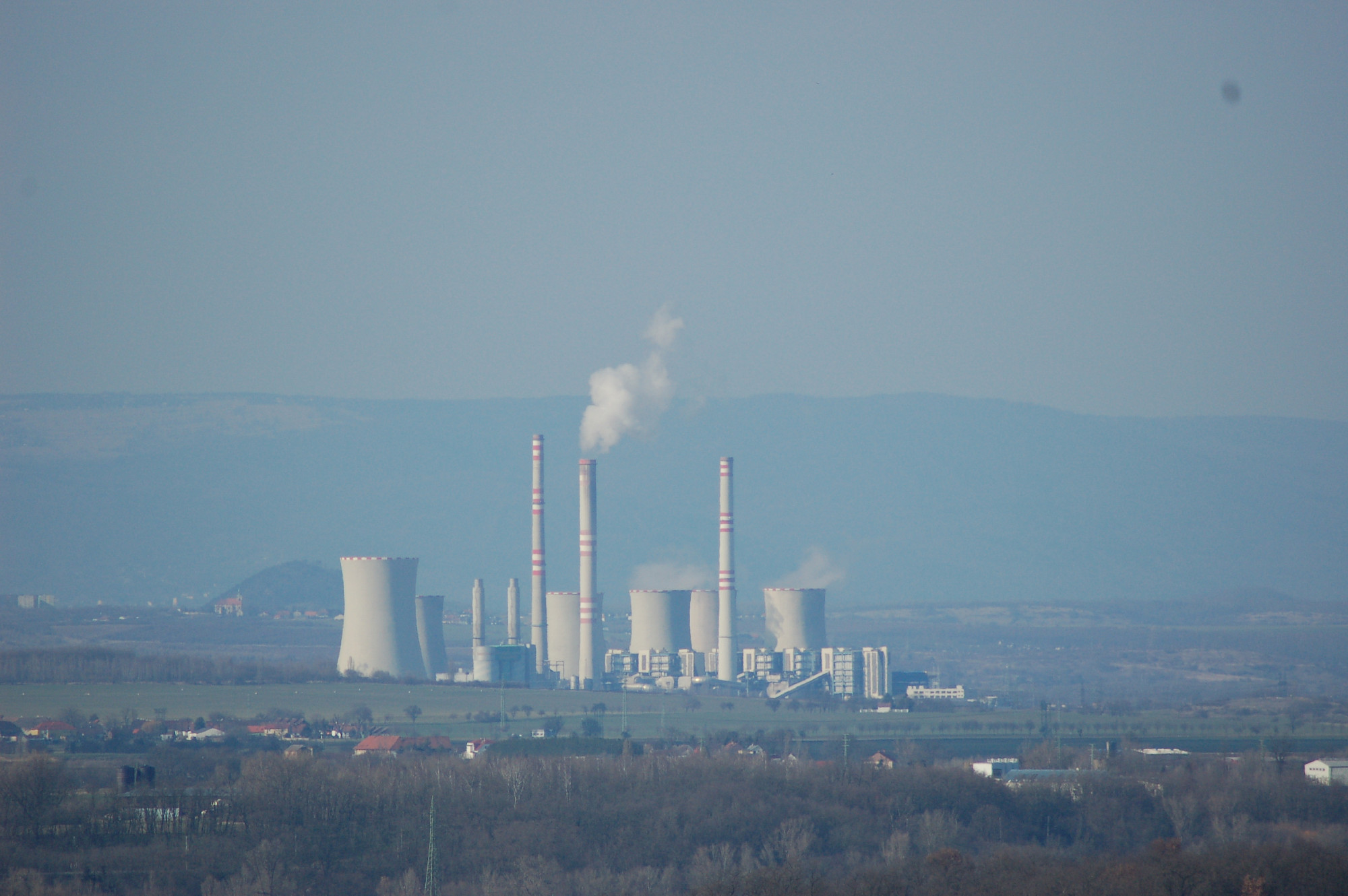
The first coal-fired power plants in the Czech Republic will be taken off the grid by the end of next year. Sev.en has announced that it will shut down the Počerady and Chvaletice power plants as well as the power plant in Kladno in December 2026, and by March 2027 at the latest. The reason for this is the difficult market situation. Specifically, this relates to the price of emission allowances and the market prices for electricity and gas. This would mean that the power plants would be shut down well before the government's previous plan. This had assumed a coal phase-out in 2033.
The Počerady power plant is located in northern Bohemia south of Most (Brüx). The power plant in Chvaletice is located on the Elbe in the Pardubice district east of Kolín. Both are among the largest coal-fired power plants in the Czech Republic. Together with the power plant in Kladno, they have an installed capacity of almost 2,400 megawatts. The power plant in Kladno also has an installed thermal capacity of 950 megawatts.
For the second year in a row, Sev.en is making high losses with its power plants. The problem is the high CO2 emissions. Sev.en needs exactly one emissions certificate to produce one megawatt hour. By comparison, the coal-fired power plants of the state-owned energy company ČEZ only need an average of 0.8 certificates. Sev.en's power plants also have a lower level of efficiency, at 32 to 33 percent.
The big question will be what impact the closure of three power plants will have on the grid and the energy supply. The grid company ČEPS must examine this. In an earlier projection, ČEPS had already assumed that the shutdown of several power plants would turn the Czech Republic into an importer of electrical energy. The country has traditionally been an exporter of energy. Should it be economically necessary, the Czech Republic has the instrument of allowing a power plant to continue producing with state aid.
The upcoming change of government also plays an important role. The three parties involved have already announced that they will allow coal-fired power plants to run longer with state support.
An overhead line causes train chaos between Prague and Berlin
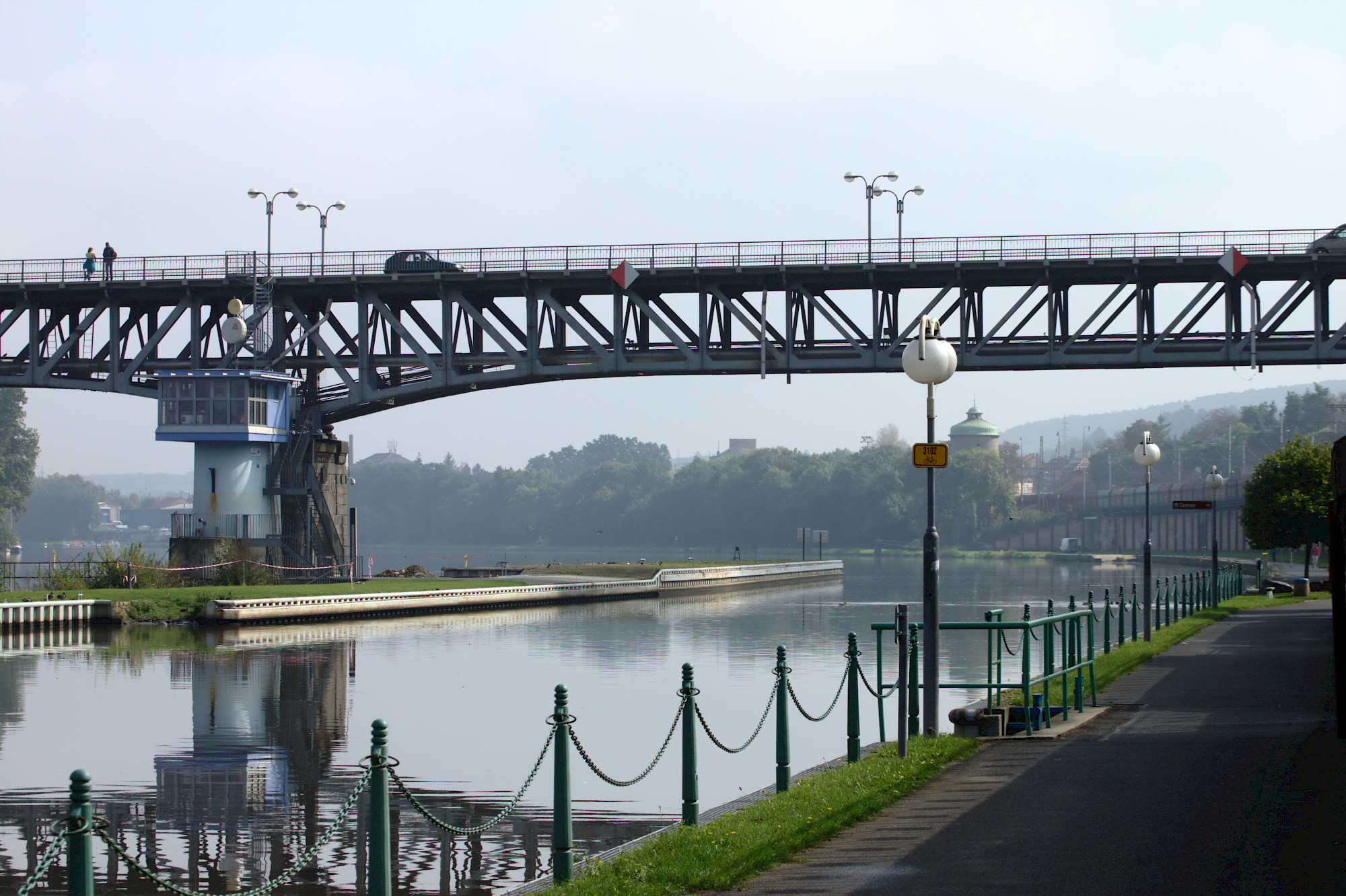
Train detour and hours of delays: On November 26 (Wednesday), rail travelers from Prague via Dresden and on to Berlin had to be patient. The cause was an overnight accident on the overhead line on the Prague-Děčín line, according to a breaking news report from Czech Railways České dráhy. Rail traffic was interrupted between the stations of Hrobce and Roudnice nad Labem (Raudnitz). International trains were diverted with considerable delays via the alternative route on the right bank of the Elbe via Lysá nad Labem and Mělník, which then also affected traffic between Dresden and Berlin. The line at the scene of the accident was not open again until 2 p.m., and delays continued into the evening.
However, the railroad did not disclose this: Overhead line damage has occurred for the 16th time in just under nine months, the last time last weekend. And the damage doesn't occur by chance somewhere on the open line, but in the middle of Roudnice nad Labem. In a way, it is damage by design. In Roudnice, the historic Špindler Bridge over the Elbe has been undergoing renovation since March. The steel construction from 1910 was getting on in years. The international railroad line runs directly under the bridge on the town side. When the line was electrified, the bridge was already in place, which is why the overhead line hangs relatively low. In order not to endanger the bridge renovation and, above all, the construction workers, the section under the bridge was taken off the grid. Train drivers have to retract the pantograph for the time being. To be on the safe side, the railroad infrastructure company Správa železnic had safety hooks installed before and after the work. If the pantograph remains up, it is pulled off the hooks as an emergency solution. The overhead line then remains intact, but the train cannot continue with the broken pantograph and blocks the line until a new locomotive is procured.
At the moment, infrastructure companies and train drivers are blaming each other. Some complain about ignorant train drivers. The others feel they have been badly warned. In fact, flashing warning signals have only recently been installed. In addition, train drivers are now being called and reminded to lower the pantograph. Despite this, another accident occurred on Wednesday night. The train drivers also believe that the problem could be solved in a different way and that the pantographs are being destroyed unnecessarily. Správa železnic denies that there is any other technical solution.
It was probably bad news in this context when it was announced in October that the bridge would have to be renovated for much longer than originally planned. The renovation should actually have been completed by now. As both the steel structure and sandstone girders have to be replaced in parts, the renovation will now take until the fall of next year. The Ústí district, which owns the bridge, has announced that it wants to complete the section of bridge under which the railroad line runs as quickly as possible. Until then, there is the threat of hours of delays in the event of another accident.
North Bohemian cities offer scholarships for returnees
In order to stop the exodus of well-trained specialists in particular, towns in northern Bohemia are offering scholarships. The spa town of Teplice, for example, offers 100,000 crowns every year to all those who return to Teplice after their studies and work or run a business there. The condition is that they stay in Teplice after completing their studies for at least the same amount of time as they received the scholarship. However, interest is limited. Just five have applied. The scholarship amounts to 4,167 euros per year. That doesn't sound like much, but it can help. Unlike before: the city only offered an annual scholarship of 10,000 crowns, i.e. 417 euros. Nobody wanted to commit to their old home for so little money.
There is even less interest in the hop and UNESCO World Heritage city of Žatec (Saaz). No one has applied for an annual scholarship, which is only 50,000 crowns, since it was introduced in 2022. In Žatec, the offer is also limited to future general practitioners, paediatricians and dentists.
The Ústí (Aussig) district also hands out scholarships. You can receive up to 100,000 crowns here. However, the scholarship is now limited to future teachers. As many as ten apply each year. This was different in the past, when the scholarship was available for other subjects without restriction.
The city of Aš in the Saxon-Bavarian-Czech border triangle is also primarily interested in teachers. Students can receive up to 96,000 crowns per year (4,000 euros). In addition, after graduation, there is a one-off starting grant of another 150,000 crowns (6,250 euros). The future teachers can also save on rent in the long term. They are even given preferential allocation of a municipal apartment, which they can use rent-free for a year. After that, they pay the rent themselves, but only half as much as in other municipal apartments.
Good consumer sentiment in the Czech Republic
This should be good news for retailers in the run-up to Christmas: In the Czech Republic, private household confidence in the economy jumped by 4.3 points to 111.7 in November. This is the highest value for six years. Analysts attribute the increased confidence in part to the result of the parliamentary elections in October. "Households are expecting certain economic improvements from the new government," said Petr Javůrek, chief analyst at Provident Financial. The hope relates specifically to the promise of lower energy prices.
However, the increase is also taking place against the backdrop of good economic development. The economy is growing faster than expected and wages have also risen well. All of this together is probably the reason for the positive mood.
The situation is different for companies, however, where confidence in economic development fell by 3.5 points to 99.9. This is slightly below the average. This is a clear indication that the positive economic development in the Czech Republic continues to be driven by private consumption. However, the picture is not uniform in the economy either. While the mood in the industrial and construction sectors is down, it is splendid in the service sector.
Analysts expect economic growth of 2.5 percent in 2025. They do not expect a recovery in industry until the course of next year.
Another nine Saxon-Czech projects approved
Today, the Local Steering Committee approved funding for a further nine small Saxon-Czech projects from the Small Projects Fund in the Elbe/Labe Euroregion. The distribution was very uneven this time: eight Czech projects were matched by only one from Saxony. The projects received a total of 80,469.60 euros in funding.