

Derweil in Tschechien... 48/25
12.12.2025
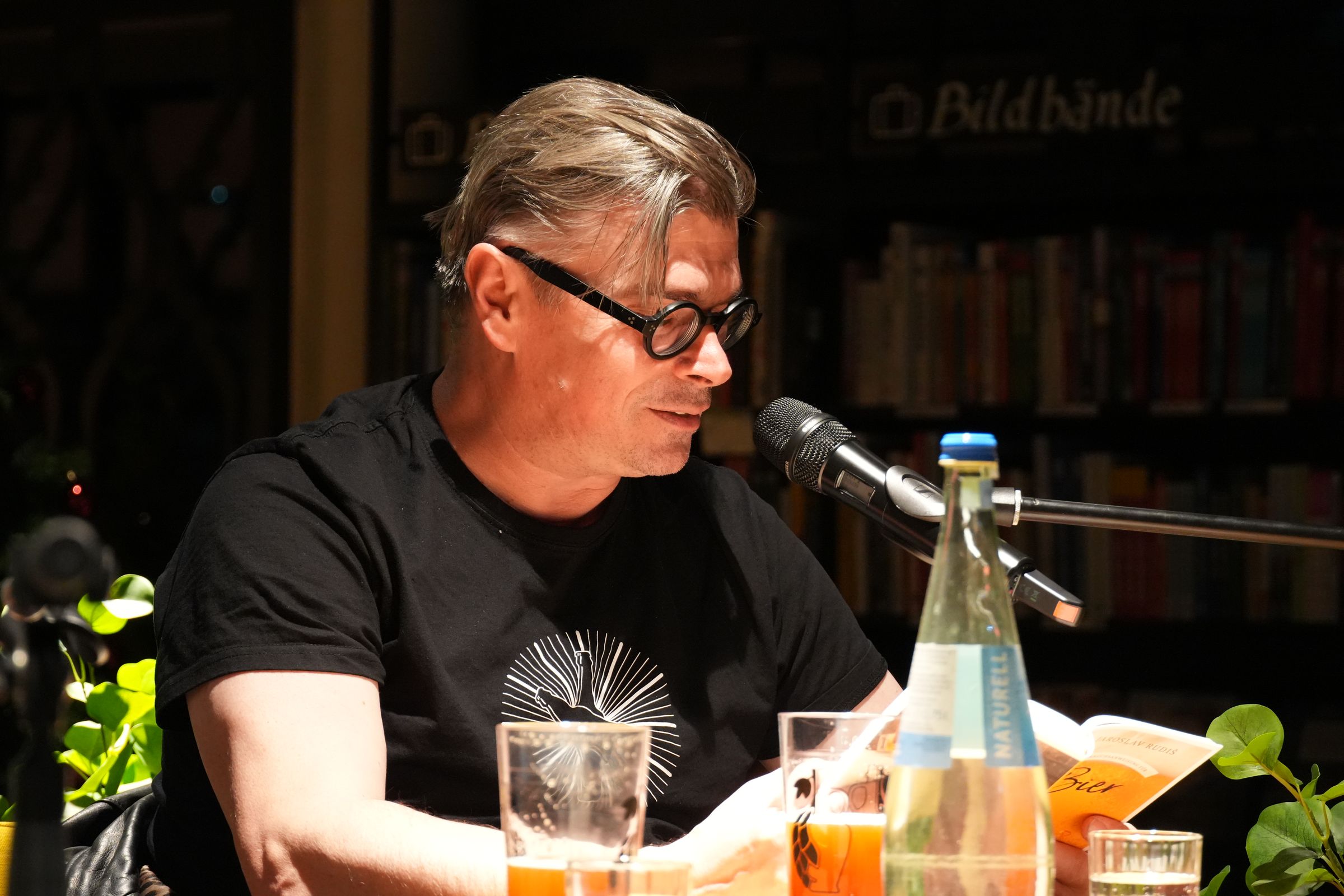
Jaroslav Rudiš receives the Giant Mountains Prize
The Czech author Jaroslav Rudiš is this year's winner of the Krkonoše Prize for Literature. The award was presented to him at a ceremony in Jelenia Góra (Hirschberg) last Sunday. According to the Sächsische Zeitung newspaper, the patron and Prime Minister of Saxony, Michael Kretschmer, was also present. The prize is endowed with 3,000 euros and has been awarded every two years since 2019 by the Verein zur Pflege schlesischer Kunst und Kultur. It honors significant literary contributions to the cultural life of Silesia in the spirit of mutual understanding. Rudiš comes from Turnov in northern Bohemia and now lives alternately in Berlin and Lomnice nad Popelkou, which is around 80 kilometers from Jelenia Góra.
The Czech Republic has a new prime minister
Andrej Babiš is the new Prime Minister of the Czech Republic. The 71-year-old was appointed by President Petr Pavel on Tuesday morning. He is returning to office after four years. He does not yet lead the government, as the ministers will only be inaugurated by the President on Monday. Within 30 days of their appointment, the government must be confirmed by parliament with a simple majority.
Prior to his appointment, Babiš announced in a video that he would sell all shares in his agrochemical holding Agrofert. They will be transferred to a trust structure and managed by an independent administrator. In his words, Babiš will no longer take control of Agrofert even after his departure as head of government. His children will only receive Agrofert after his death.
Babiš traveled to Brussels after his appointment and met with Commission President Ursula von der Leyen and Council President António Costa.
First Michelin Guide for the Czech Republic
The Michelin restaurant guide is being published for the first time in a separate country edition for the Czech Republic. In addition, nine restaurants were honored with the coveted star, one of which even received two stars. Six restaurants received the star for the first time.
The prerequisite for the publication of a separate Czech Republic guide was the payment of a fee of around 2 million euros by the Czech government. This also secures the publication of the prestigious restaurant guide for five years. As the restaurant tests were not limited to Prague, unlike in previous years, the number of Michelin stars in the Czech Republic increased significantly. Four were awarded outside of Prague alone. To receive a star, the restaurant must meet five strict criteria, which include the quality of the ingredients, harmony of taste, mastery of cooking technique, original cuisine personalized by the chef and consistently high quality.
No Michelin star has been awarded to the North Bohemian border region. But with "Arrigo" in Děčín (Tetschen) and "V Bezovém Údolí" in Kryštofovo údolí (Christofsgrund) near Liberec (Reichenberg), two top restaurants made it into the guide.
Hřensko removes first border market stalls
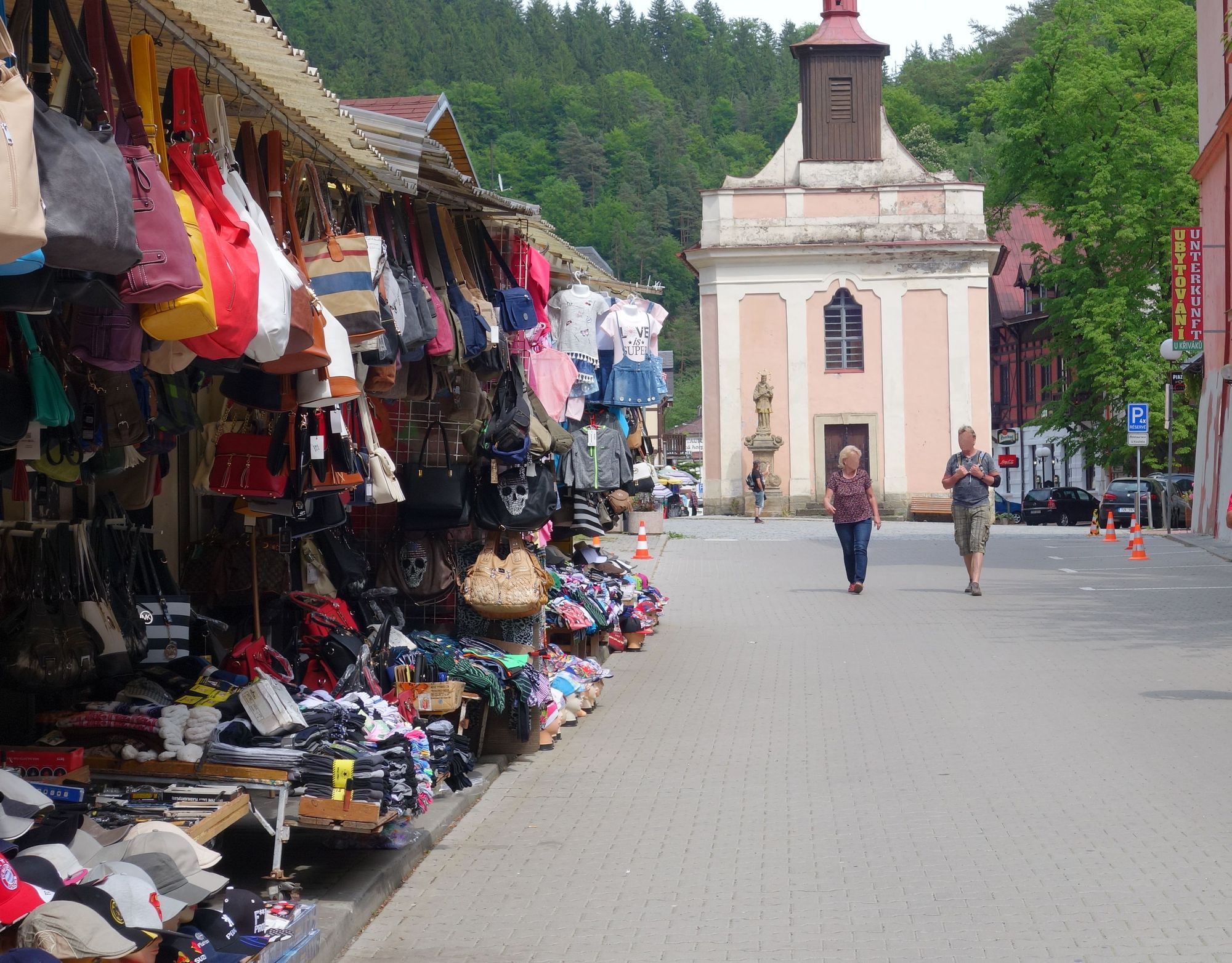
The border village of Hřensko (Herrnskretschen) is working on its image. Until now, it was not only known for the Edmundsklamm and Wilde Klamm gorges, but also for the many market stalls selling all kinds of goods of dubious quality. Recently, Mayor Kateřina Horáková announced that some of the market stalls would have to disappear. These are the ones that stand on land owned by the municipality. Some stalls take up the entire footpath. As a rule, they stand in front of houses, but some are also separate structures.
New measurements have shown that there are around 20 stalls. The traders also had a permit for this. However, this dated back to 2004 and expired a year ago. Now the municipality has given the traders, who belong to the Vietnamese minority, an ultimatum until the end of the year to remove their stalls. The first stall has already been removed. For the first time in more than 20 years, the sidewalk and the front of the building have been exposed again.
The customers at the stalls and booths come exclusively from Germany or are tourists who are interested in the supposedly cheap goods. For Czech customers, the stalls are completely uninteresting. In the Czech Republic, however, the stalls are one reason for Hřensko's dubious reputation.
A bench commemorates Bohemian refugees
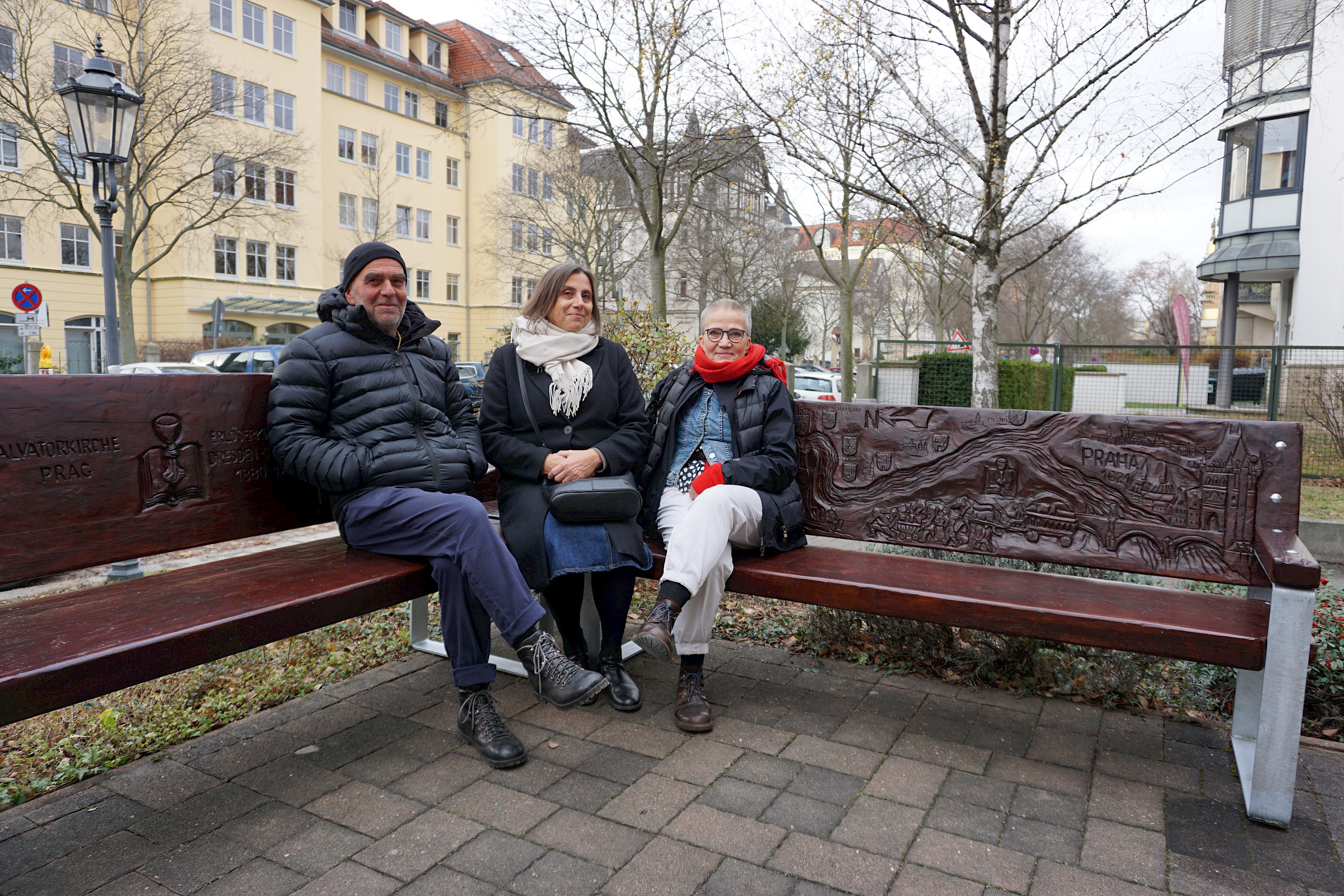
A trek passes by. Wagons full of luggage, pulled by horses, but also just by people. Above it an open book and a chalice. It quickly becomes clear that the book is the Bible. And the refugees are Protestants. On the right is Prague and the year 1621, on the left Dresden, with the Vltava and Elbe rivers in between. The Thirty Years' War was raging at the time. The united Protestant armies suffered a crushing defeat at the hands of the imperial troops at the Battle of White Mountain, which was still outside Prague at the time. And even though the war continued for another 27 years, the fate of Bohemia and all those who adhered to the Protestant faith was sealed. Their leaders were killed and their heads and bodies were displayed on the Old Town Square for months as a deterrent. Everyone else either had to return to the bosom of the Catholic Church or flee.
All of this can be found on the wooden backrests of a bench, depicted by the wood sculptor Ivo Švejnoha from Kytlice (Kittlitz) near Nový Bor (Haida) in the Czech Republic. The bench stands in front of the Johanneshaus in Dresden (Haydnstr. 23) and was inaugurated on the morning of the 2nd Advent.
But why is there a bench with motifs of Bohemian exiles in front of a parish hall in Dresden? It is a reminder of the Bohemian traces in Dresden, which have faded and become blurred as a result of the war and several municipal reforms. Bohemian exiles had also settled in Dresden. They founded the Church of the Redeemer, true to their Prague home parish of Salvator, Latin for redeemer. However, the church building in Paul-Gerhardt-Straße was badly damaged during the air raids in February 1945 and demolished in 1962. You can find out more about the history of the parish here.
Today the parish is called Johannes-Kreuz-Lukas. Now the bench not only commemorates the origins of the congregation, but also the old Church of the Redeemer, which is also depicted on the backrests together with the Salvator Church in Prague. And that's not all: two chalices from the Bohemian sisters and brothers in faith have also remained with the congregation. However, they have only recently returned, having been stored away for a long time or were part of the Saxony Bohemia 7000 exhibition in Chemnitz seven years ago. Jana Cejpová from the Salvator parish council was present at the inauguration. Both congregations maintain a close partnership to this day. The production of the bench, whose frame was made of hot-dip galvanized steel by the company Metallgestaltung & Schmiede Andreas Nestler in Freital, was financially supported by the Dresden-Blasewitz district advisory council.
The backrests and seats of the bench are not Ivo Švejnoha's first work in Dresden. There is already one of his works in the open air in Zschonergrund - it is also a bench.
Osek Monastery Library makes a guest appearance in Teplice
The library of the Cistercian monastery of Osek (Ossegg) is not normally open to visitors. But that will change until February. The volumes, some of which are over 500 years old, have been temporarily moved to the Teplice Regional Museum. This is located in the former castle. A room has been created there that is a complete replica of the library in Osek. This gives visitors the feeling that they are actually in the monastery in Osek.
A selection of the predominantly baroque volumes is on display until February 15. The library itself was founded in 1725. Not only books, but also statues of saints such as John Chrysostom, Thomas Aquinas and Bernard of Clairvaux are on display. Small prints are also on display, some of which are unique. A special feature is the painting of Benedikt Littwerig, the founder of the library. The portrait does not come from the library, but from the depot of the regional museum, and was previously known as "Unknown Monk". It was only in preparation for the exhibition that it was established that it was the founder of the library, Littwerig.
The exhibition is open every day except Mondays during the museum's usual opening hours, i.e. from 1 p.m. to 5 p.m., and at weekends from 10 a.m. to 12 noon.
If you would like to receive our weekly review regularly in your email inbox, sign up for our newsletter.