

Meanwhile in Czechia... 9/26
06.03.2026
Fuel prices in the Czech Republic are rising more slowly
Suddenly refueling in the Czech Republic is popular with Germans again. German media reported long queues at filling stations right on the border. One station in Dolní Poustevna (Niedereinsiedel) near Sebnitz is even said to have been sold out at times. The reason for the high demand is the sharp rise in fuel prices for petrol and even more so for diesel in Germany following the attack by Israel and the USA on Iran.
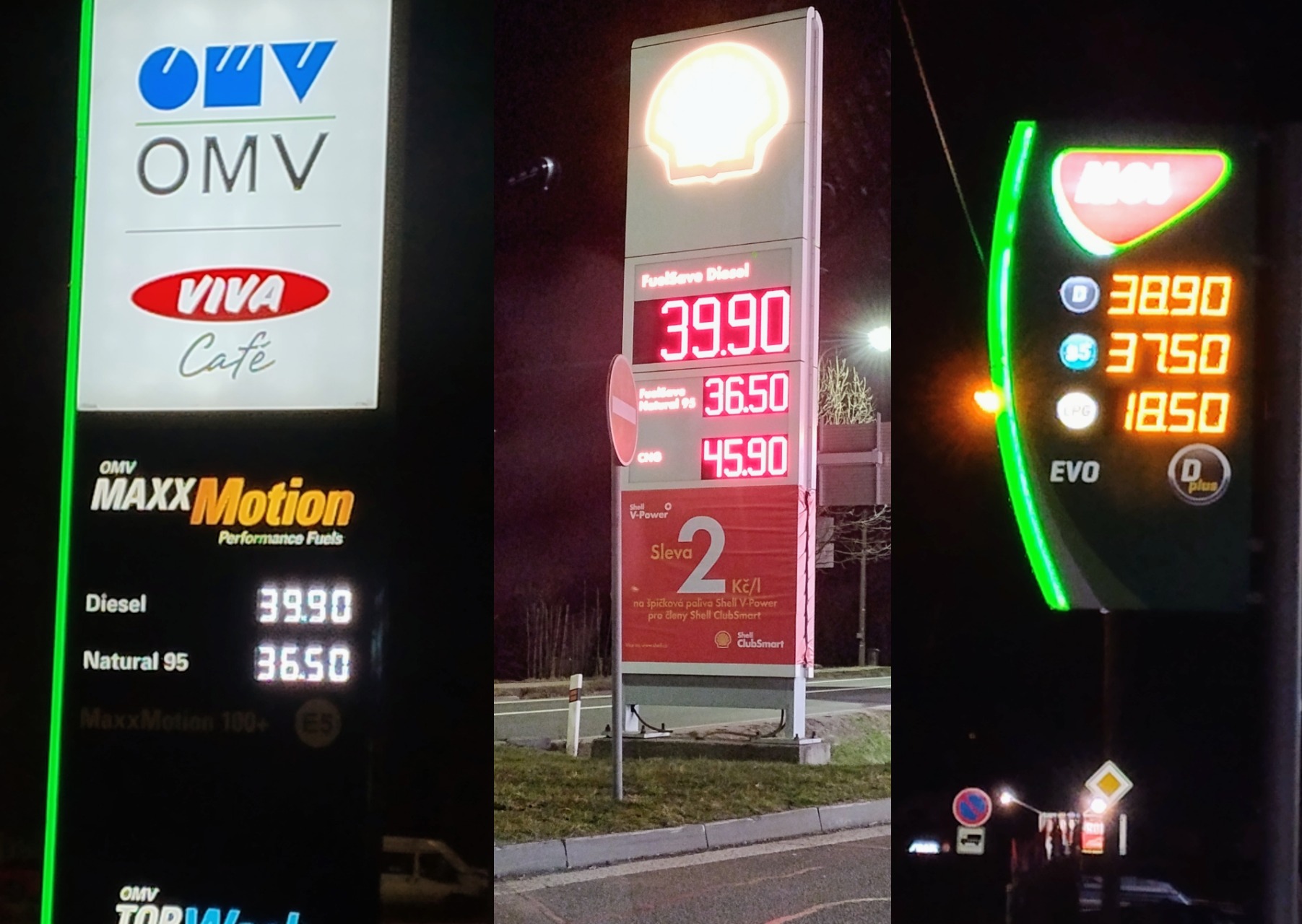
But the situation is beginning to change. Just a few days after the rush of German drivers, prices in the Czech Republic are also rising, albeit more slowly. The daily newspaper Děčínský deník reported on Thursday that prices for a liter of Natural 95, which is equivalent to standard German petrol, in Děčín (Tetschen) were between 33.50 crowns (1.40 euros) and 36.40 crowns (1.52 euros). For diesel, drivers even have to pay between 34 and 35 crowns per liter on average, which corresponds to between 1.42 euros and 1.46 euros.
According to Děčínský deník, prices have risen by an average of between 8 and 25 cents per liter since the attack on Iran, which is significantly slower than in Germany.
According to the daily newspaper Hospodářské noviny, one reason for this is the new pricing policy of the petrol stations EuroOil and RobinOil. They belong to the state-owned oil company Čepro, which also operates a refinery and oil storage facility and maintains an oil reserve on behalf of the state. Both EuroOil and RobinOil keep the price as low as possible at their 300 or so filling stations. The daily concludes that this is political will from an interview on the Echo24 server with Industry Minister Karel Havlíček (ANO) on Thursday, in which he explained the pricing policy of Čepro petrol stations: "They keep the price as low as possible. They will neither speculate nor take advantage of the situation. Then everyone can see for themselves what the real situation on the market looks like when someone starts to raise prices." This policy appears to be working for the time being, as around 300 petrol stations constitute a certain amount of market power. In addition, the Ministry of Finance has irregularities in pricing investigated.
At normal times, the price difference between petrol in Germany and the Czech Republic is around 30 cents per liter.
"Chaotic" repatriation from crisis area
In contrast to the reaction to the rise in oil prices, the government appears to be acting in a less coordinated manner when it comes to the repatriation of Czech citizens from the Middle East. In particular, Foreign Minister Petr Macinka (Motorist Party) once again drew inglorious attention to himself when he advised citizens in the crisis region to "enjoy the time. It will certainly be an experience," said the Foreign Minister. This was no consolation for the approximately 5,000 Czech citizens affected. At almost 4,000, most of them are in the United Arab Emirates. Oman, which has temporarily halted the authorization for evacuations, poses a particular challenge. More than 1,300 people are stuck there, the second-highest number of Czech citizens in the region. Several hundred people are in Jordan, Qatar, Saudi Arabia and Israel.
Pirate MP Zdeněk Hřib criticized the government's communication chaos in particular: "Chaotic as in Corona times," said the pirate. Many citizens felt poorly informed and there was a lack of government support. At the very beginning, Foreign Minister Macinka had said that the government was not planning any evacuation flights. In the meantime, he has apparently changed his mind or was pressured to do so within the government. The planning of evacuation flights began on Monday with the help of the Czech airline Smartwings and the Czech military. The first planes landed in Prague on Tuesday. They came from Oman, Egypt and Jordan. On Wednesday, the returnees were told by Foreign Minister Petr Macinka that they would have to pay for their return flight themselves, on average 15,000 crowns per person (625 euros), which Prime Minister Andrej Babiš categorically rejected. On Thursday, Macinka acted as if he had never mentioned that anyone would have to pay for their flight.
However, the thousands of Czechs who are in the Far East in Thailand, Vietnam or the Maldives are left to fend for themselves. As a rule, they have booked flights with a transfer in the Gulf region. Prime Minister Andrej Babiš has announced that the government will not be able to help them for the time being.
Deutsche Bahn closes Elbe Valley line

Rail travelers must be prepared for new closures in the Elbe Valley in the direction of the Czech Republic. The years-long renovation and expansion of the Bad Schandau freight station have been completed. However, further modernization work is now pending. Deutsche Bahn is therefore planning new closures in the coming months. Specifically, the section between Bad Schandau and the border town of Schöna will be closed daily from March 15 to 22 from 9 am to 5 pm. After that, it will be closed every Monday except public holidays between 9 am and 7 pm until November. Another total closure is planned from April 14 to 19 from 9 am to 5 pm. There will also be night closures from April 13 to 17 and from April 25 to 29 from 9 pm to 3 am. During the full closures, buses will run between Dresden and Ústí nad Labem (Aussig) to replace the Eurocity service. Further closures will follow from June to November 2026. Details will be announced by Deutsche Bahn in good time.
Irrespective of this, there will still be restrictions on the section between Heidenau and the spa town of Rathen until April 11. During the day, only one track can be used at a time due to construction work. At night, there will be total closures.
Hardly any savings from relocation to the Czech Republic
The relocation of production facilities from Germany to Poland or the Czech Republic brings less savings for companies than hoped for. As the Handelsblatt reports, citing a study by the consulting firm Strategy&, in addition to the comparatively small savings in wages, there are other problems such as a shortage of skilled workers and insufficient automation in the industry.
The study was prompted by increased investment by German industrial companies in neighboring countries to the east, as labor costs in Germany are 30 percent higher than the EU average. The declining attractiveness of China in recent years has caused companies to focus more on their immediate surroundings. This is why the two most popular countries between 2015 and 2024 were Poland and the Czech Republic.
However, hopes of greater savings are often disappointed. Important disadvantages of the region are labor costs, which have risen three and a half times faster than productivity in recent years, the shortage of skilled workers for industry, which would be 16 percent greater than in Germany, and energy prices, which have almost tripled in five years.
Cities in the border region invest in swimming pools

The Aquapark in Děčín is one of the main attractions in the city on the Elbe. Almost 300,000 people visit it every year. But that's also the problem. The facility, which was supplemented with a modern fun pool at the turn of the millennium, is reaching its capacity limits. In the mornings, school classes are held here, and daycare centers also come. Clubs train in the afternoons. There are only ever short time slots for the public in the morning, around midday and then in the evening.
The city of Děčín is therefore planning to expand and modernize the facility. The plan is for the clubs to train outdoors all year round. Even though the water is warm thanks to thermal springs, the pool also needs to be covered to ensure year-round training. At the same time, the 50-meter pool needs to be replaced with a new one. Initial designs are to be presented to the public this spring. The costs are estimated at up to 200 million crowns. This corresponds to around 8.3 million euros. This is far too much for the budget of the town of 50,000 inhabitants. Therefore, the expansion can only start if a suitable funding program is launched.
Not only Děčín, but also Rumburk (Rumburg) in the Schluckenauer Zipfel is planning to modernize its indoor pool. Exact plans are not yet known. The only thing that is certain is that the technology is to be replaced and a photovoltaic system installed. This is also to be connected to the photovoltaic system on the roof of the nearby school. In this way, the city wants to save on operating costs. A sauna world is also to be installed.
Rumburk is also dependent on subsidies for the modernization. The costs there are also around 200 million crowns. The modernization would also have cross-border effects, as clubs from nearby Saxony already train in the hall today. The sauna should make the hall even more interesting for guests from Saxony.
Exhibition from the perspective of plants
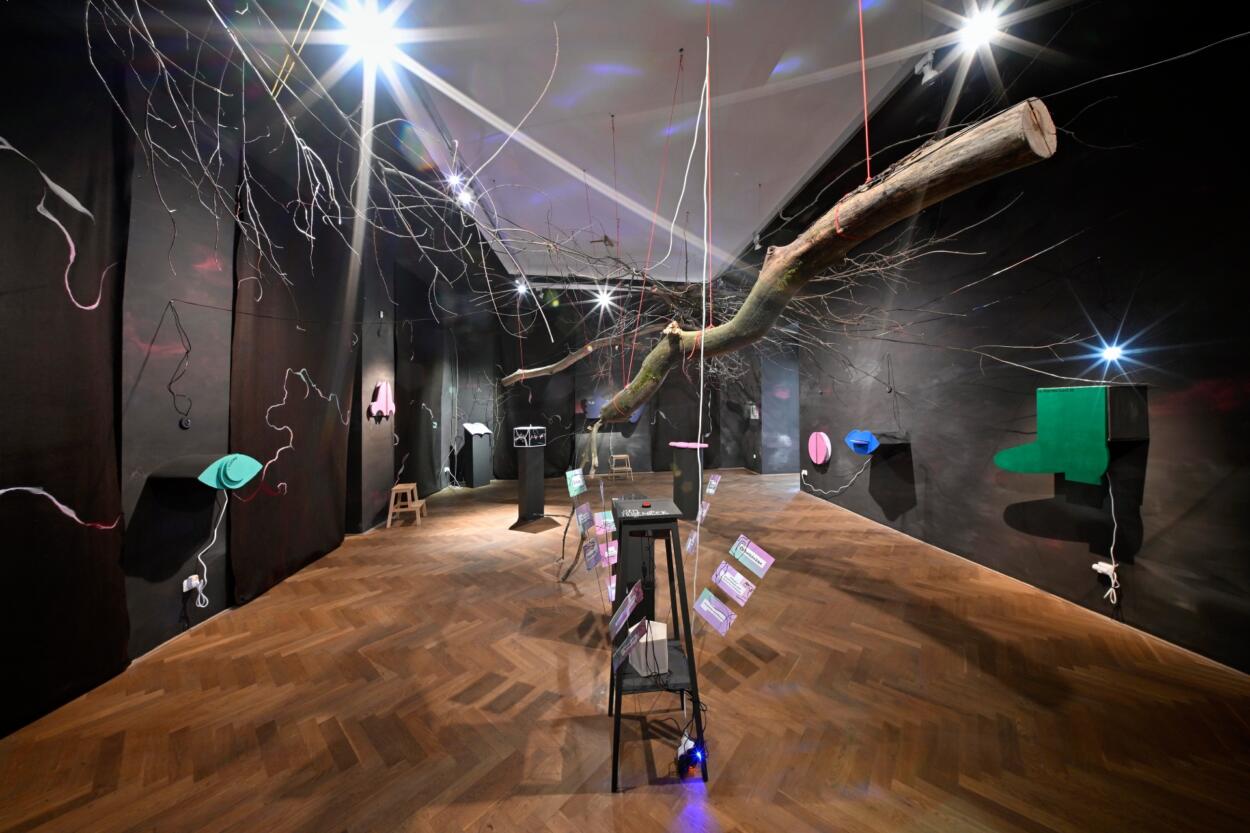
What does the world actually look like for plants? An exhibition at the Regional Museum in Ústí nad Lab em aims to help visitors put themselves in the shoes of plants. The exhibition entitled "Planeta Plantae" (The World of Plants), which opened at the end of February, is spread over three rooms and includes real plants, mostly houseplants, which will survive the exhibition until August 2. In the first room, the exhibition organizers show how plants have shaped the world and made life possible for humans and animals. The second room shows the life of roots underground. In the third room, the exhibition shows how plants and humans are similar and how they differ.
The exhibition is presented in a multimedia format and promises to be light on text, making it attractive even for visitors who do not speak Czech. There are also several interactive features. The exhibition can also be easily combined with a visit to the permanent exhibition "Our Germans" in the same building. However, visitors will look in vain for exotic plants. The available space does not allow for this. However, a visit to the botanical garden in Teplice is recommended. An exhibition on plant scents and perfumery is running there until the end of March.
The exhibition in the museum in Ústí is open daily except Mondays from 9 am to 6 pm.