

Meanwhile in Czechia... 27/26
10.07.2026
Czech Republic Restores Graves of Prominent Germans
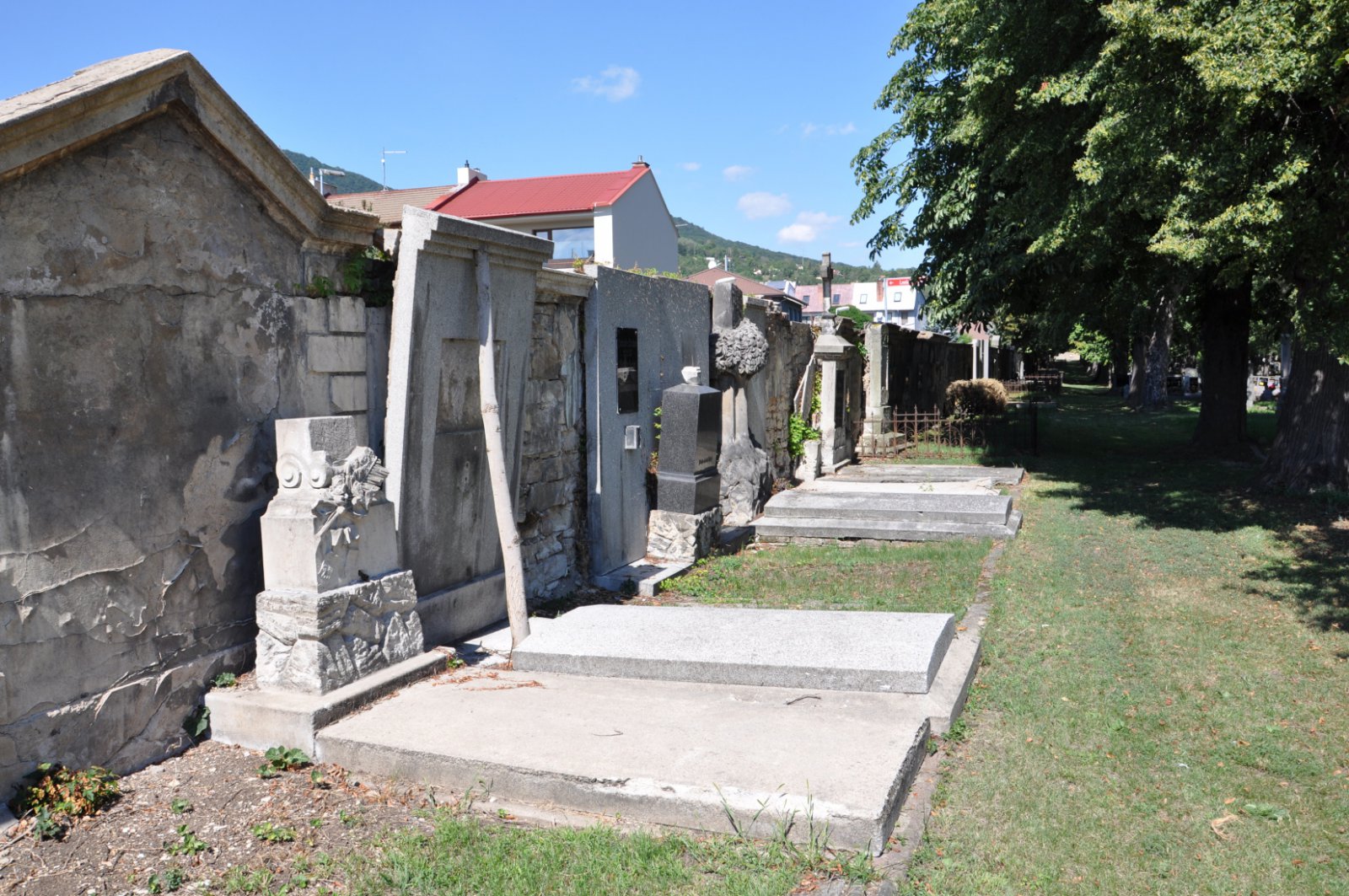
The Czech Ministry of Regional Development is funding the restoration of gravesites and monuments honoring prominent Germans. The ministry is allocating approximately 9.5 million crowns (about 390,000 euros) to 55 projects. Funding covers up to 70 percent of the total costs. The projects involve sites in seven districts of the Czech Republic, primarily in the border region. For example, the ministry is providing 150,000 crowns (about 6,250 euros) to restore the grave of Franz Tschinkel in Lovosice (Lobositz). In 1856, Franz Tschinkel, together with his brothers and his father, founded a factory in Lovosice to produce coffee substitutes from chicory. The factory grew into a company that bore the name “Deli” starting in 1938 and gave rise to brands known today such as Deli (bars), Tatranka (waffles), and Esíčka (cookies). The company is now part of the Mondelēz International group.
Funding of 56,975 crowns is also being provided to support the restoration of the Brettschneider family grave in Děčín (Tetschen). Rudolf Brettschneider was the owner of the local printing plant.
The funding from the ministry is based on agreements in the 1992 German-Czechoslovak Treaty on Good Neighborly Relations and Friendly Cooperation.
Court Confirms Extradition of Right-Wing Extremist Liebich
The Czech Republic is extraditing the far-right extremist Marla Svenja Liebich to Germany. This was confirmed by the Supreme Court in Prague. The ruling previously handed down by the District Court in Plzeň (Pilsen) is now final. Liebich had filed an appeal to prevent her extradition. She had been arrested in April in Aš on the basis of an international arrest warrant issued by the public prosecutor’s office in Halle/Saale. Liebich had already been sentenced in 2023—at that time still as a man named Sven—to 1.5 years in prison for incitement of the people, defamation, and insult; however, she evaded her sentence by fleeing to the Czech Republic.
Amnesty Yields 6,000 Weapons
It was one of the most successful gun amnesties in Czech history. From the beginning of the year through the end of June, unregistered firearms could be legalized in the Czech Republic without penalty. More people took advantage of this opportunity than in similar amnesties. In total, not only were 5,918 weapons turned in, but also 213,000 rounds of ammunition and 64 kilograms of explosives.
However, many of the weapons were historical and, as such, sometimes very valuable—for example, a British Sten MK II machine gun. It was with such a weapon that the 1942 assassination of the brutal Nazi Vice-Reich Protector Reinhard Heydrich was carried out. In the Ústí district, among the weapons turned in was a German Vollmer-Erma EMP machine gun chambered for 9 mm Luger rounds, which would be worth around 24,000 crowns today (approx. 1,000 euros).
The weapons are being cataloged and subjected to ballistic testing to ensure that they were not used in any criminal offenses in the past. If the owner of the weapon meets all legal requirements, they will have the weapon returned to them upon request and after registration. The remaining firearms are added to the collection of the Police Museum or the Institute of Criminalistics. Firearms for which there is no interest are destroyed.
Bílina River Cleared of Pipes
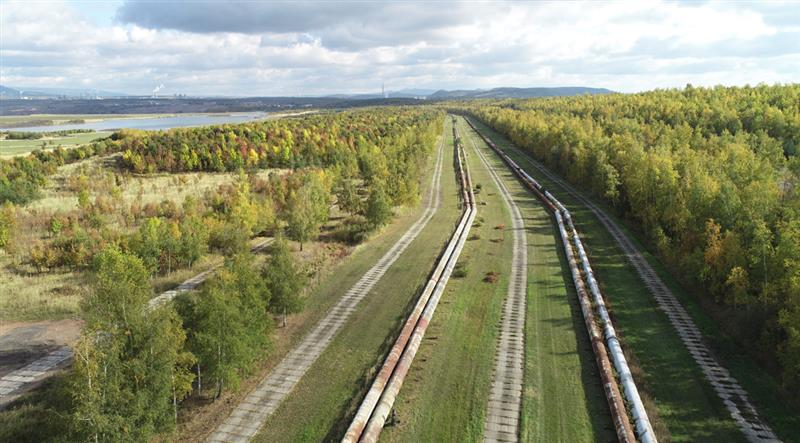
The Bílina (Biela) River will once again flow in its natural riverbed in the coming years. After 40 years, it is to be freed from the pipes and made visible again. The river had been channeled through pipes along a three-kilometer stretch between the cities of Chomutov (Komotau) and Most (Brüx) to ensure safe lignite mining. To achieve this, the river was forced into four large pipes. The area served as a spoil pile for mining, and there was a risk of water breaking through into the open-pit mine if the river were left to flow on the surface. Many communities in the area were also demolished because of the lignite mining, including the small town of Ervěnice (Seestadtl), which once had over 5,000 residents.
Since the Bílina is to flow in a near-natural state again in the future, its course will be extended to a total of 4.7 kilometers due to its meanders. Gradually, flora and fauna are expected to return to the river, and it is set to become a paradise for anglers.
The Bílina was once considered the most heavily polluted river in the Czech Republic. It rises in the Ore Mountains as a clear mountain stream, later flows not only through the coal-mining region but also past many chemical plants, and empties into the Elbe River in Ústí nad Labem (Aussig).
New Trail of Sacred Monuments in Šluknov
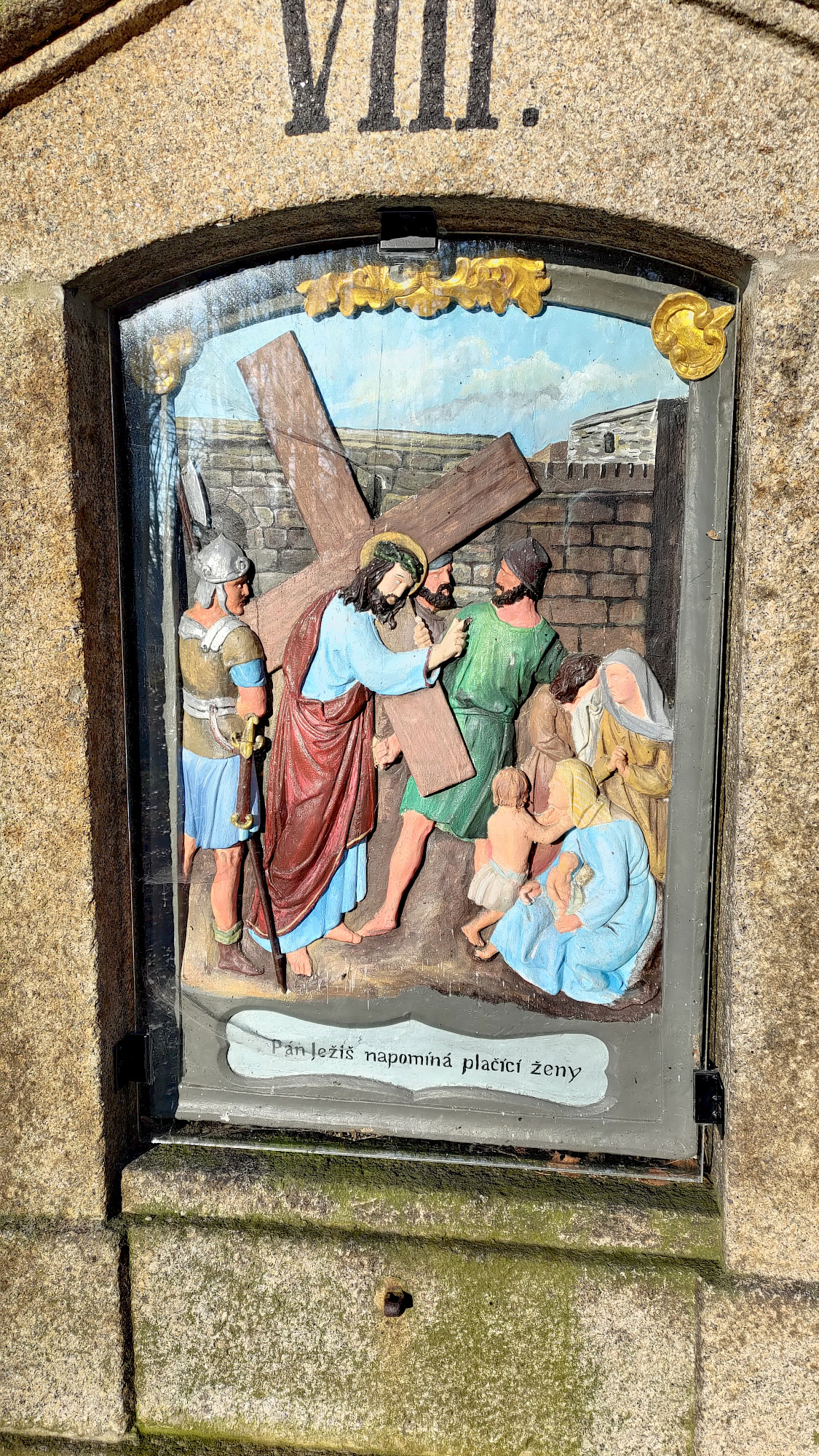
In the small town of Šluknov (Schluckenau), visitors can now explore a variety of religious monuments along a new educational trail. The 11-kilometer route connects a total of 18 monuments, including crosses, chapels, and Stations of the Cross. Three of these are located in the fields around Šluknov alone. The Schluckenau region, already rich in religious monuments, is particularly well-endowed in the region’s namesake town. The Stations of the Cross near the town center is also the oldest in the region. The many monuments date back to the period before 1945. By the time of the Recatholization, at the latest, the region had become one of the most devout in all of Bohemia and Moravia. Martin Chroust, head of the Department of Development and Environment for the city of Šluknov, attributes this to the region’s proximity to Saxony, which had been Protestant since the Reformation and was bypassed by the Recatholization. “The predominantly German inhabitants of the Zipfel were surrounded by other Germans, albeit of the Protestant faith. By erecting the crosses and statues, they wanted to demonstratively show them their Catholic devotion,” explains Chroust. With the new, yellow-marked trail, information panels were installed at five monuments for the first time.
Last year, four circular trails were marked in and around Šluknov. They are dedicated to the themes of “Architecture,” “Quarries,” “Fukov—Path Through the Vanished Village,” and “Grand Scenic Loop.”
Church in UNESCO Old Town Gets a New Facade
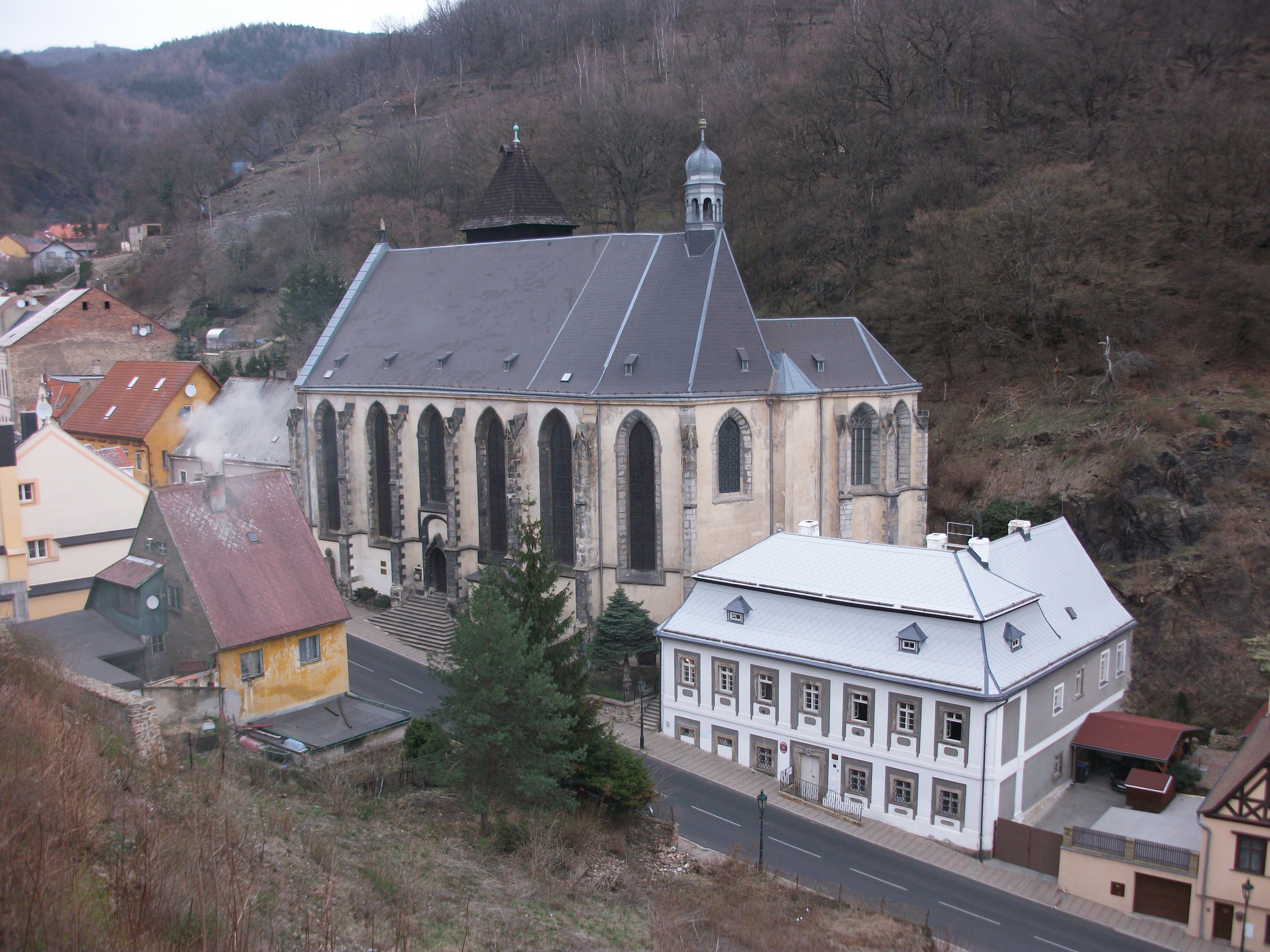
The facade of the late-Gothic Church of the Assumption in Krupka (Graupen) is undergoing extensive renovation. The church is one of Krupka’s most important architectural landmarks and is located in the heart of the UNESCO-protected Old Town. The Old Town is part of the UNESCO Mining Region.
The renovation is not being carried out by the church itself, but by the city, which has owned the building since 2016. Since then, a complete renovation of the church’s interior has already been carried out. The renovation of the facade also includes structural reinforcement and the restoration of numerous sculptural elements. Completion is scheduled for October 2027. The costs amount to nearly 20 million crowns (830,000 euros). The city is receiving financial support for the facade renovation from the Ústí Region and the Ministry of Culture. However, the city is contributing the majority of the approximately 13 million crowns.
If you’d like to receive our weekly recap regularly in your email inbox, sign up for our newsletter.