

Derweil in Tschechien... 5/25
31.01.2025
Prague to be tunneled under
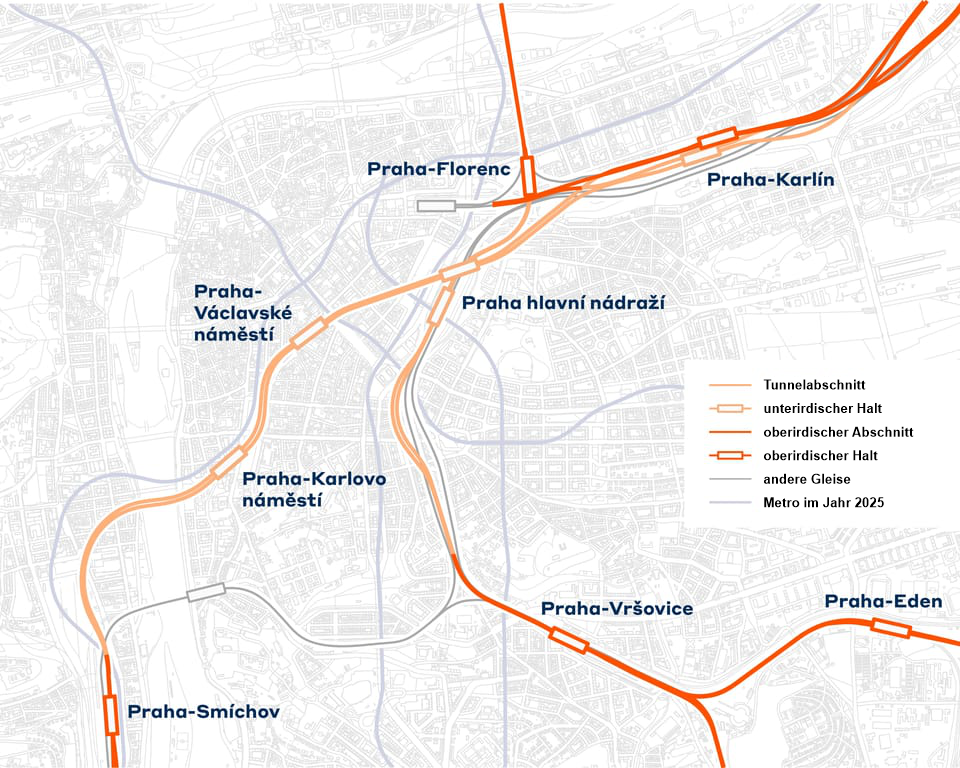
The Czech Railway Administration (Správa železnic) is planning a major project of underground regional rail links in the center of Prague. It consists of two intersecting tunnels with a total length of 10.6 kilometers, a new two-level station under the main railway station and four other new underground stations. This will also provide the airport with a direct connection to the main station. The Ministry of Transport has now selected the preferred option from a feasibility study, for which the necessary planning and approval processes are now beginning.
Construction work will begin in 2035 at the earliest, and train services are not expected to start before 2047. At current prices, the project is expected to cost around 7.4 billion euros in total. The aim is to handle the ever-increasing commuter traffic from the Prague region to the city in a sustainable way. The existing tracks can no longer accommodate additional trains, and the Central Bohemian Region is expecting a population increase of 300,000 people over the next 25 years.
13 mammoths found in Ústí
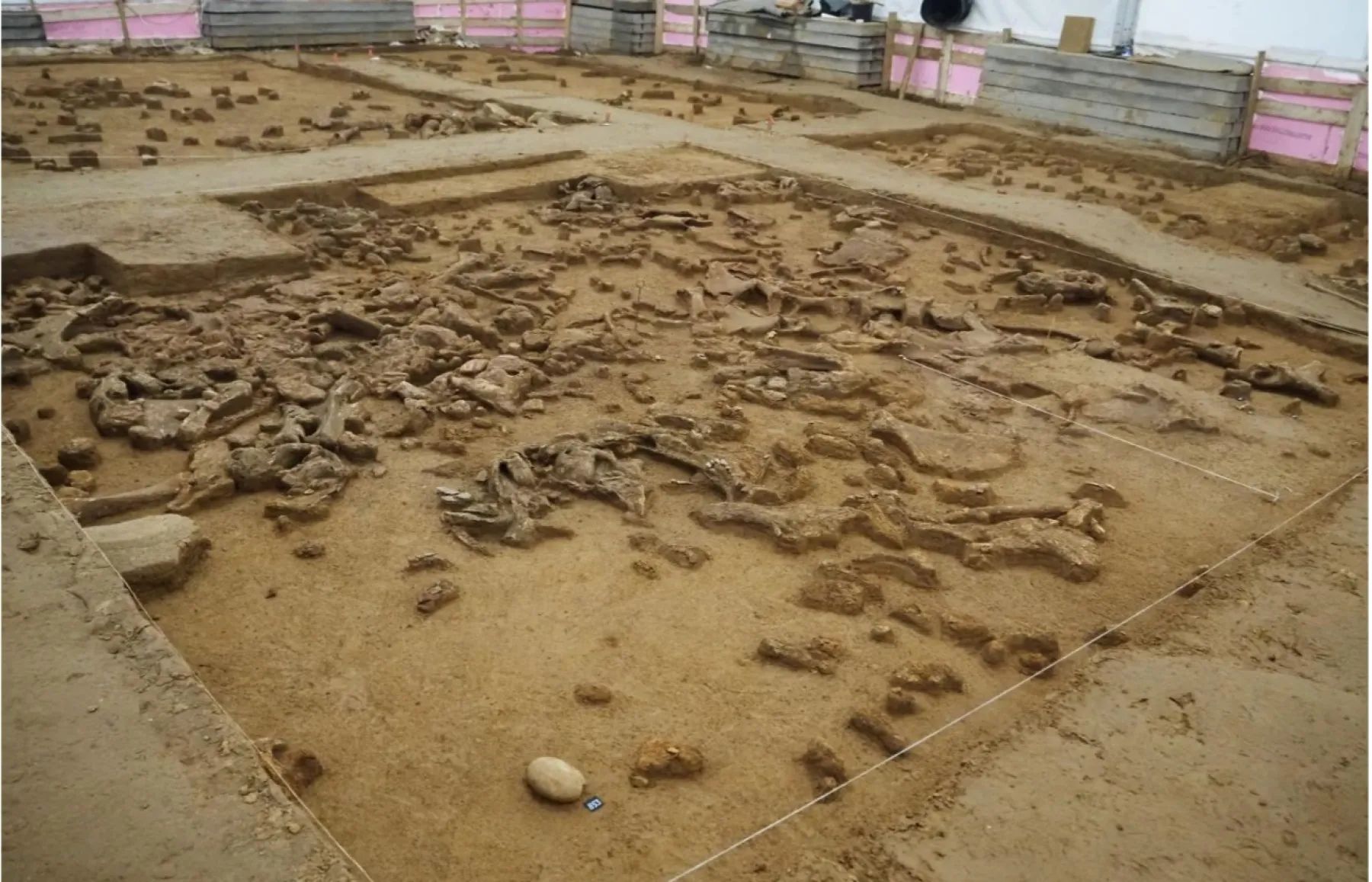
Prehistoric bone finds were discovered in November during construction work on the new large judicial complex (some also call it the Palace of Justice) in Ústí-Bukov. They have since been excavated, examined and presented to the professional public this week.
It is a camp of mammoth hunters who lived here around 22,000 years ago during the so-called Gravettian culture. The remains of at least 13 mammoths were found among thousands of animal bones as well as various man-made artifacts. The latter include stone tools and basalt blocks, which were probably used to break open the bones of mammoths.
On January 27 and 28, the site was presented to almost a hundred archaeologists and other natural scientists from the Czech Republic and abroad. In particular, they discussed the working methods, the methods for documenting the finds and the sampling strategies for researching the environment of that time. State-of-the-art methods will be used to obtain maximum information about the life of hunter-gatherers, the fauna of the period and the environment in general and its changes during the last Ice Age.
Jan Masaryk's death is investigated again
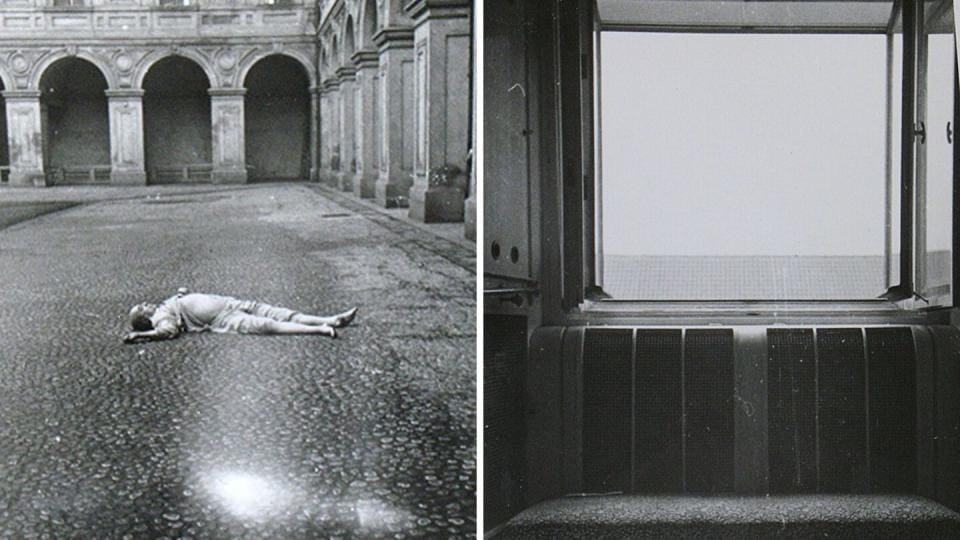
Jan Masaryk, son of the first Czechoslovak President Tomáš Garrigue Masaryk, was Foreign Minister of Czechoslovakia from 1940. He remained so even after the Communists came to power in February 1948, but on March 10, 1948, he was found dead in his pyjamas under the window of the bathroom in his official apartment in the Czernin Palace (Černínský palác), then and now the seat of the Ministry of Foreign Affairs. This is sometimes referred to as the "third defenestration of Prague". It is still not clear whether it was murder or suicide (or an accident). This question has come up again and again, especially since the Velvet Revolution. The topic has also been dealt with in literature, e.g. in a very interesting way from the perspective of Palais Czernin by Marek Toman in his book "In Praise of Opportunism" from 2021.
The investigation is now entering a new round: the Office for the Documentation and Investigation of Communist Crimes (Úřad dokumentace a vyšetřování zločinů komunismu, ÚDV), a special body of the Czech police, is once again investigating the case on suspicion of murder. The background to this is previously unknown documents from the diplomatic archives of France, the USA and Great Britain that emerged in August last year. These could contain new information and help to solve the case.
Czech transport minister in Dresden
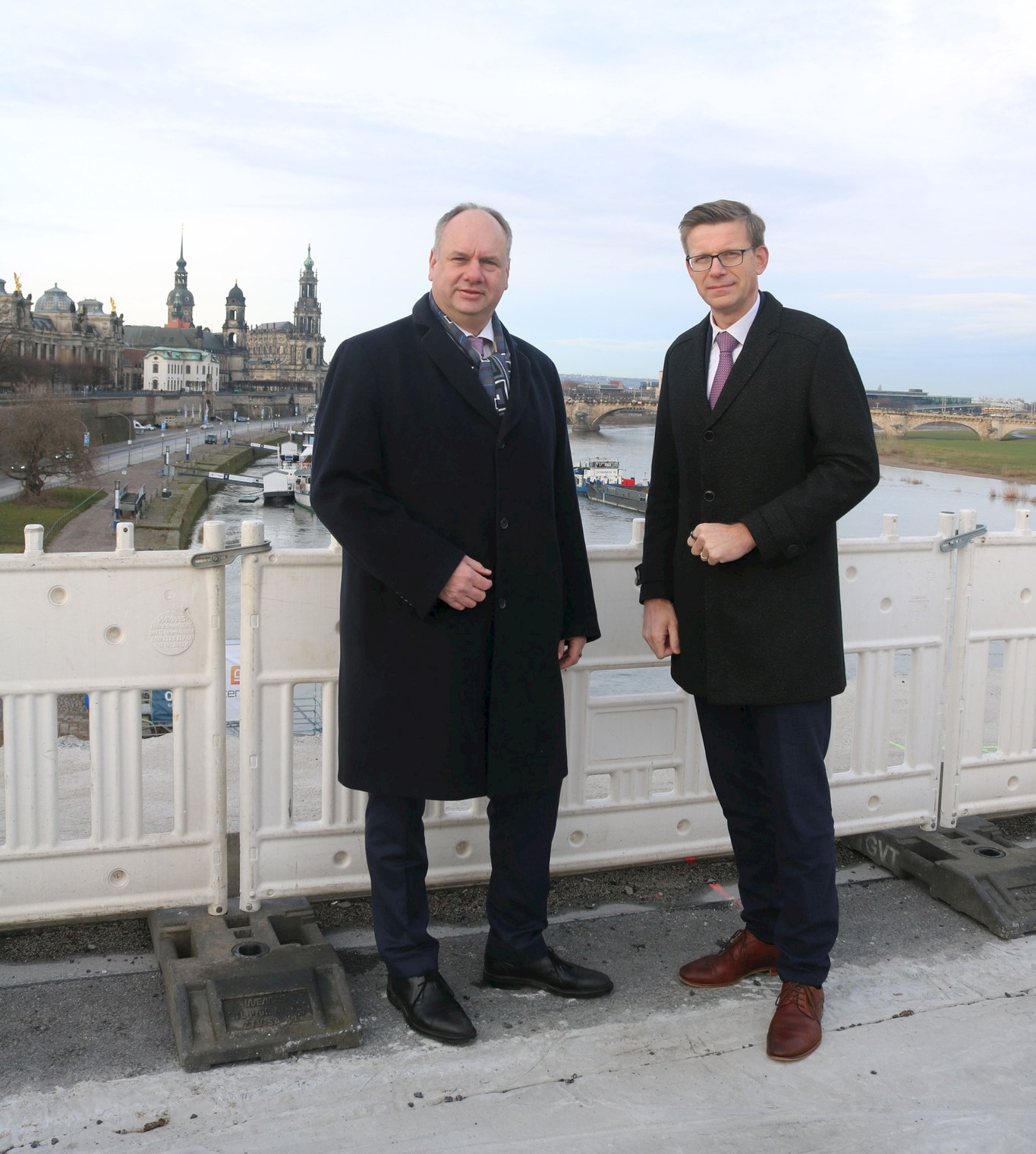
The Czech Minister of Transport, Martin Kupka, visited Dresden yesterday. The main reason for this was, of course, the limited navigability of the Elbe due to the collapsed Carola Bridge and the closed bridge in Bad Schandau. He met with Dresden's Lord Mayor Dirk Hilbert and toured the Carola Bridge with him. This was followed by a meeting with Regina Kraushaar, Saxony's Minister of State for Infrastructure and Regional Development. The high-speed rail link between Dresden and Prague was also discussed. The minister published a short video of his visit on Facebook (you can also watch it without logging in). Dirk Hilbert also commented on Facebook: He praised the Czech transport minister's visit and at the same time criticized the fact that the German transport minister had not yet announced his visit to Dresden. There would obviously be more interest in Prague than in Berlin.
Discussion about prestressed concrete roofs on industrial halls
It is not only Saxon bridges that are at risk of collapse as prestressed concrete structures, but also many roofs of industrial halls, according to Czech engineers and technicians. Similar to the Carola Bridge in Dresden, experts at the Technical University of Ostrava see a fundamental problem in errors made when installing the prestressed concrete trusses used from the 1960s onwards. Later, improper conversions also contribute to water penetrating the trusses and leading to corrosion. The researchers pointed to four collapses of such industrial halls in the Czech Republic since 2010, including a disused industrial hall in Ostrava in April 2023. The Chamber of Authorized Engineers and Technicians (ČKAIT) is now calling for increased, regular inspections of statics. In this context, the collapse of a pedestrian bridge in Prague-Troja in 2017 is mentioned as the best-known Czech example of the collapse of a prestressed concrete bridge.
Fewer traffic fatalities in the Czech Republic
Czech roads are becoming safer and safer. In 2024, the number of road deaths fell to 438, 17 fewer than in the previous year. This gives the Czech Republic a relative figure of around 40 road deaths per 1 million inhabitants. In comparison: In Germany, there were 2830 road deaths in 2024 (extrapolated), or around 34 per 1 million inhabitants.
Other positive (i.e. numerically negative) trends were the reduction in the number of seriously injured persons and pedestrians killed to the lowest level since records began, the number of cases of driving under the influence of alcohol or drugs by ten percent and the number of speeding offenses, also by ten percent.
The encouraging development in the Czech Republic is attributed, among other things, to the L17 program, which enables novice drivers aged 17 and over to drive with a mentor. This is intended to make young drivers more responsible, and there has also been a reduction in alcohol and drug-related accidents. Around 20% of novice drivers would have taken advantage of this program in 2024. There are also other campaigns such as "Kamarádi v automobilu" (Friends in the car) or "Nultá hodina autoškoly" (Zero hour driving school), which are aimed at young people.
Dry February" campaign
In other countries, there are often calls to consciously abstain from certain foods in January, e.g. alcohol ("Dry January") or meat ("Veganuary"). While these "Januaries" have their last day today,"Suchej únor" (Dry February) begins tomorrow in the Czech Republic.This campaign has been running since 2013 and, according to the organization of the same name, 1.2 million adults took part last year, i.e. around 13% of the population aged 15 and over.
At the same time, Czech breweries are recording a significant increase in the consumption of non-alcoholic beers, reports Radio Prague. According to historian Filip Vrána, it has risen by around 1/3 from 2019 to 2023. This is not a short-term fad, but a long-term trend.
More Czech beer and food in Dresden
For lovers of Czech cuisine, there is a new place to go in Dresden: the new restaurant "Babička im Rausch" has opened in Pieschen. The name has nothing to do with the grandmother's alcohol consumption. Rather, the restaurant is a kind of branch of "Babička" in Pirna, which has moved into the previous restaurant "Rausch" (formerly "Rausch&Rausch"). Operator Josef Micek is also responsible for the "Hurvinek" in the east of Dresden. For him, the installed tank beer system was the decisive reason to take over the restaurant, with which he can now offer fresh, unfiltered and unpasteurized beer from Pilsen for the first time. This is not possible in his other restaurants and is otherwise a rarity in Dresden.
If you would like to receive our weekly review regularly in your email inbox, sign up for our newsletter.
To the newsletter registration