

Meanwhile in Czechia... 19/26
15.05.2026
Czech parliament rejects Sudeten German Day
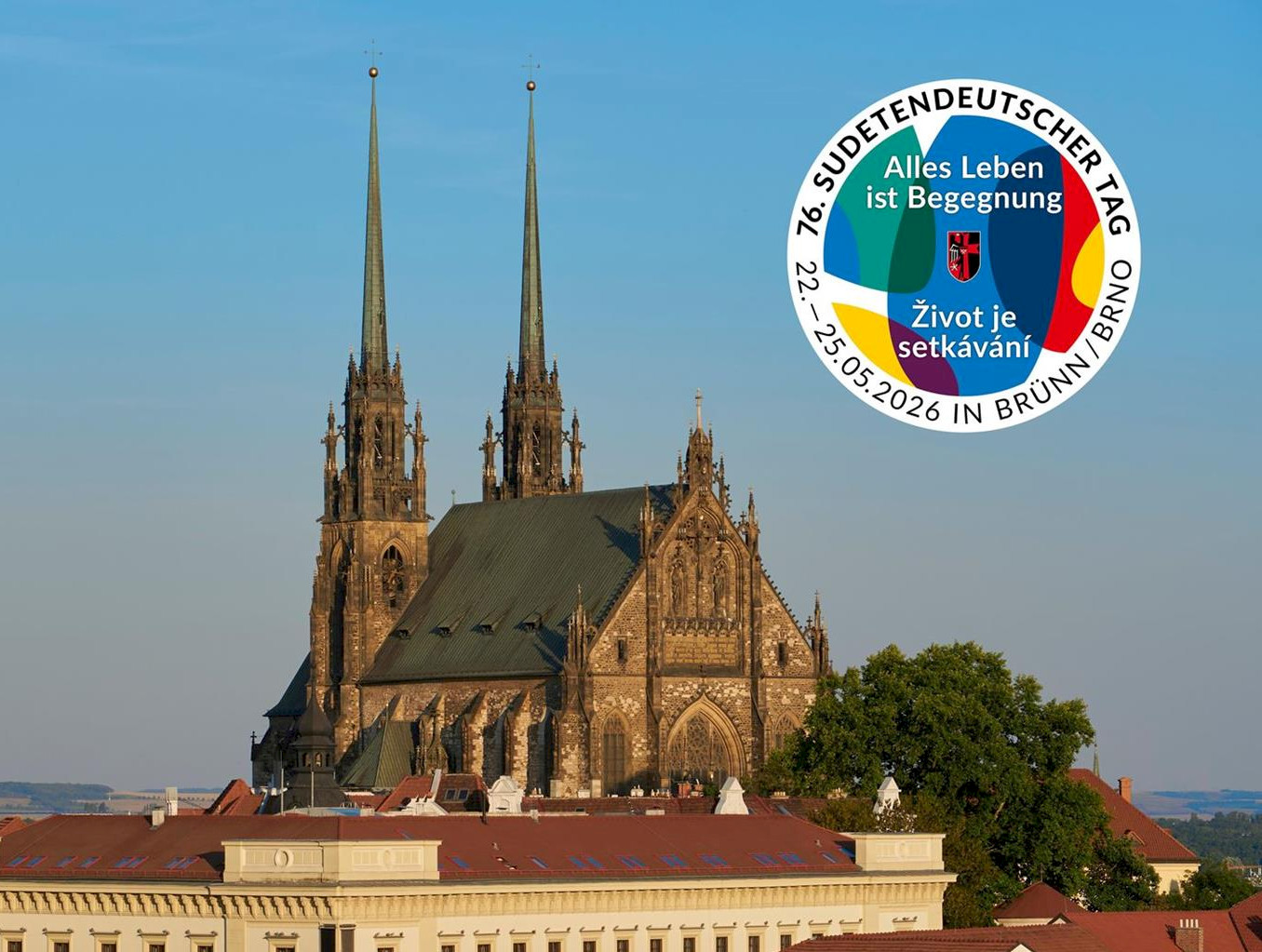
© Sudeten German Landsmannschaft
For the first time in its history, the Sudeten German Day will take place on the territory of the Czech Republic: This year, the gathering traditionally organized by the Sudeten German Landsmannschaft at Whitsun will be celebrated by invitation in Brno (Brünn) under the motto "All life is encounter".
A few days before the start of this historic event, a narrow majority in the Czech parliament has now spoken out against the meeting. A bill put forward by the Czech governing coalition of ANO, Motorists and the far-right SPD was approved by 73 out of only 77 MPs present. Three ANO MPs and the environment minister for the Motorists, Igor Červený, abstained from voting. The parliament comprises a total of 200 MPs, the governing coalition has 108 seats. The opposition MPs left the chamber in unison for the duration of the vote.
With the resolution, the parliament rejects the 76th edition of the Sudeten German Day on the soil of the Czech Republic and called on the organizers to cancel the event. The resolution also refers to those parts of the Sudeten Germans who question the conditions that have existed since the end of the Second World War. It condemns any expressions of historical revisionism, relativization of National Socialist crimes and a challenge to the legal and property relations in the Czech Republic in the post-war period, i.e. the so-called Benesch Decrees. It should be mentioned that the Sudeten German Landsmannschaft under Bernd Posselt already abandoned such demands 11 years ago. Without this progress, the invitation to Brno would never have been extended.
Speakers from the governing coalition also pointed out that relations between Germany and the Czech Republic are the best in modern history and that the rejection of Sudeten German Day should not affect them. However, the organization of Sudeten German Day in Brno was "not very happy and opens old wounds", according to the speaker of the ANO party Taťána Malá, or "a political provocation", according to the speaker of the Motorists, Minister of Sport Boris Šťastný. At the same time, the parliament emphasized the importance of the Czech-German Declaration of 1997, which confirms the existence of the Benesch Decrees, but refers to the past. An important consequence of the declaration was the establishment of the German-Czech Future Fund, which the foreign ministers of both states, Johann Wadephul and Petr Macinka, pledged to continue financing last week in Berlin.
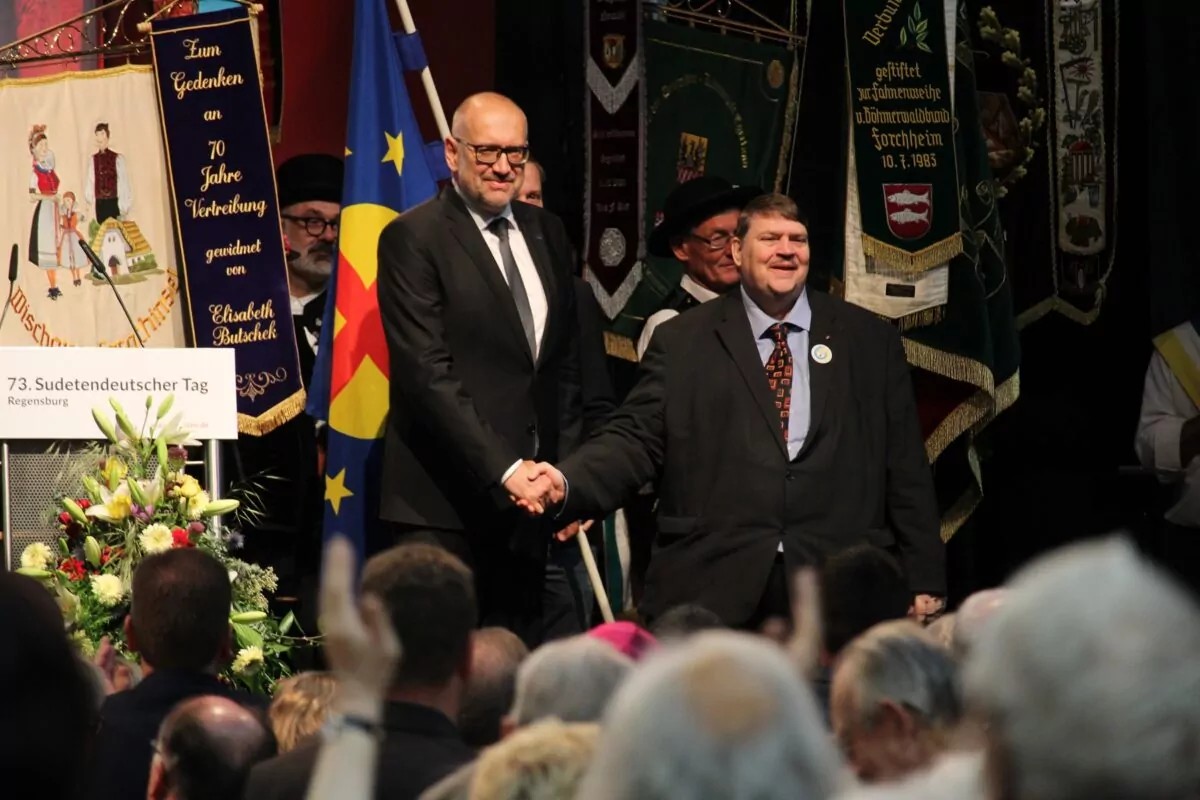
The Sudeten German Day in Brno takes place at the invitation of the Meeting Brno organization. It has been organizing the Reconciliation March for years, which commemorates the expulsion of the Brno Germans after the Second World War. The organizers confirmed that the Sudeten German Day will take place as planned despite the decision of the parliamentarians. They see the decision of the House of Representatives as an expression of weakness and fear of their own past and not an expression of national self-confidence. The chairman of the Pirate Party in Brno, Adam Zemek, described the decision as a disgrace.
The chairman of the Sudeten German Landsmannschaft, Bernd Posselt (CSU), described the vote as a "farce and a caricature of a parliamentary process". He pointed out that around a third of MPs from the governing parties did not show up or did not vote, including Prime Minister Babiš (Ano party).
In the past, the far-right SPD had already organized a protest event against Sudeten German Day. Several online petitions on the Petice.com portal with a total of almost 30,000 signatories oppose Sudeten German Day in the Czech Republic. Another petition from the beginning of May in support of Sudeten German Day has just over 6,000 signatories so far.
The number of Czech participants in Sudeten German Day has been increasing for years. At the same time, the proportion of the Czech population who have reservations about Germany and the Germans is steadily decreasing, but according to surveys it is still around 25 to 30 percent.
Scoring a few political points with this section of the population is likely to have been the main aim of the two small right-wing governing parties, both of which (especially the Motorists) are doing very badly in the polls. Even if they emphasize that they do not want to burden German-Czech relations with the decision, it is playing with fire if the anti-German card is pulled out again and again as soon as they hope to gain a small advantage from it.
Theft and return of a holy relic in the Czech Republic
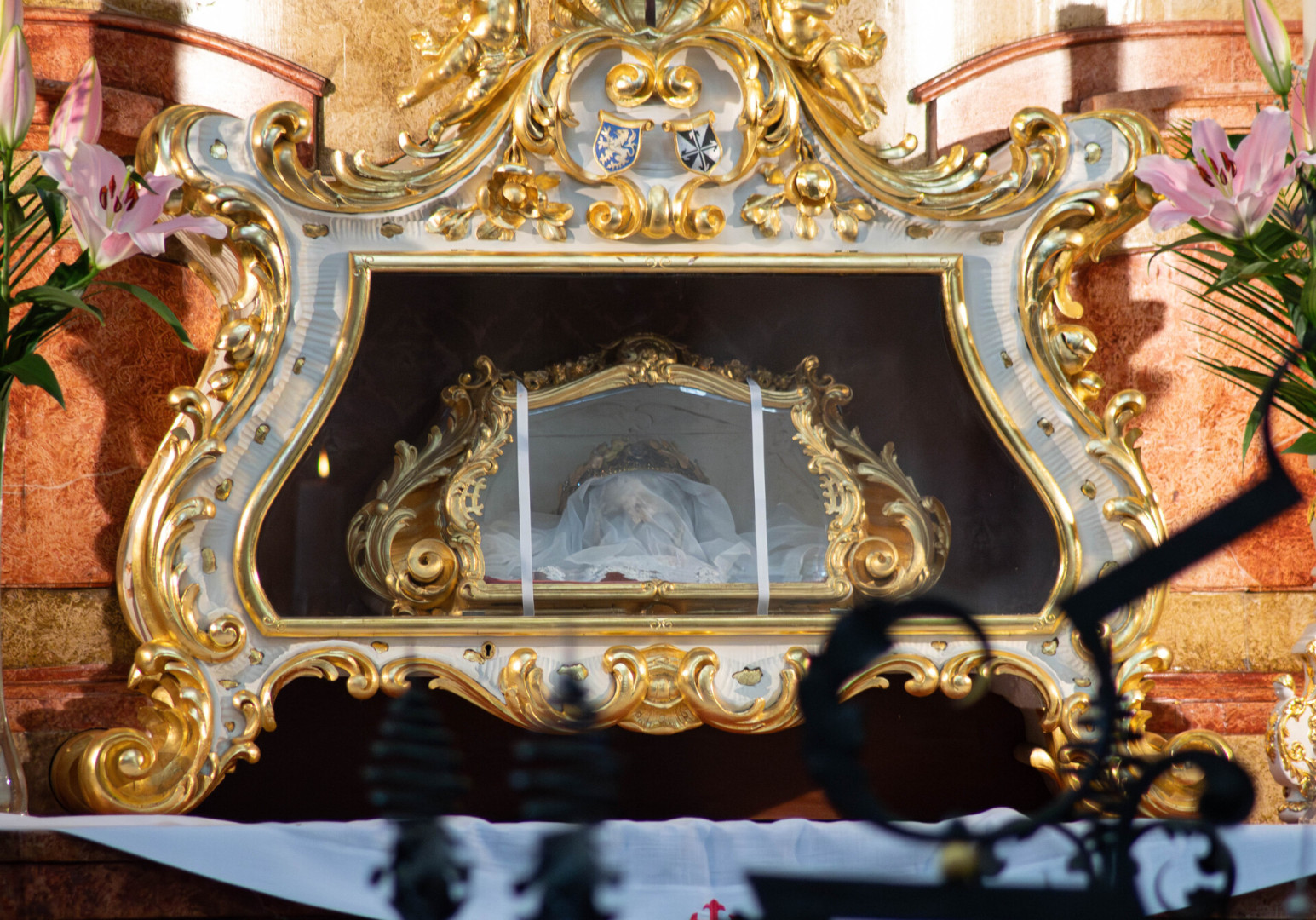
Shock in the Czech Republic: On Tuesday evening, an unknown person stole the skull of Saint Zdislava from the Basilica of Saint Vavřinec (Laurentius) in Jablonné nad Podještědí (Fork) in northern Bohemia near the border with Saxony. According to the police, the perpetrator is said to have taken advantage of the fact that the alarm system was switched off shortly before mass in the evening. As the priest was preparing for mass, he smashed the double glass of the reliquary. The priest could only see the perpetrator disappear from the church. The crime is said to have occurred between 6 and 6.15 pm.
On Thursday evening, however, the police reported that they had caught the suspect in the neighboring district of Central Bohemia. The perpetrator is said to have changed his clothes after the crime and driven to Mladá Boleslav. At the same time, the police have already indicated that they know where the 800-year-old relic is located. On Friday afternoon, they then announced further details at a press conference in Česká Lípa (Bohemian Leipa). According to the report, the perpetrator had cast the skull in concrete in order to sink it in the river. According to the police, the suspect confessed to the theft. However, he had not wanted to sell the skull. He was annoyed that it was lying separated from the body in the church and wanted to give it eternal rest.
It was still unclear on Friday whether the skull could be removed intact from the concrete. Restorers are currently attempting to do so. For believers, the skull has above all a spiritual value. Zdislava was a Bohemian noblewoman who was particularly committed to helping the poor. She also founded the monastery in Jablonné v Podještědí. She died at the age of just 32 and was laid to rest in the Basilica of St. Lawrence.
She was beatified in 1907 and canonized in 1995 by Pope John Paul II. She is venerated as the patron saint of the poor and suffering. Since 2000, she has also been the patron saint of the diocese of Litoměřice. Tens of thousands of people make a pilgrimage to the shrine with her skull every year. In Jablonné, she is always commemorated with a pilgrimage on May 30. A new shrine with bulletproof glass is to be installed in the basilica by then.
Serious riots at the soccer summit
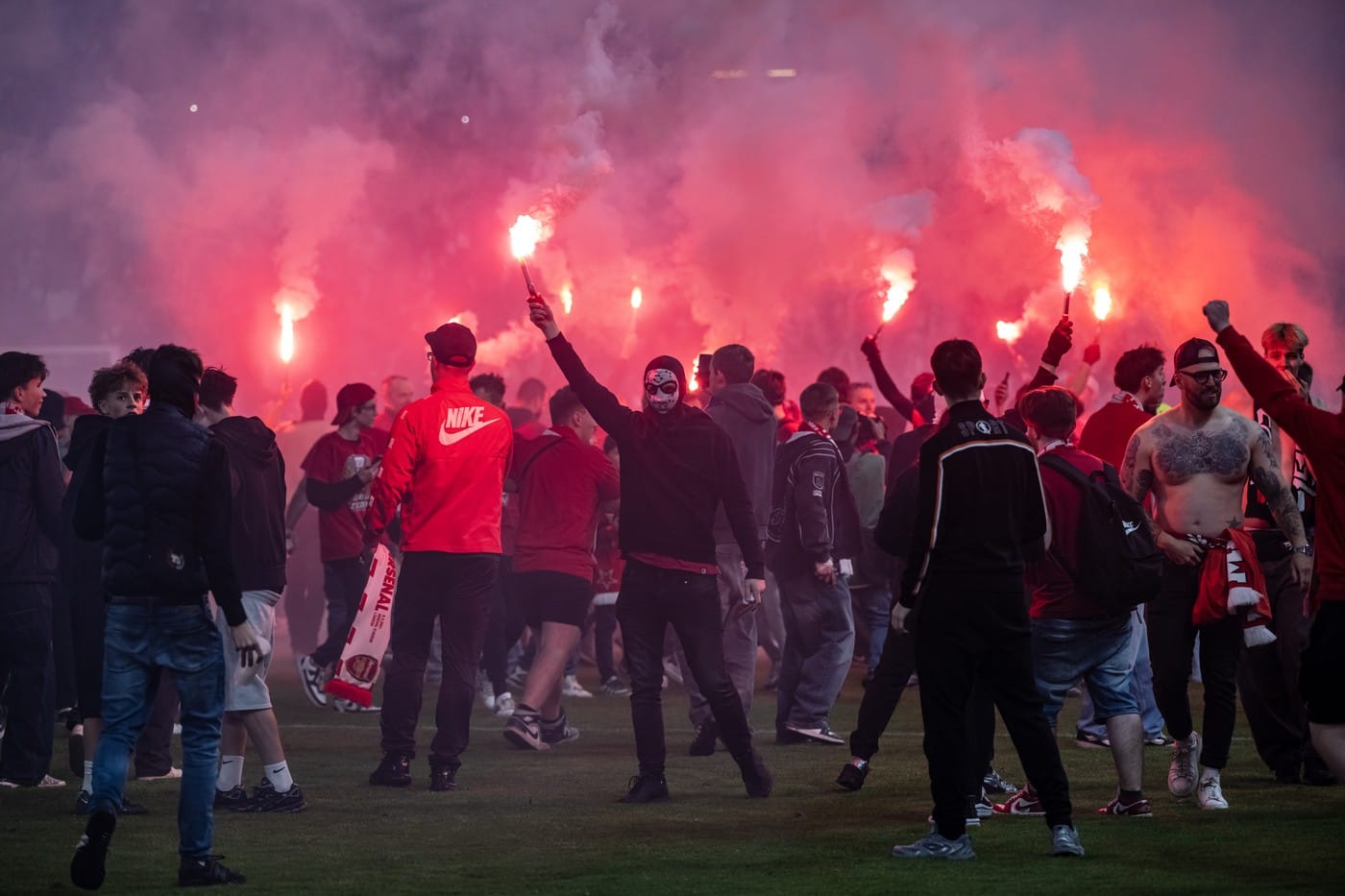
After serious rioting in the top match of the Czech soccer league between Slavia Prague and Sparta Prague, the league association imposed severe penalties, especially against the home team Slavia. At last Saturday's match, Slavia fans stormed the pitch shortly before the end of stoppage time and attacked several Sparta Prague players. Jakub Surovčík, the visitors' goalkeeper, was the most seriously affected. The match, which was 3:2 in favor of Slavia at the time of the attack, was scored 3:0 for Sparta. Slavia received the maximum fine of 10 million crowns (approx. 400,000 euros) and must play four home games without spectators. This still affects two home games in the championship round and the first two home games in the new 2026/27 season.
The race for the championship was briefly open again due to the new scoring of the game. After a win in the next game (in front of empty stands) and a draw by Sparta, Slavia were nevertheless able to secure the championship and participation in the group stage of the Champions League in the coming season ahead of schedule. However, Slavia did not feel like celebrating. The incident will keep the club busy for a while. The rioters are to be banned from the stadium for life. The police have already reported that they have identified most of the people involved. The police investigation is continuing. Sparta Prague also received a smaller fine, as Sparta supporters had also stormed the pitch. Slavia Prague is expecting losses of 50 million crowns (approx. 2 million euros) as a result of the riot.
Damage assessment for forest fire in Bohemian Switzerland
The national park estimates the damage caused by the forest fire at the beginning of May at 15 to 20 million crowns, i.e. up to 800,000 euros. This mainly relates to the damage caused to the forest by the fire, but also to the costs of the fire-fighting operation. The National Park is now claiming its insurance cover.
At the same time, the national park announced that the affected area between the villages of Rynartice and Chřibská will remain closed for longer. This is because there is a risk of further damage from falling trees, but rockfalls are also possible. This must now be investigated. Paths also need to be cleared and trees at risk need to be felled. Many paths were also affected by the fire. The fire also destroyed young beech and fir trees that were only 10 to 15 years old.
It had broken out in rough terrain on May 2. By May 7, when the fire was finally extinguished thanks to the onset of rain, 2,581 firefighters had been deployed. Helicopters dumped almost 3 million liters of water over the fire area. Despite the difficult terrain, the spread of the fire was stopped after 52 hours. The fire affected 100 hectares of forest, ten times less than the huge forest fire in the summer of 2022.
Czech Republic struggles for priority areas for wind power
The Czech Ministries of Environment, Industry and Trade and Regional Development have designated 80 areas for the faster construction of wind turbines and 14 areas for the construction of photovoltaic plants. A decision on the priority areas by the end of August is a prerequisite for receiving EU funding. The procedure for public comments is currently underway.
Two areas are planned for the Ústí district: one near Kryštofovy Hamry in the Ore Mountains and one near Podbořany in the Louny district. Another is mainly located in the Central Bohemian Region, but is close to the iconic Říp Mountain. The district administration of Ústí rejects this location. The administration also has reservations about the Ore Mountains site due to its proximity to an army radio station. In the Liberec district, wind turbines are planned in the former restricted area of Ralsko and in the Semily district.
However, motorist politician Filip Turek is currently campaigning against the construction of wind turbines. Turek is the government's representative for climate policy and the Green Deal, although he is an outspoken opponent of it. He actually wanted to become Environment Minister, but President Petr Pavel turned him down. Turek now wants to use the new building law to ensure that fewer wind turbines are built despite priority areas. He wants to tighten the distance regulations in the law. He wants wind turbines in priority areas to be at least 900 meters away from residential buildings. Outside of priority areas, the distance should be 1.2 kilometers if the wind turbine is no higher than 240 meters.
The Czech Republic is well behind other countries in the European Union when it comes to building wind power plants. To date, just over 200 wind turbines are in operation in the country. These produce around one percent of the Czech Republic's electrical energy. In order to fulfill the obligation of 3 gigawatts of installed capacity, 500 to 600 more wind turbines would have to be built.
Industry Minister Karel Havlíček had already said that the target of 30 percent energy from renewable sources by 2030 declared by the previous government is not achievable. Currently, 18 percent of energy in the Czech Republic is produced from renewable sources. Nuclear energy is dominant, with coal-fired power generation in second place. However, the Czech Republic wants to phase out coal-fired power generation in the 2030s.
Wind turbines are reportedly not popular in the Czech Republic. However, a survey by the STEM/MARK Institute shows a different picture. According to the survey, 74 percent of respondents view wind power positively. Hydropower plants and solar power plants are even more popular. Nuclear power is very popular with two thirds of respondents. Coal is the least popular, with only 23 percent of respondents viewing it positively.
Czech Republic supports village shops
The Ústí district is once again participating in the Ministry of Industry and Trade's program to support village stores. Specifically, the district is applying for 3.8 million crowns (just under 160,000 euros), which will be given to stores in villages with up to 1,000 inhabitants. Since the start of the program in 2021, the district has already distributed 17 million crowns (700,000 euros) to 200 stores in the region. The money is intended to pay salaries for sales staff, energy, telephone and internet costs or cash register fees. Each store can receive between 20,000 and 100,000 crowns (800-4,100 euros). The prerequisite is that the stores primarily offer food, drinks and tobacco products.
The number of stores with an area of up to 400 square meters was 11,701 throughout the Czech Republic in 2023, a decrease of more than 2,000 compared to 2017. However, the decline has since slowed. Compared to 2019, there were only 400 fewer outlets.