

Meanwhile in Czechia... 21/26
29.05.2026
Sudeten Germans hope for a repeat in the Czech Republic
This is already the third newsletter in which the Sudeten German Day in Brno is prominently mentioned. If you are wondering why, because it seems to be of secondary importance for our border region, this is not the case this time. Both the wonderful sign of the invitation of the Sudeten Germans to the Czech Republic, who were often referred to as "our compatriots" in Brno, and the political squabbles surrounding it have had a major impact on German-Czech relations. They triggered an intensive discussion in Czech society, the (hopefully positive) consequences of which we will probably only be able to assess in retrospect in a few years' time. Below you will also find a few personal impressions from on site.
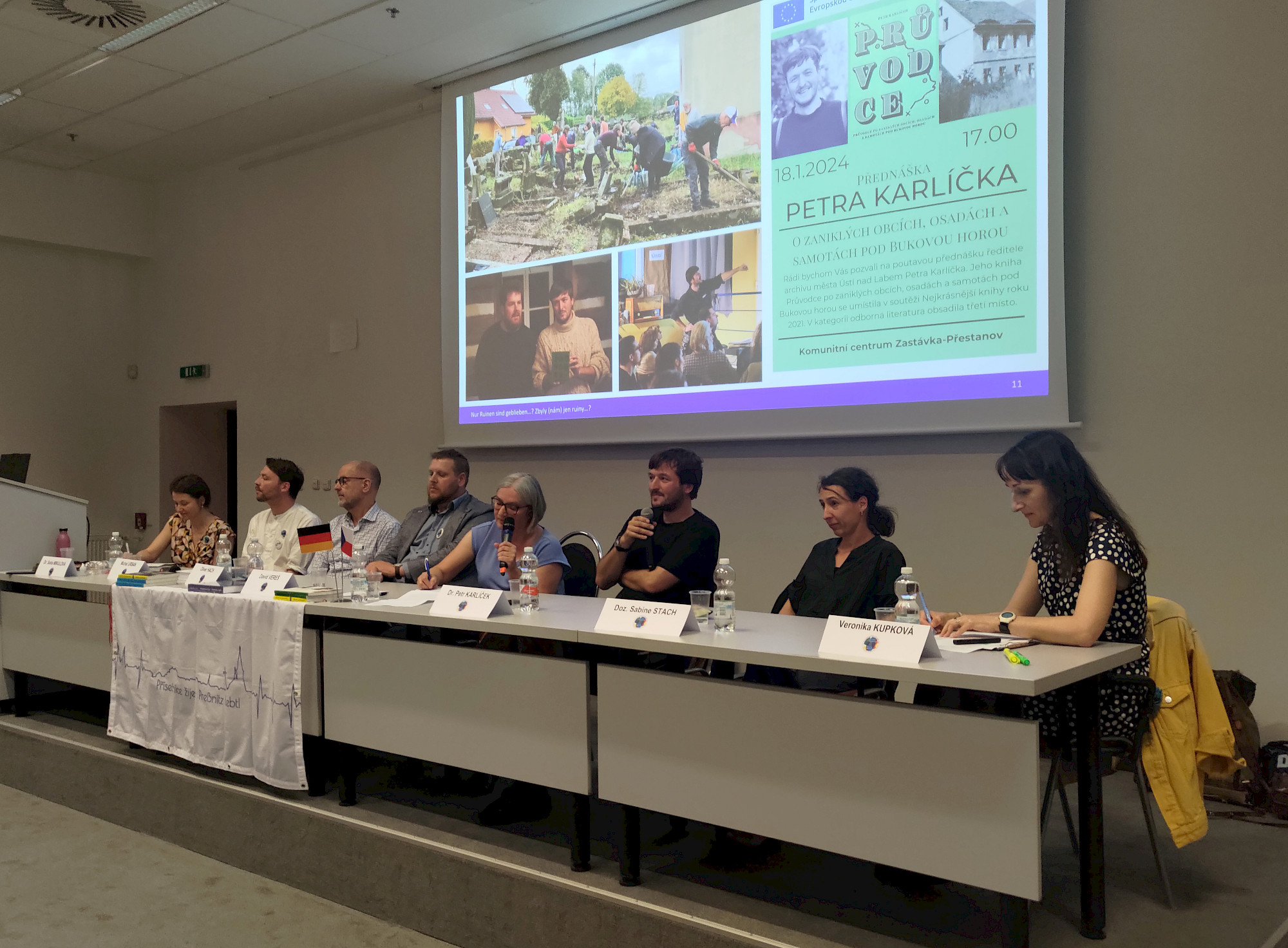
The Sudeten German Day in Brno began on Thursday with a commemorative event at the main railway station at platform 5, from where the transports to concentration camps had departed. It was attended by the son of Sir Nicholas Winton, who saved almost 700 Jewish children from the Nazis in 1939, and two of the so-called Winton children. On Friday, there was a public festival with music and dancing in the center of Brno, which was also attended by many locals.
Saturday and Sunday were the main days with many stands, events and several speeches by Czech and German representatives in an exhibition hall, which, according to personal estimates, was attended by around 2000 people. The Czech writer and resister against the communist regime, Milan Uhde, was awarded the Charlemagne Prize of the Sudeten German Landsmannschaft. The National Socialists had murdered 18 members of Uhde's family, yet he was committed to reconciliation work throughout his life.

In addition, the Brno Reconciliation March Pohořelice (Pohrlitz) to Brno organized by Meeting Brno took place on Saturday, which this time around 1300 people completed in whole or in part. The meeting ended on Monday with an act of remembrance for the victims of National Socialism in front of the Kaunitz dormitory, the former Gestapo headquarters in Brno.
The counter-protests feared in advance were limited. At the commemorative events and the reconciliation march, there were sometimes a few dozen and sometimes up to 200 protesters. One action that was much discussed in the social media was the erection of a symbolic wall made of cardboard boxes in front of the exhibition grounds. However, visitors to Sudeten German Day did not notice this, as it was located in a hall at the other end of the exhibition grounds. Instead, visitors to an anime festival taking place at the same time were probably irritated. Given their creative outfits, this was probably mutual.
The largest counter-event took place on Sunday in the center of Brno, where around 2,500 people from all over the Czech Republic took part in a rally organized primarily by the Communist Party (KSČM), followed by a demonstration. However, this was far away from the exhibition center. Normally, such counter-protests always try to get within sight and earshot of their opponents, but that was not the case here. It was probably mainly about images for the media and perhaps also about the internal cohesion of a party in decline.
However, the Sudeten Germans are hoping for a repeat performance in the Czech Republic. In 2027, the Sudeten German Day will once again take place in Bavaria, in Nuremberg. But after that, it would be nice to alternate hosting, according to the chairman of the Sudeten German Landsmannschaft, Bernd Posselt, on Bavarian radio. Several cities in the Czech Republic have shown interest in hosting the event.
Schluckenauer Zipfel faces five-month road closure
From June 1, a five-month period of suffering awaits drivers and residents on the edge of the Schluckenauer Zipfels. The reason is the five-month closure of state road 9 between Svor and Nová huť. This is necessary because the Czech Road and Highway Directorate is building a bypass around the village of Svor. The challenging terrain leaves no other option than a large-scale bypass.
The "9" is the main connection for road traffic in and out of the Schluckenau tip with the Czech interior. As a state road, it is also designed for large trucks weighing more than 7.5 tons. Some of these vehicles also use the "9" road for transit to Germany. These trucks now have to be rerouted. The transit trucks in particular are expected to drive around the area from Monday. An increased volume of traffic is to be expected on the detour route. Tourists and day-trippers from Saxony should therefore avoid it. To avoid having to use very small roads, the road from Horní Světlá below the Lausche via Nová huť to Kytlice has been designated as a one-way road in the direction of Kytlice.
In the communities along the detour route, but also elsewhere in the Schluckenau region, the plan to close the road had sparked protests in advance. They only found out about it from the media and still criticize the lack of communication with the road and freeway authorities. Nevertheless, together with the administrations of the Ústí and Liberec districts, they were able to get the duration of the closure reduced from the original 24 weeks to 20 weeks. It was therefore only supposed to last until October 16. However, the competent district office in Liberec did not stipulate a penalty if this deadline was exceeded.
Reopening of the Edmundsklamm gorge in June
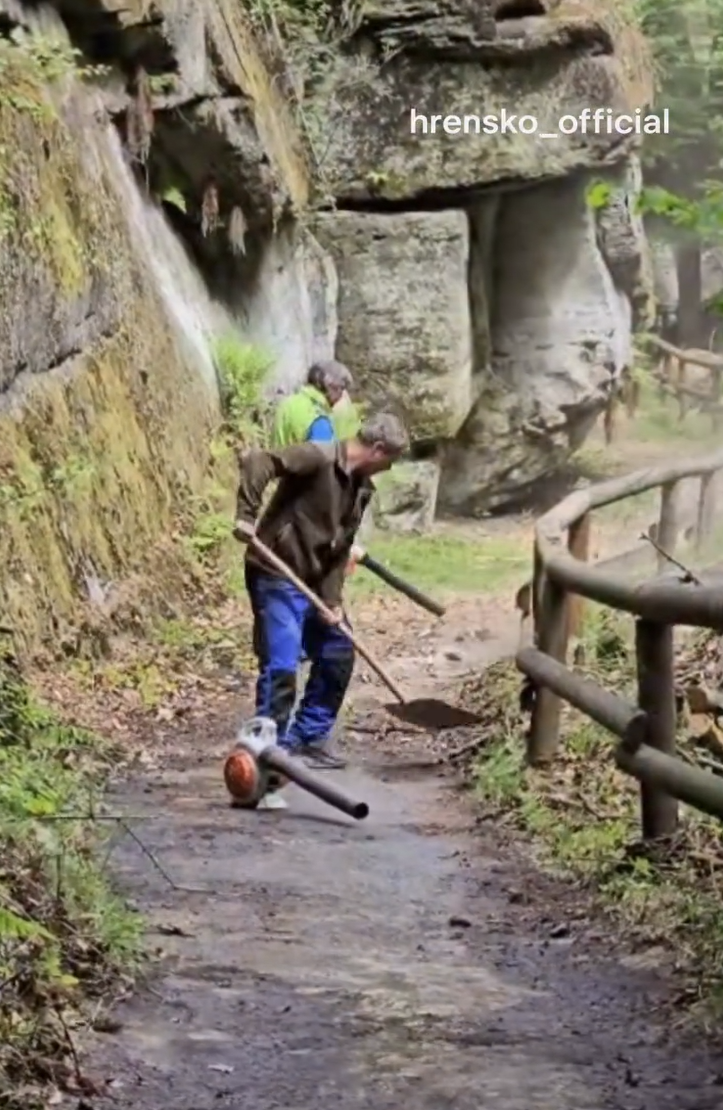
Since the winter break, tourists in Bohemian Switzerland have had to forego the popular boat trips in Edmund's Gorge for safety reasons. But now it will soon be time again. The boats are due to return in June.
The reason for the closure was a boulder around 130 meters above the hiking trail to the boat landing stage. The unstable part of the boulder was removed and crushed by a specialist company by Friday. The rest of the boulder was secured and fitted with a net to hold back any stones that might come loose.
"We would like to open at the beginning of June, but we are still waiting for a geological and dendrological report," said the mayor of Hřensko, Kateřina Horáková, on Czech Radio.
Since the reopening after the major forest fire in the summer of 2022, tourists have only been allowed to enter Edmund's Gorge under professional supervision and in groups, as there is still a risk of rockfall. The Bohemian Switzerland National Park regularly checks the stability of the rocks.
However, the municipality of Hřensko has announced that a booking system will soon be put into operation so that entry to the gorge can also be conveniently booked online. The number of admissions is also set to increase slightly, but will remain limited.
The Wilde Klamm, where boats also operate, has been in operation since Good Friday, but can still only be reached from the lower landing stage. Hikers can get there either from Mezná or from Růžová.
Shift project brings Ústí important museum prize
The "Kingdom of Soap Bubbles" project at the District Museum in Ústí nad Labem has been awarded the Czech museum prize "Gloria musealis". It is about the work of the Schicht family of entrepreneurs, who grew up in the Schreckenstein district with the production of cosmetics, drugstore goods and oil. Later, Schicht even merged to form the multinational Unilever Group, which still exists today.
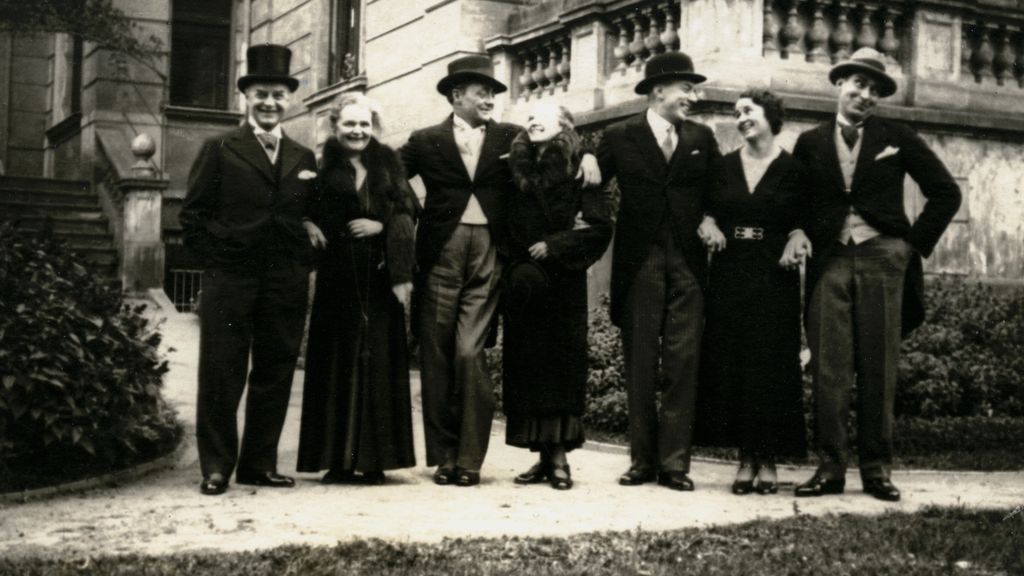
The title of the project is also the title of a documentary film about the Schicht family, which premiered last year after seven years of filming. However, according to Martin Krsek from the museum in Ústí, this is only the glorious conclusion of the project. The main work of the museum staff, including Krsek and others such as Tomáš Okurka, was the almost 20-year effort to re-establish contact with the Schicht family and regain their trust. The family had been expelled after 1945 and had lost their property in Czechoslovakia. The family's relationship to the events of the 1930s and 1940s was not uniform. One part of the family made pacts with the National Socialists, while another openly supported the Czechoslovakian resistance in exile.
Incidentally, the documentary will be shown on November 5 as part of the Czech-German Culture Days 2026 in Dresden.
The spa town of Teplice suffers from the Iran conflict
The war between the USA and Iran is also having an impact on the spa business in Teplice in northern Bohemia. The spa town is traditionally a destination for many guests from Arab countries, especially from the Arabian Peninsula. But these guests are not coming at the moment. "We only have a few clients from the Middle East at the moment. The conflict is having a major impact on whether people can travel to us, i.e. whether there are any flight connections at all," Iveta Slížková from the spa company is quoted as saying. Teplice is now hoping for Czech clients, at least those who would otherwise have traveled to the Middle East. It remains to be seen whether the plan will work out. The umbrella organization is already expecting a weak season.
Taiwanese company plans major investment in North Bohemia
The upcoming opening of ESMC's semiconductor plant in Dresden will also have an impact on northern Bohemia. The Czech Republic has repeatedly offered itself to supplier companies. Now the Taiwanese company i-TRANS Global is planning its European logistics center for semiconductor chemicals in North Bohemia. The company is currently looking for a suitable site measuring almost 17,000 square meters.
The company is being supported by the Ústí district and the state agency CzechInvest, which is helping with the company's relocation. The logistics center is scheduled to go into operation at the beginning of 2028, according to the plan. i-TRANS plans to invest 20 million euros in the center. The aim is to create 60 jobs.
In a second phase, i-TRANS envisions deeper cooperation with Czech chemical manufacturers. In addition to the proximity to Dresden, the focus of industry in the Ústí district on the chemical sector is the second main reason for locating in northern Bohemia.
Personal impression of the Sudeten German Day
As a visitor on site, I would like to add a few personal impressions: The unfortunately still widespread image of the Sudeten German Landsmannschaft (SdL) as a stronghold of those who play off the expulsion against the crimes of National Socialism and want their former property back is (by now) completely wrong. Bernd Posselt in particular, as chairman, has ensured over the last 25 years that the SdL has become a more uncomfortable haven for diehards, revanchists and old Nazis. I was unable to hear anything at the stands, at events or at the beer table that reflected such views.
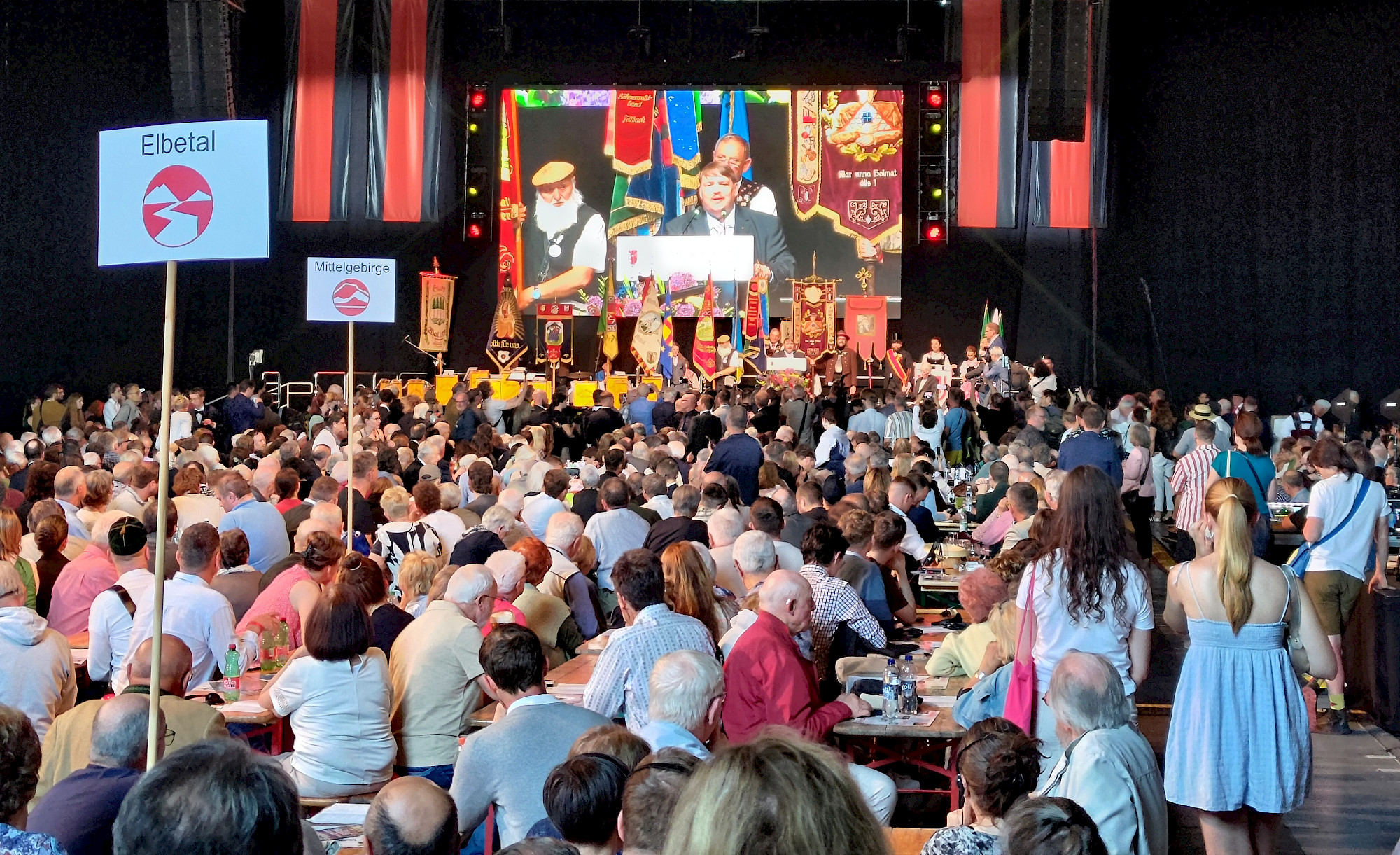
In all speeches from the German side, without exception, the crimes of the Nazis and the complicity of the Sudeten Germans were named first. The suffering of the expulsion was not concealed, but always placed in this context. In the spirit of the German-Czech Declaration of 1997, it became clear that we do not have to agree on the assessment of the past, but nevertheless want to work towards a common future in good neighborly relations. This does not mean forgetting or drawing a line under the past, but rather a joint, unbiased examination of the past. Bernd Posselt in particular has repeatedly emphasized that it is not about guilt and accusations, but about the lessons that must be learned from the events in order to learn from them for the future. With regard to the Beneš Decrees, for example, it was emphasized that they did not want to revise them, but that their basic approach of collective guilt and collective punishment could in no way be accepted in an enlightened society. However, I fear that both are simply not dead.
The Czech speakers all emphasized the importance of reconciliation, coming to terms and forgiveness, and it was nice to see how every sentence they uttered was eagerly applauded by the audience (even before the translation). I had the impression that the Sudeten Germans present were incredibly grateful for the invitation to the Czech Republic. They are real German-Czech bridge builders, and this was honored.
Rüdiger Kubsch