

Meanwhile in Czechia... 25/26
26.06.2026
National Park Reports Highest Forest Fire Alert Level
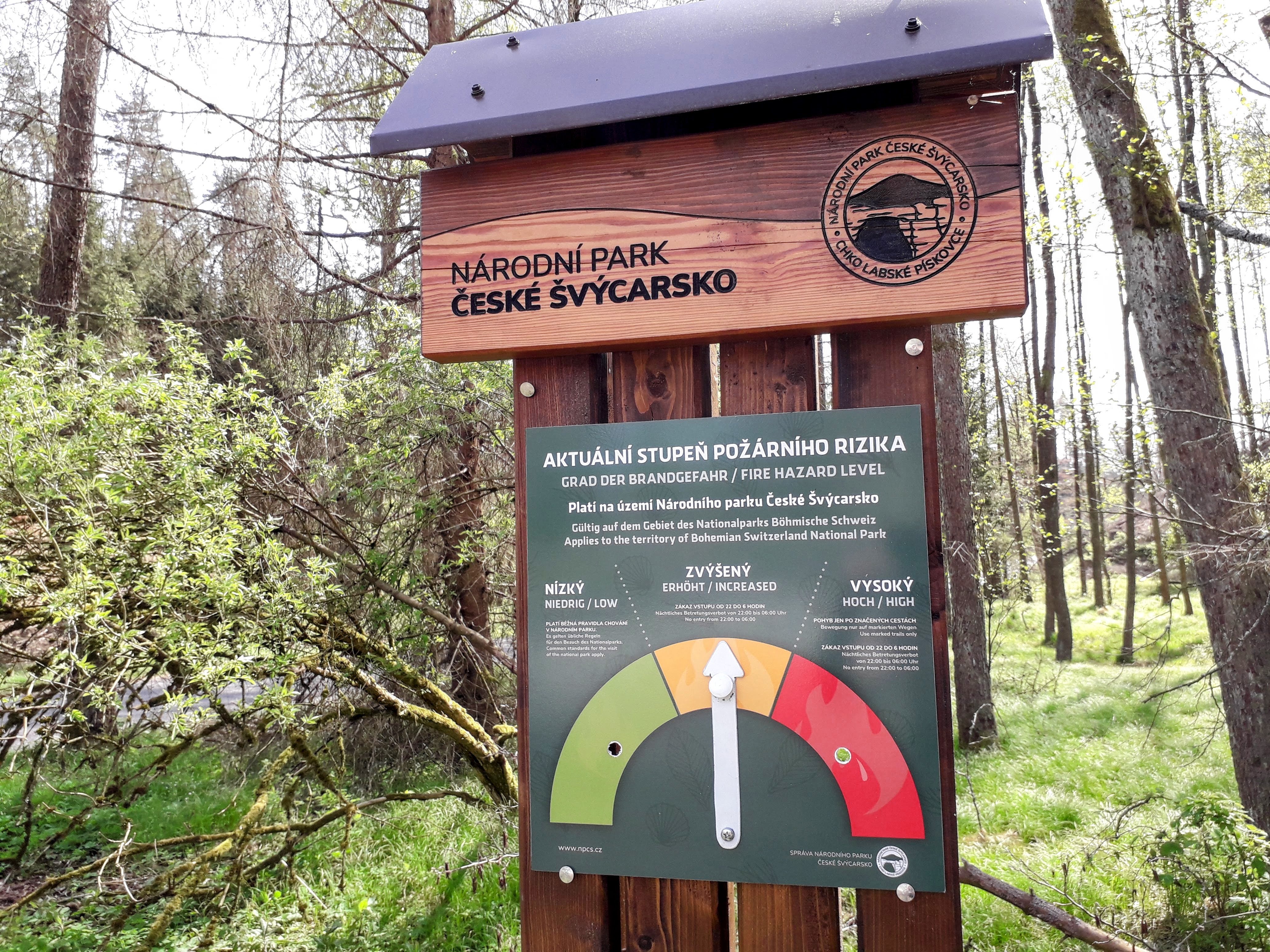
Since Wednesday night into Thursday, the highest fire danger alert level has been in effect in the Bohemian Switzerland National Park. The national park administration issued this alert in response to data from sensors installed throughout the park. Forecasts from the Czech Hydrometeorological Service are also being taken into account.
For visitors to the national park, this means some restrictions. Visitors must not stray from marked trails, and entry into the national park is prohibited between 10 p.m. and 6 a.m. Signs at 48 access points to the protected area inform visitors of these restrictions.
The highest forest fire alert level also means increased readiness among rangers and other national park staff. Every morning and evening, they launch surveillance drones equipped with thermal imaging cameras. Rangers carry emergency water bags containing 20 liters of water and are out in the field more frequently than usual. Anyone who violates the regulations faces penalties. This applies all the more to violations of rules that are in effect at other times as well, such as the ban on camping, lighting campfires, smoking, or using portable stoves.
Despite the risk of wildfires, the Czech Fire Department is now better equipped to respond to emergencies in the national park’s often rugged terrain. “Quads and drones help. And it has become clear that in such difficult terrain, extinguishing fires with helicopters is the most effective method,” the daily newspaper Děčínský deník quotes Martin Laníček, the head of the fire department in the Ústí district, as saying.
Constitutional Court Orders President to Attend NATO Summit
In an emergency ruling, the Czech Constitutional Court has ordered President Petr Pavel to attend the NATO summit in Ankara in two weeks. The government must facilitate his participation and may not hinder it in any way.
The court based its decision on established practice. According to this practice, the Czech president has always attended NATO summits. Only once, in 2022, did then-Czech President Miloš Zeman have to cancel his attendance due to illness.
President Pavel filed a jurisdictional challenge with the Constitutional Court on Monday after the government decided that the president should not attend and that Prime Minister Andrej Babiš should lead the delegation. The issue at stake is not only his participation in the summit but also the distribution of powers among the highest offices of state, such as the president and the prime minister. No decision has yet been made on this petition. According to observers, a ruling is not expected for several months because the issue is a fundamental one. It also remains to be seen whether the court will ultimately side with the president on all points.
With the Constitutional Court’s preliminary ruling, the months-long dispute over the president’s participation in the NATO summit is far from over. The focus has now shifted to the question of who should lead the delegation. The government had designated Prime Minister Babiš for this role. However, strictly in terms of protocol, the delegation is always led by the highest constitutional authority, namely the president.
Prime Minister Babiš announced that he would respect the “unusually swift” decision, but called it “completely absurd.” “Foreign policy at the NATO summit should defend the government, which is responsible for it according to the Constitution. That is why I believe the Constitutional Court’s decision runs counter to the interests of the Czech Republic,” Babiš stated on the social media platform “X.” Foreign Minister Petr Macinka of the Motorists’ Party, in turn, accused Pavel of a “constitutional coup.” Macinka said he would respect the ruling but added: “The president has declared war on the government and is inciting Czech society.”
Protests Against the Elimination of Broadcasting Fees
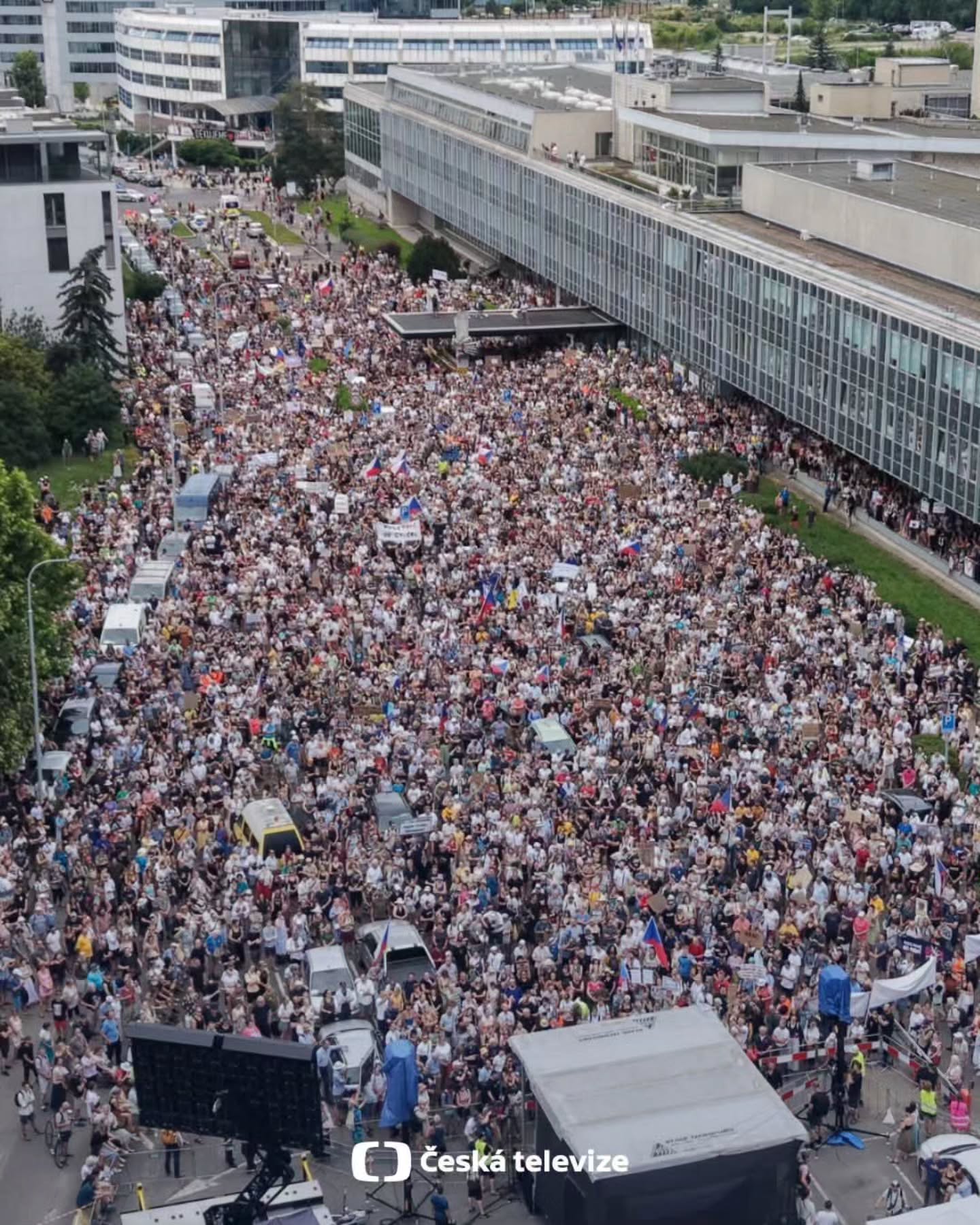
Employees of Czech Television (Česká televize, ČT) and Czech Radio (Český rozhlas, ČRo) went on a 24-hour warning strike on Monday. Just under a quarter of the employees actively participated, while the rest ensured that the legally mandated public service obligations were met. Viewers and listeners could recognize the strike by various signs. Not only was it reported on the websites, but there were also “minutes of protest” during which the screens went black or the radios fell silent. On that day, employees came to work dressed in black and, shortly before noon, formed a human chain around the broadcasting building in the Vinohrady district. Another hundred television employees gathered at noon for a one-hour protest rally in front of the television building, which also featured performances by well-known artists. As early as Sunday, several thousand people had heeded a call from the organization Milion chvilek (Millions of Moments) to support public media.
According to the government, the media are set to lose their public service status in the future. Under a government decision, broadcasting fees will be abolished and replaced by funding from the state budget. Currently, the monthly fee for Czech Television is 150 korunas (about 6.25 euros) and for radio, 55 korunas (2.30 euros). The government’s draft bill stipulates that public broadcasters will not only be funded differently but will also receive less money. In the future, funding is to be 15 percent below current levels, which would result in savings of 1.4 billion crowns. According to ČT and ČRo, this would lead to the layoff of 470 to 700 of the 4,250 employees. A parliamentary draft, on the other hand, anticipates savings in the higher three-digit million-koruna range.
The strike was initiated by the employee initiative Veřejnoprávně. Further actions have been announced.
Police Take Over Iconic Central Bank Branch
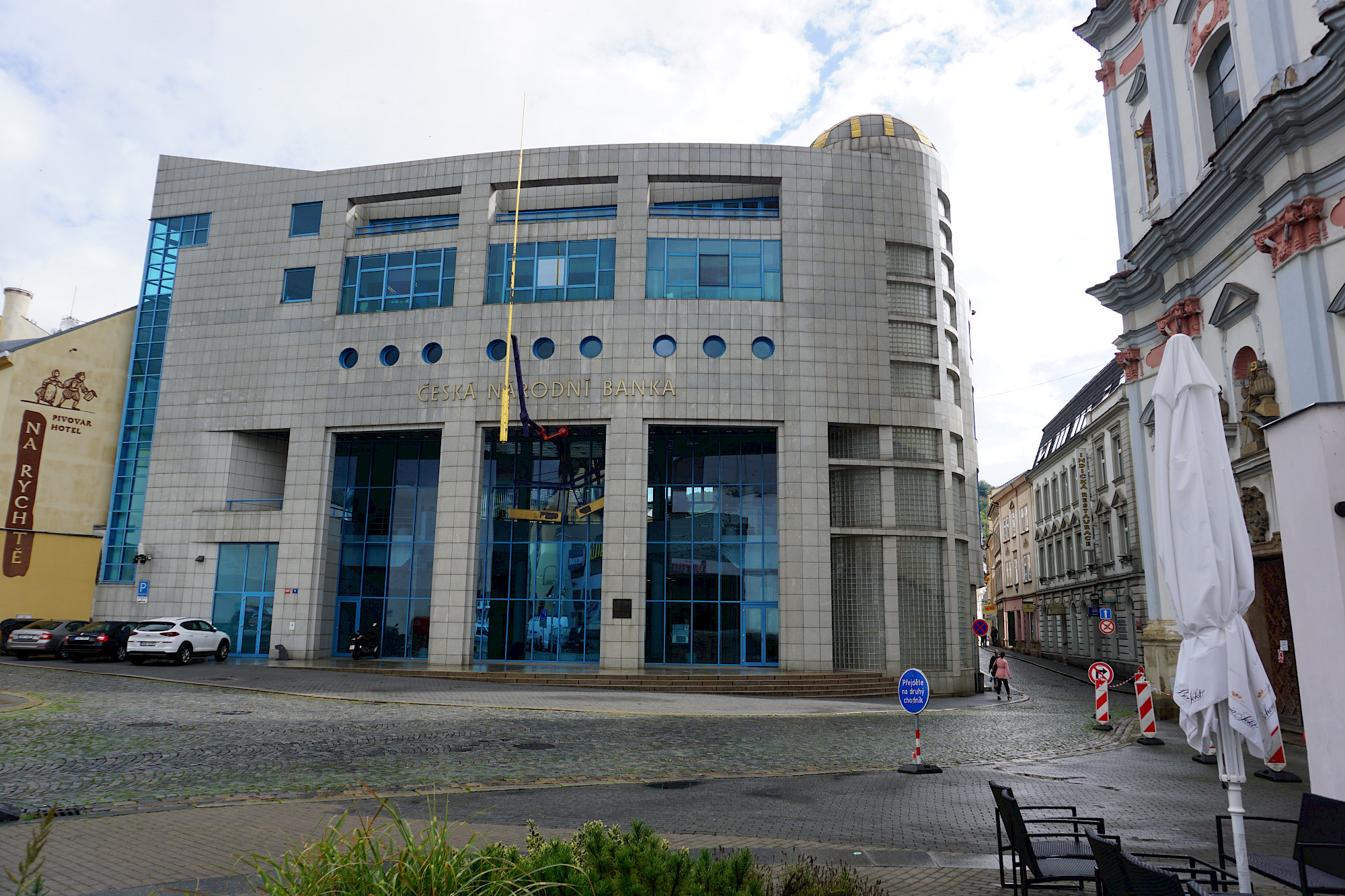
A buyer has been found for the iconic building of the Czech National Bank (ČNB) in Ústí nad Labem (Aussig). For 43 million crowns, it will be transferred to another state institution, as the police headquarters will move in. The central bank will remain a tenant until the end of the year. After that, the building—located very close to the main train station and across from the Forum shopping center—is scheduled to undergo renovation. Built in 1994, the building became famous for the large pendulum on its facade.
Until two years ago, people could still exchange old koruna bills—found in travel bags or buried somewhere in the depths of their homes—for current currency at the teller windows here. However, at the end of 2024, the central bank ceased operations at several branches, including the one in Ústí, for cost-saving reasons. First, counter services will end, and by the end of this year, the bank will move out entirely. The nearest location in Saxony where one can now exchange old koruna bills is the central office in Prague. There are also branches in Brno, Ostrava, and Hradec Králové. The closure of the branches is reportedly linked to the central bank’s transition to digital communication.
Czech Films at the Ústí Summer Cinema
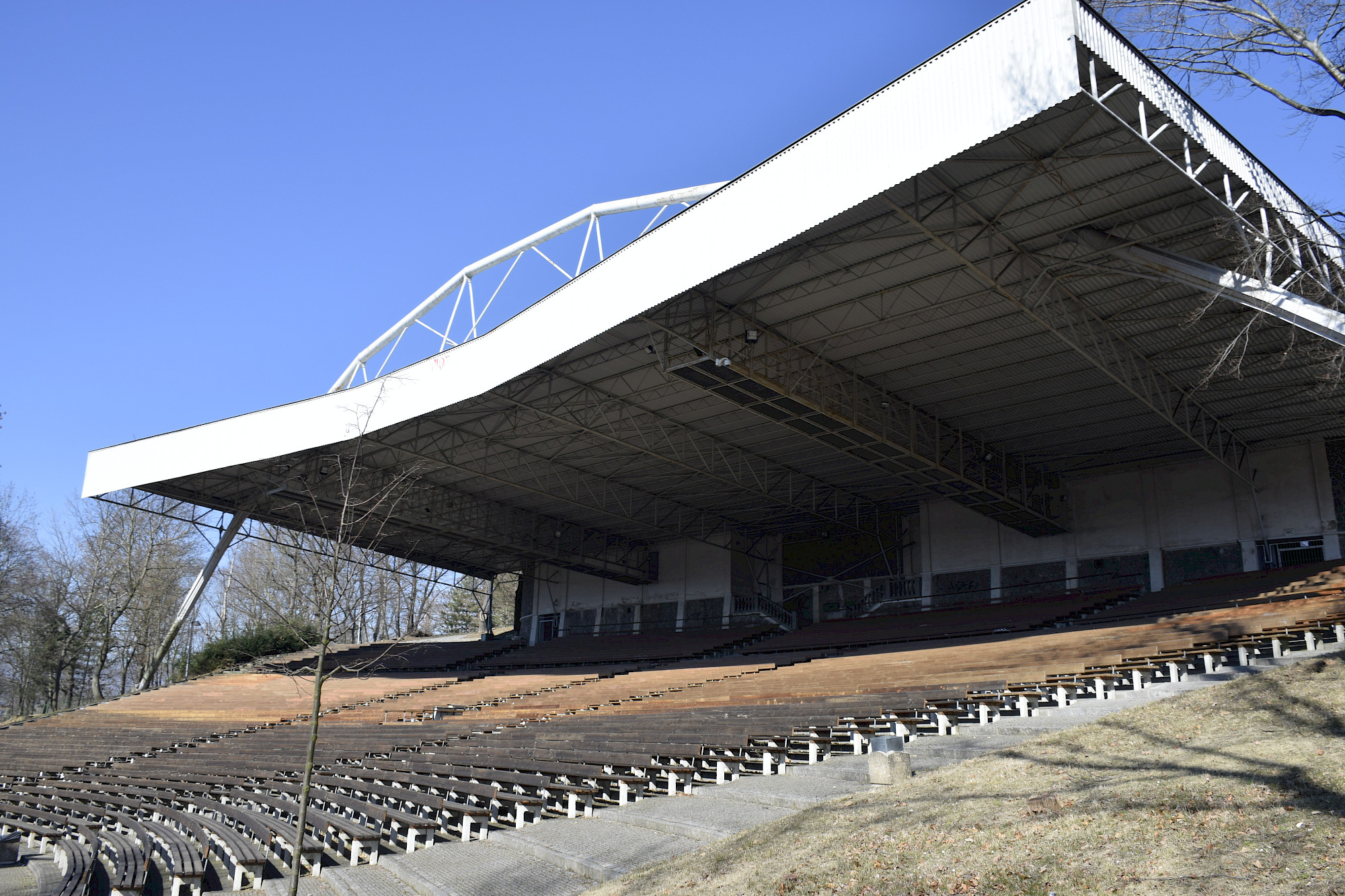
After 13 years, movies are once again being shown at the Ústí nad Labem Summer Cinema. The Summer Cinema is thus living up to its name once more. For a long time, the venue hosted only concerts and parties, but now visitors can once again enjoy a wide-ranging program. This includes morning and evening yoga, stand-up comedy, travel lectures, children’s theater, concerts, and—most recently—movies once again. The first film to be screened, on August 5, is the classic “Hoří, má panenko” (The Firemen’s Ball) by Miloš Forman. Other films to be screened include “In Bruges,” “Palm Springs,” and the Czech film“Mimořádná událost”(State of Emergency), which was shown at the Czech-German Cultural Days in 2022. So if you speak Czech and want to experience these classics in a romantic summer atmosphere, don’t miss this opportunity. While it may not quite have the same charm as the banks of the Elbe, you can admire the magnificent canopy designed in 1954 by architect Josef Slíva and steel structure expert Josef Zeman.