

Meanwhile in Czechia... 26/26
03.07.2026
Czech Heat Record in Northern Bohemia
Since Sunday, the warmest location ever recorded in the Czech Republic has been Doksany in northern Bohemia. On June 28, the temperature at the local weather station rose to 41.9 degrees Celsius. This marks the first time the all-time high temperature has been reached in June.
The fact that the new record was set in Doksany is also due to several local factors. At 158 meters above sea level, the weather station there is the lowest-lying one in the entire Czech Republic. Doksany is also located in the rain shadow of the Ore Mountains, and more often than elsewhere, there is no wind in Doksany, as was the case on Sunday. Furthermore, temperatures in cities are usually 1.5 degrees higher than in rural areas.
Federal Cross of Merit for Kristina Kaiserová
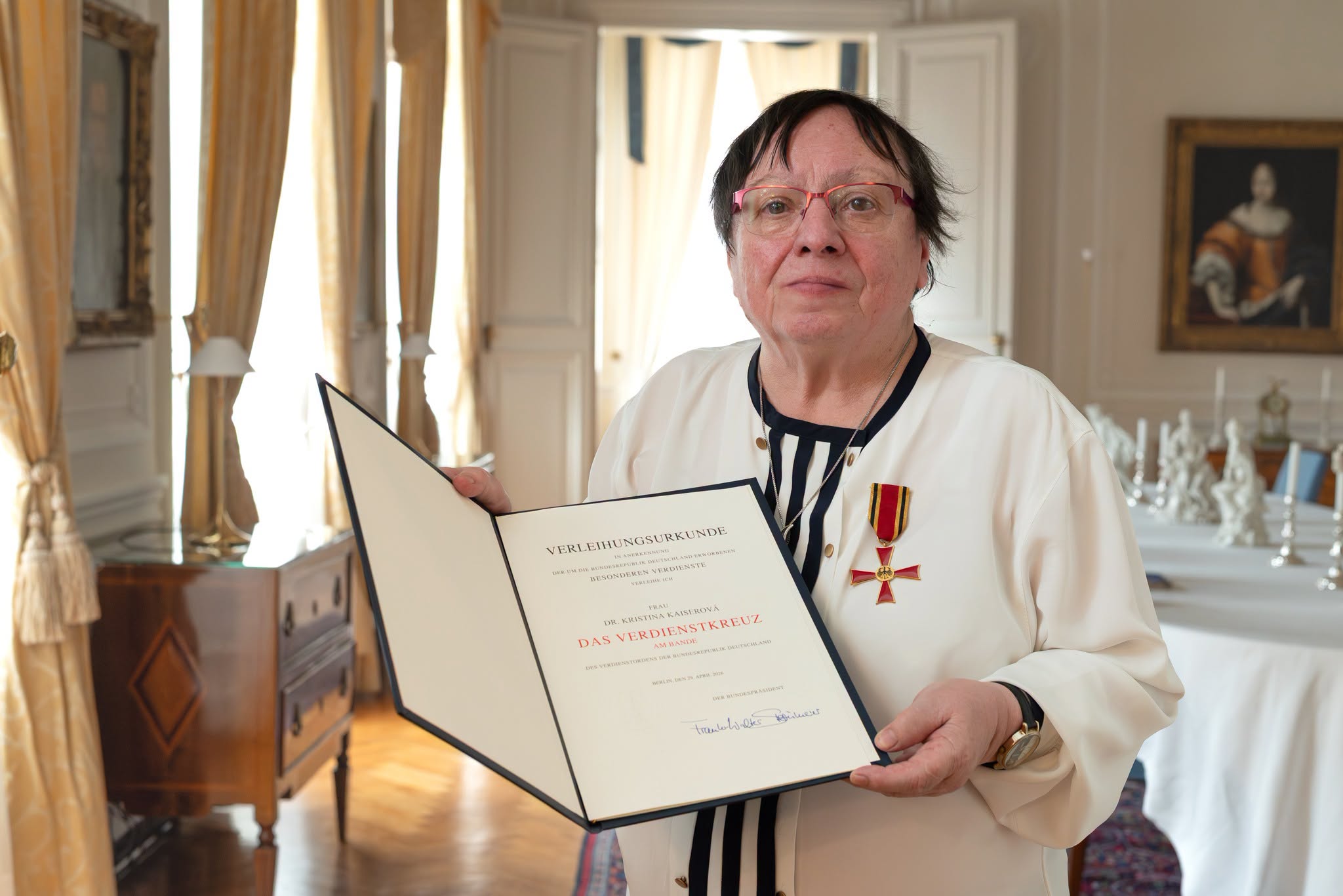
Historian Kristina Kaiserová was awarded the Federal Cross of Merit by Federal President Frank-Walter Steinmeier. Kristina Kaiserová received the award for her contributions to reconciliation between Germans and Czechs. “The award also honors your often voluntary commitment to Czech-German relations and the study of our shared history,” Steinmeier continued. Kaiserová received the Federal Cross of Merit from the German Ambassador to Prague, Peter Reuss.
Kristina Kaiserová was born in Varnsdorf in 1956 and studied history and Czech at Charles University in Prague. After seven years at the archive in Děčín, she moved to the University of Ústí in 1990, initially as a research assistant in the Department of History at the Faculty of Education. She also became the academic secretary at the Institute for Slavic-Germanic Studies, which she has headed since 2006.
She is particularly credited with founding the Collegium Bohemicum, which organized the exhibition on the Germans in Bohemia, Moravia, and Silesia and opened it in 2021. To this day, she serves as chair of the board of directors of the Collegium Bohemicum. But her commitment extends far beyond that. Her research has focused primarily on the history of Ústí (Aussig), but also on the entire Saxon-Bohemian border region.
For decades, she also volunteered to organize the successful language course “Colloquia Ustensia,” which took place every summer in Ústí. At the same time, she remains actively involved in many German-Czech initiatives to this day and continually encourages cooperation.
Czechs Are More Eager to Take Vacations Than Germans
Summer vacation has begun, as it does every year on July 1 in the Czech Republic. According to the Holiday Barometer, 8 out of 10 respondents in the Czech Republic plan to go on vacation in the coming weeks. This makes the Czech Republic one of the most vacation-loving countries among the eleven European nations surveyed. Only in Italy do people take more vacations, reports the daily newspaper Děčínský deník, citing the survey results. In Germany, the former “vacation world champion,” only 7 out of 10 respondents are planning a summer vacation.
The main reason for this reluctance is financial difficulties. In the Czech Republic, 62 percent of respondents among the 20 percent who are not traveling cited this reason. Forty-six percent cited personal reasons for their reluctance. Respondents could select multiple answers.
The Czechs’ enthusiasm for vacations isn’t limited to summer breaks. According to the Holiday Barometer, nearly two-thirds go on vacation twice or more per year. This figure is also lower in Germany. Half of the respondents from the Czech Republic spend at least part of their vacation within the country. In Italy, Spain, and France, the figure is significantly higher, at 7 out of 10 respondents. Furthermore, 56 percent of the Czechs surveyed consider their ideal vacation to be abroad. Only 3 out of 10 prefer to travel within their own country.
This may also be due to financial reasons, as the strong exchange rate of the koruna (currently, one euro costs 24.2 korunas) makes vacations abroad more affordable. Ten years ago, only 3 out of 10 respondents could afford a vacation abroad. According to the travel agency Invia, a Czech family spends an average of 69,000 crowns on a beach vacation—that is, abroad—which is equivalent to about 2,850 euros.
Hřensko Extends Firecracker Ban
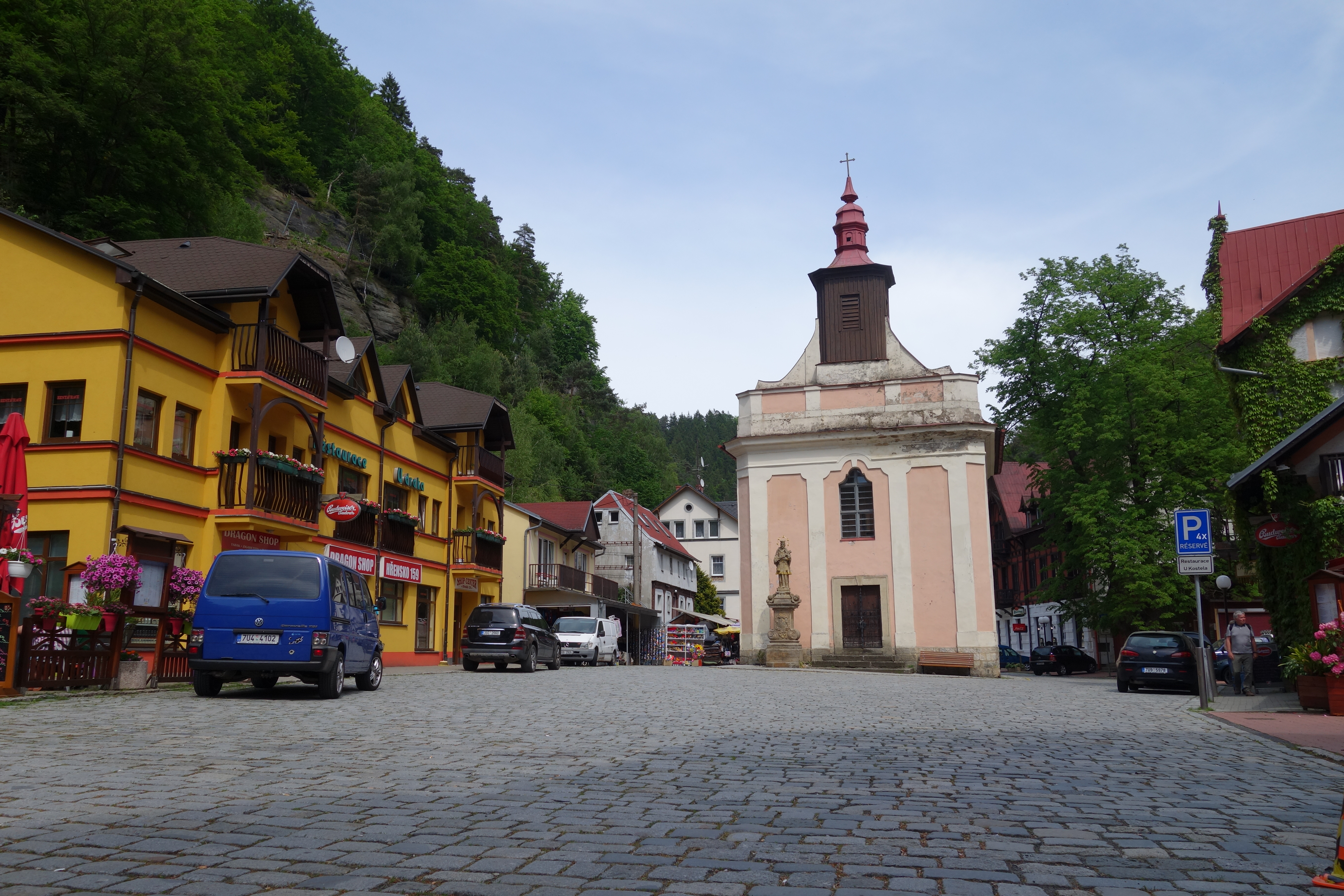
The border town of Hřensko (Herrnskretschen) has extended its existing fireworks ban to cover the entire municipal area. An amendment to the previous ordinance had become necessary due to a new law that, among other things, prohibits the use of fireworks near hospitals or nursing homes. While neither hospitals nor retirement homes are located in Hřensko, the municipality was one of the few to have already implemented a fireworks ban prior to the law and was now required to adjust it accordingly. The ban now applies throughout the entire municipal area. This includes the trail to Pravčická brána (Prebisch Gate), which is used by over 100,000 people annually. However, the Forest Act and the Nature Conservation Act also apply there, and both likewise prohibit the use of fireworks.
The new regulation permits the use of private fireworks only within built-up areas—and even then, only during the transition from the old year to the new.
Overcrowded Emergency Shelters in the Giant Mountains
Emergency shelters are actually intended to be used only in emergencies, as the name suggests. However, as reported by the public broadcaster Česká Televize, the local national park administration in the Giant Mountains is complaining about deliberate misuse. Consequently, the emergency shelters are being used a bit too much. “These shelters are actually intended to provide refuge during bad weather. There, you can change into dry clothes and eat your packed lunch,” explains National Park spokesperson Radek Drahný. Given the current level of use, there is no room left for those who are truly in need. Furthermore, this intensive use is contributing to noticeable littering around the shelters. Since they are not equipped with restrooms, visitors relieve themselves all over the surrounding area. Paper tissues and other trash are left behind.
Mountain huts are intended for overnight stays. However, this is where completely different ideas about mountain tourism seem to clash. As the TV report goes on to show, spending the night under the open sky or in emergency shelters is an integral part of hiking in the mountains. “For us, the mountain huts are more of a last resort,” said Anna from Prague on television. She added that it’s often a matter of money as well.
In total, there are over 20 such simple shelters in the Giant Mountains where people seeking shelter can spend the night. However, there is no danger even in the event of “misuse.” National park rangers conduct checks at exposed locations. But there are only 19 rangers for the entire national park. Enforcing exclusive use for emergencies would therefore be impossible.
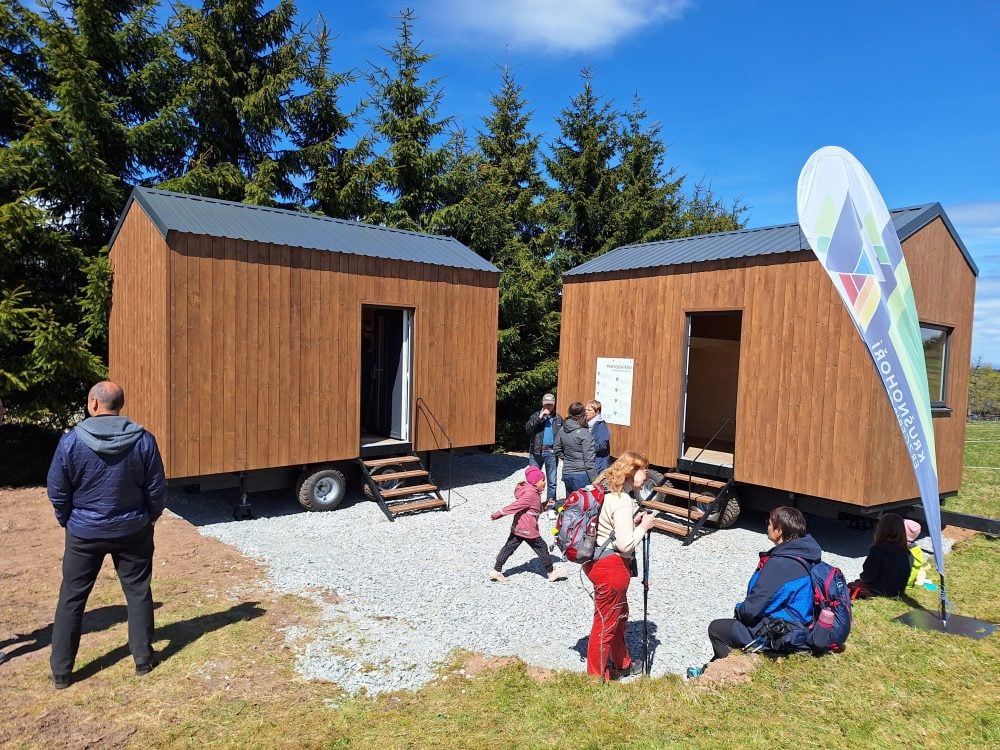
Unlike in the Krkonoše Mountains, overnight stays in simple shelters on the Bohemian side of the Ore Mountains are encouraged. There, the tourism association in particular is driving the establishment of various simple overnight accommodations for a single night. These accommodations are also equipped with restrooms. They are primarily intended for fans of long-distance hiking, which has been gaining popularity for several years now. Various long-distance hiking trails run through the Ore Mountains. One of them is the “Stezka Českem.”
Crowned Best Ice Cream Parlor
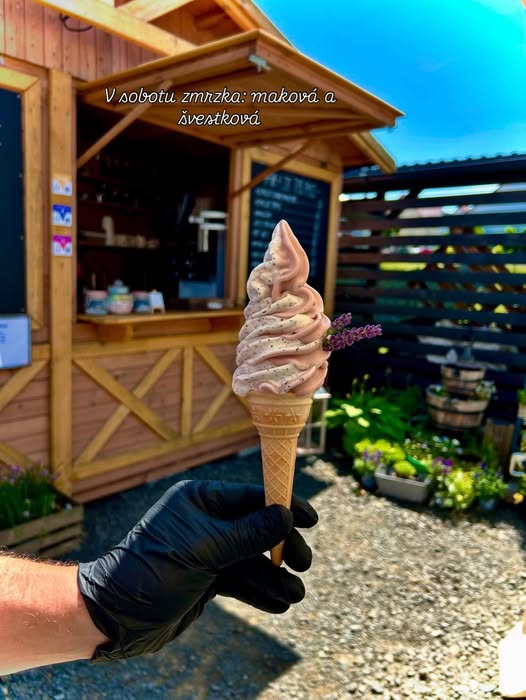
The best ice cream in the Ústí district can be found in the small village of Radejčín, which is best known for the highway tunnel of the same name that runs through the Bohemian Central Mountains. Now, the village’s “Kolotočka” café is also doing it proud. Readers of the daily newspaper Ústecký deník voted it into first place among the best ice cream shops, with 52 percent of the vote. Last year’s winner, “Zmrzlina z Garaže” from Svádov—a district of Ústí on the right bank of the Elbe—came in a close second. “Zmrzlina z Garaže” received 45 percent of the vote. The ice cream shop is conveniently located along the Elbe Cycle Route. Other ice cream shops were also suggested during the voting, but they received only a few votes.