

Meanwhile in Czechia... 31/26
21.08.2026
The Czech Republic commemorates the suppression of the Prague Spring

On Friday, the violent suppression of the Prague Spring was commemorated in many places across the Czech Republic. On the night of August 21, 58 years ago, troops from the Soviet Union, Poland, Hungary, and Bulgaria began invading Czechoslovakia to put an end to the attempt there to reform socialism. Fifty-eight people died as a result. By the end of 1968, another 50 people had lost their lives.
The invasion brought an end to the so-called Prague Spring under Communist Party Secretary Alexandr Dubček, who—especially in the first half of 1968—had brought the country unprecedented freedoms such as freedom of the press and freedom of travel, as well as a wealth of films and books that remain significant to this day. The occupation, which was actually intended to be only temporary, did not end until after 1989, when what was then Czechoslovakia negotiated an accelerated withdrawal of Soviet troops.
High-ranking politicians, as well as tens of thousands of people, took part in the commemoration. In his speech in front of the Czech Radio building, President Petr Pavel highlighted the outstanding role of radio journalists in keeping citizens informed about the course of the invasion. “Czech Radio and Czech Television continue to play a significant role in the Czech media landscape today, not only in news reporting but also in investigative journalism, education, culture, and sports,” Pavel emphasized. According to Pavel, public media today face political pressure to curtail their freedom and independence. He was referring to the Czech government’s decision to abolish broadcasting fees and to fund radio and television directly from the state budget. “They are with us—be with them!” the president exclaimed, alluding to the slogan of the broadcast journalists from 1968 (“We are with you, be with us!”). Senate President Miloš Vystrčil of the opposition ODS party also linked the commemoration of the 1968 invasion to criticism of the new broadcasting law. “Independent media and courage are the first targets of a power that seeks to normalize,” he said.
Government politicians also appeared at the commemoration and were met with boos. Prime Minister Andrej Babiš sent his apologies; he had planned a trip to South Bohemia for one of the most important days of remembrance in the Czech Republic.
State museums and galleries are free once a month
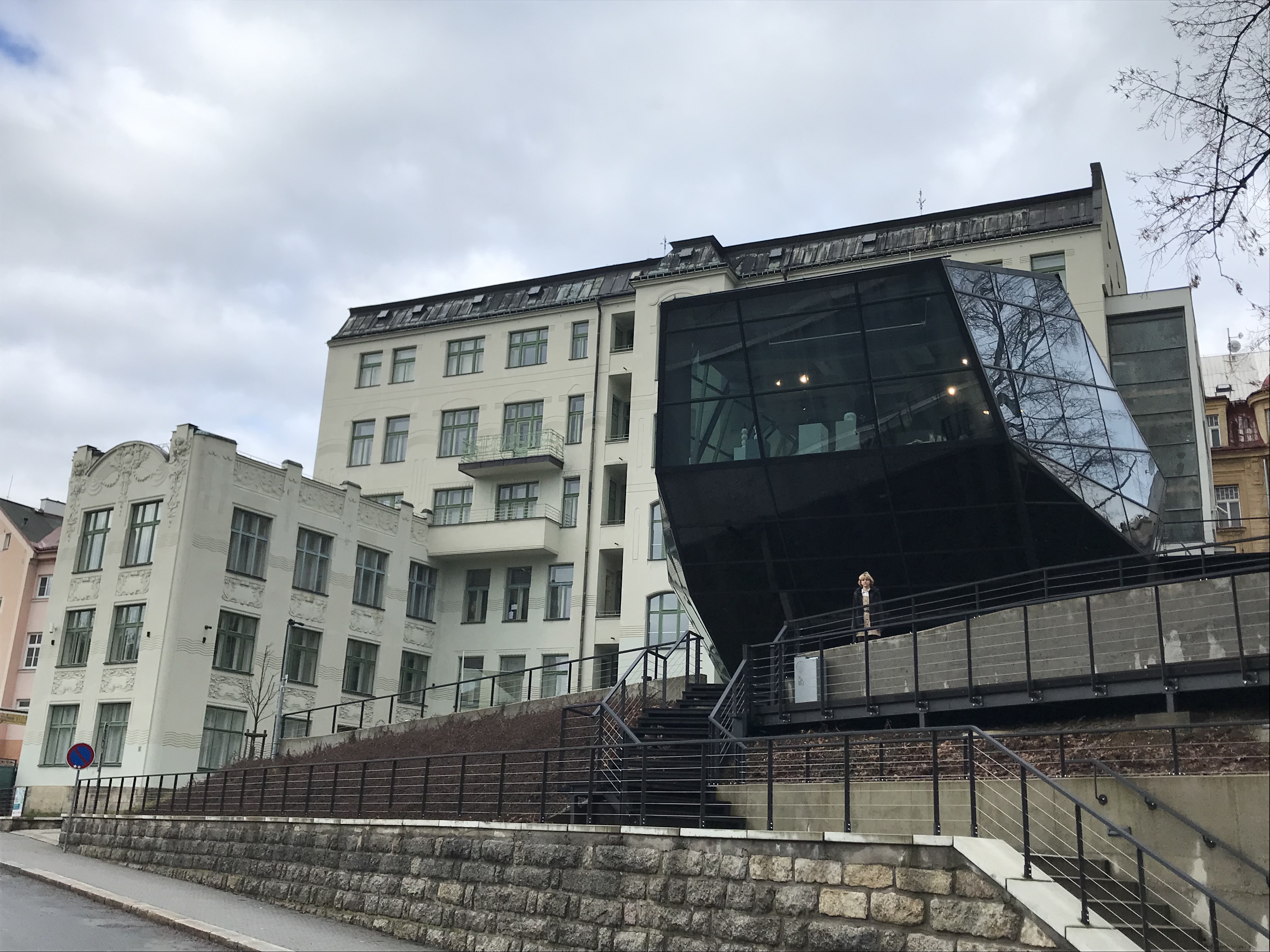
Starting in September, state-run galleries and museums in the Czech Republic will be free to visit on the first Sunday of every month. This was announced by Culture Minister Oto Klempíř. The first day with free admission will therefore be September 6. The new policy will initially remain in effect until the end of the year. However, the minister is aiming for a permanent solution. The Ministry of Culture published the list of institutions covered by this initiative on its Facebook page. These include, among others, five locations of the National Gallery in Prague, four locations of the Moravian Gallery in Brno, and two locations of the Olomouc Museum of Art. Free admission on the first Sunday of the month is also available at the State Museum of Glass and Jewelry in Jablonec nad Nisou (Gablonz). “The goal is to make culture accessible to as wide a range of people as possible,” said the minister.
This new initiative builds on a pilot program conducted in the spring, during which state-run galleries were open free of charge on the first Sunday of each month, the largest state-run museums on the second Sunday, and regional museums on the third. As a result, visitor numbers rose significantly compared to other Sundays. On August 30 and September 27, state-owned palaces and castles will also be open to the public free of charge. In return, these institutions are to receive compensation payments from the state.
Northern Prague Ring Road to Be Built Starting in 2028
Construction of the remaining northern section of the Prague ring road is scheduled to begin in two years. According to the state Road and Highway Directorate (ŘSD), up to 90 percent of the necessary land is expected to be acquired by the end of 2027. The Directorate then plans to apply for a building permit. The northern section is one of the last major segments of the ring road where construction has not yet begun. In contrast, the western and southern sections have been completed for some time, and in the southeast, the section between the D1 highway to Brno and the town of Běchovice is currently under construction.
The northern section is particularly important for connecting the D8 from Prague to Dresden. In particular, the journey to Prague Airport would then be significantly faster. However, the Ministry of Transport anticipates resistance, primarily from the local population. It is therefore not yet possible to say exactly when the northern section will be completed.
How often do people go mushroom hunting in the Czech Republic?
According to statistics alone, Czechs go mushroom hunting 33 times each year. This is based on data from the Ministry of Agriculture, which was analyzed by the Faculty of Forestry and Wood Processing at the Czech University of Life Sciences. Since there are also less enthusiastic mushroom hunters among the Czech population and the statistics include children, the actual number of annual mushroom-hunting trips is likely to be significantly higher. Czech mushroom hunters could therefore easily go mushroom hunting twice a week. Last year alone, 20 metric tons of mushrooms were collected.
However, the number of mushroom-hunting trips is on the decline. The 33 mushroom-hunting days refer to the year 2025. In 2024, statistically, each resident still went mushroom hunting 44 times; a year earlier, it was even 47 times. However, even 33 mushroom-hunting trips are well above the long-term average of 24.
The data shows that 65 percent of people go mushroom hunting at least once a month. Another 21 percent of respondents said they do so at least once a week, and 14 percent even several times a week. In contrast, 25 percent of respondents went mushroom hunting only once or twice a year, and nearly 10 percent ignore this almost national leisure activity.
According to the statistics, mushroom hunters were most active in the Liberec, South Bohemia, and Plzeň regions.
Conditions in the Czech Republic are truly ideal for mushroom hunting. There is no limit on how much you can harvest for personal use. Exceptions include protected plants and fenced-in properties. However, due to the drought, many may have lost interest this year.
Record Turnout for the Gaston Swim
This year’s “Gaston Memorial” swim across the Elbe River drew a record number of participants. 120 swimmers covered the entire route from Ústí nad Labem to Děčín—or at least swam part of it.
Originating as an idea born over a few beers one evening at a pub, the event—which starts not far from the Schreckenstein weir—has gained a certain popularity. In 2008, the water polo team met up at the “U Gastona” restaurant “for a beer” after practice. That’s when the topic came up: how long would it take to swim from Ústí to Děčín? “One of our water polo players then decided to test it out, and that’s how it all began,” said Tomáš Česnek, the organizer of the Elbe Swim, to the daily newspaper Děčínský deník.
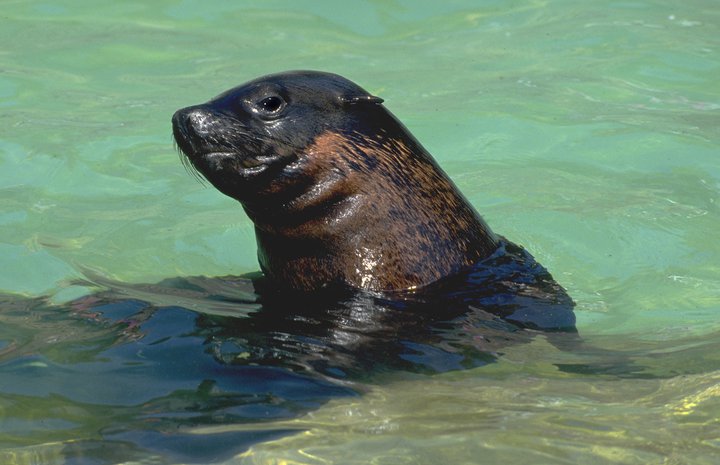
The name of the Elbe Swim commemorates Gaston, the South African sea lion who lived at the Prague Zoo from 1991 to 2002. He became famous when, during the floods of August 2002, the Prague Zoo near the Vltava River was inundated and Gaston swam to safety in the Vltava. After attempts to recapture him failed, he continued on his way to Wittenberg, where zookeepers were able to rescue him from the raging Elbe River, but he died from stress and exhaustion. The sea lion, who was popular among visitors to the Prague Zoo, had traveled a good 300 kilometers through the floodwaters of the Elbe River, pursued by zookeepers and zoologists.
.