

Meanwhile in Czechia... 32/26
28.08.2026
Czech Republic to Build Three New Dams
The prolonged drought has also shaken up the political scene in the Czech Republic. Prime Minister Andrej Babiš has reactivated the National Coalition Against Drought, which will operate under his leadership going forward and has set itself the goal, among other things, of accelerating the construction of new dams and reservoirs. However, most of the steps toward the first new dam construction since the Velvet Revolution had already been taken before the drought coalition was reactivated, so the dam in Nové Heřminovy is now on the verge of breaking ground. The dam is scheduled to be completed by 2033 and will have a water surface area of 130 hectares.
This will be followed by the dams in Vlachovice near Zlín (156 hectares) and in Kryry near Louny (73 hectares), with construction scheduled for completion in 2031 and 2035, respectively. Plans for additional dams in Senomaty and Šanov, on the border between the Central Bohemia and Ústí regions, are less concrete. These are also located in the Kryry area, which is one of the driest regions in the Czech Republic in the long term.
To accelerate the expansion, the government will introduce a new law for additional dams by October. In its long-term master plan, the Czech government anticipates 86 sites.
The Děčín District Is Losing Its Largest Lake
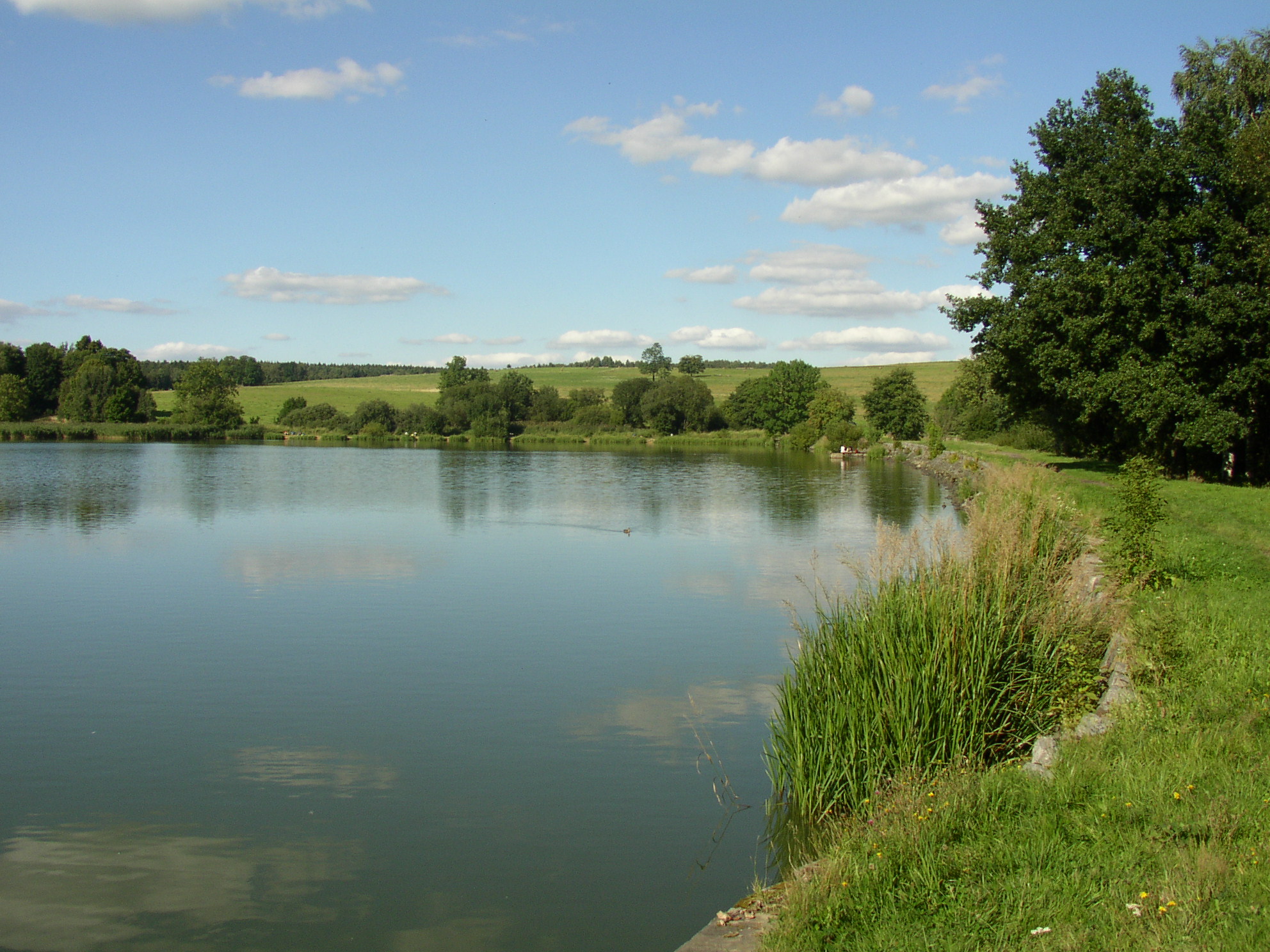
In these dry times, when every water reservoir is needed, the largest lake in the Děčín district has disappeared. Where 36 hectares were still covered with water just two years ago, there is now, at best, a wetland—nearly 400,000 cubic meters of water have simply vanished.
This is the Velký rybník, literally “Big Fish Pond,” known in German as Bernsdorfer See. It is located on the outskirts of the village of Rybniště (Pond Village), at the northeastern end of the municipality. As the name suggests, it is an artificially created body of water that was first mentioned as early as the 16th century, at that time still under the name Pelmensdorffer Teich. This name was a reference to the former village of Pelmennsdorff, which is now called Horní Podluží (Obergrund) and bordered the pond to the east.
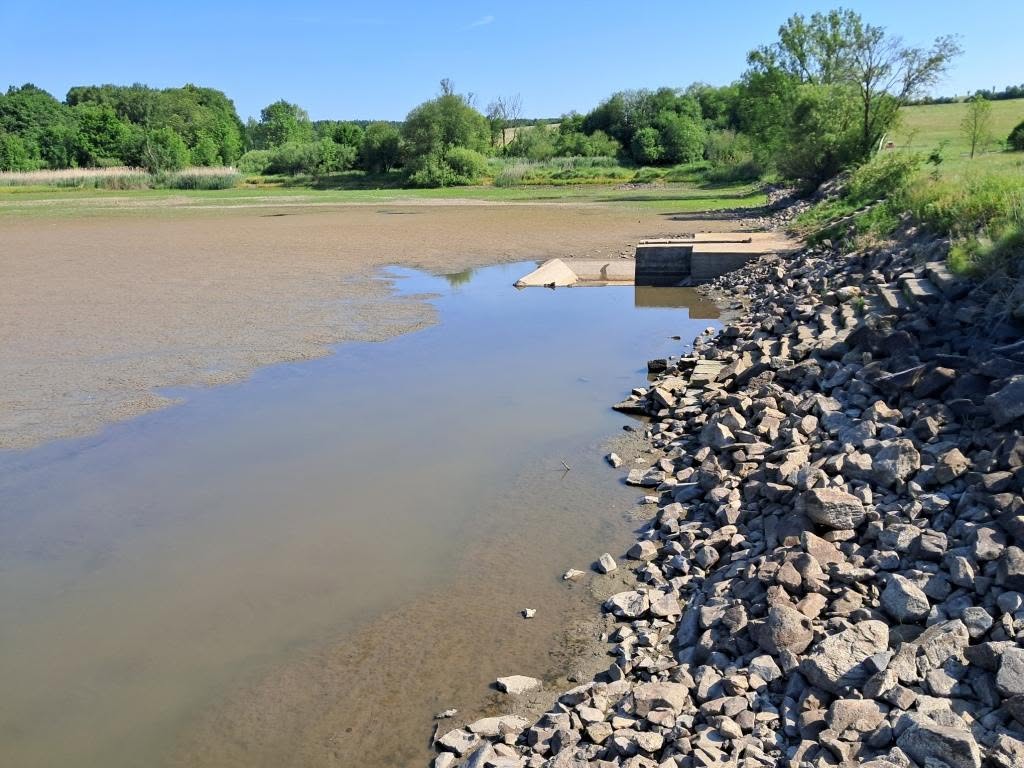
The main reason for the concerns surrounding this vast body of water—which is even designated as a nature reserve and serves as a vital habitat for migratory birds, as well as white-tailed eagles and gray herons—is the dam, which is no longer stable. When the dam was in danger of breaking two years ago, the municipal administration of Varnsdorf (Warnsdorf) ordered the water to be drained. A dam breach would have had catastrophic consequences for the neighboring communities of Horní Podluží and Dolní Podluží, as well as for Varnsdorf and the adjacent communities in Saxony. The floodwaters would naturally have followed the course of the Lausur River, which in the Czech Republic is known as the Lužnička—one of two rivers dammed into Velký rybník—and flows into the Mandau River at Großschönau.
However, the owner has so far failed to repair the dam. In the meantime, the severe drought did the rest, and almost nothing remained of the vast body of water. This situation will change again with increased rainfall during the colder months. To make matters worse, the discharge control system is also broken, meaning the water cannot be retained even at a lower level. For the reservoir to refill, the renovation of the dam is crucial. The owner—who is the proprietor of the Varnsdorf-based company Velveta—assures, however, that he is working to have the dam renovated soon, according to the daily newspaper Děčínský deník.
Cable Thieves Halt Train from Zittau to Liberec
The train from Liberec to Zittau should actually be traveling at high speed right now. The Czech Republic had spent millions upgrading the route from Liberec to the Czech-Polish border. A lot has happened on the German side as well. And in the end, the Polish side was finally persuaded to upgrade the short section of track running through their country without any stops. On the former slow-speed line, where the speed limit was 30 km/h, speeds of up to 100 km/h are now possible.
But now the train is once again being slowed down on that short stretch through Poland. That’s because cable thieves are running rampant there. Fiber-optic cables are repeatedly being stolen, causing service outages. Since the schedule is now based on the higher speed, the delays are quickly piling up.
District Administrator Martin Půta has now made the problem a top priority. Půta is originally from Hrádek nad Nisou and also has good contacts in Poland. After all, this is the line in the Liberec district with the second-highest ridership. An average of 2,500 passengers ride the train daily.
The district wants the track manager to repair damage more quickly and is calling for cross-border police cooperation. The goal is to stabilize the line by the start of the new school year (Tuesday, September 1).
Šluknov Wants to Buy Back Prefab Buildings
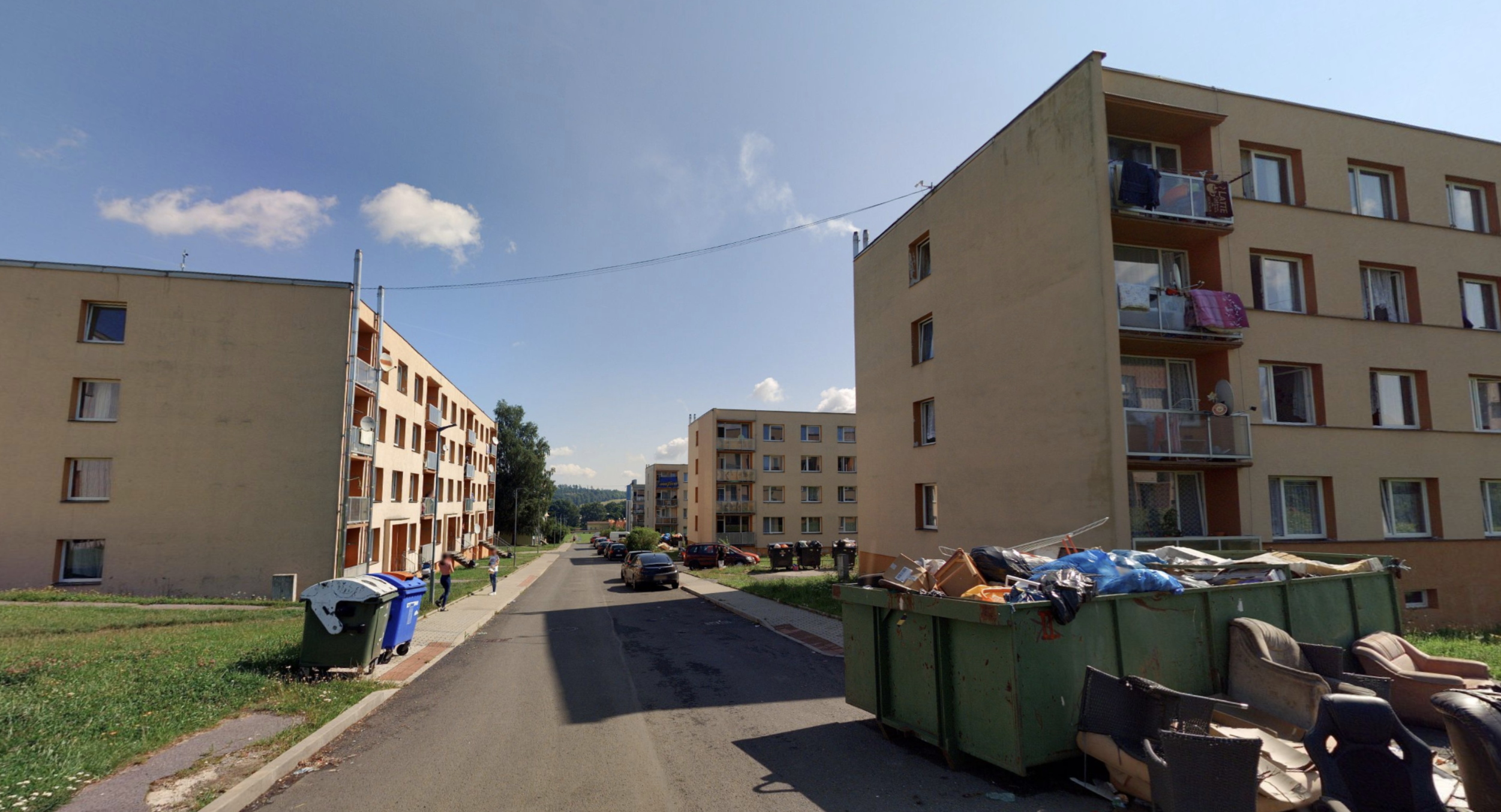
The planned repurchase of 400 apartments in the prefabricated housing complex in Šluknov (Schluckenau) is taking shape. Since the city does not have the necessary funds on its own, it has asked the state and the Ústí district for support. Since the state was unable to provide the 200 million crowns (8.3 million euros) it had originally pledged, it was decided to expand the EU’s “Just Transition” fund to include a “Housing” component. A decision on the allocation of these funds is imminent. The fund is actually intended for areas where coal was mined in the past or is still being mined today. That was never the case in Šluknov. The traditional coal-mining regions are located near Ústí and further west. However, Northern Bohemia is generally considered a problematic region, which is why there are also a large number of so-called socially marginalized communities here.
It is not only in Šluknov that there is great hope that the funding will be approved. For its part, the Ústí Regional Council has already approved a sum of 60 million crowns. The final decision rests with the Regional Parliament. The city itself is contributing up to 30 million crowns. The total purchase price amounts to 285 million crowns. The purchase is scheduled to take place before the end of this year.
The prefab housing complex is not only in need of renovation; it also suffers from an unfavorable demographic makeup. In addition to seniors, the residents here are primarily people who rely on welfare. A total of 1,500 people live in the complex—more than a quarter of the city’s entire population. The current owner, meanwhile, charges relatively high rent for the basic apartments, some of which are in dire need of renovation. Since housing subsidies cover the rent up to a certain amount, the landlord is guaranteed his income—a business model that is very common in the Czech Republic.
As soon as the apartments are back in city ownership, the city plans to begin renovations. Some of the buildings are also scheduled for demolition. Temporary housing solutions must be found for the tenants. Above all, the city wants to give these people a sense of hope for the future again. In collaboration with the Ústí district, the residents’ problems will be addressed. To this end, the district is currently seeking social workers to work with the residents in the housing complex starting October 1. A total of 7.5 positions are being advertised.
Beneš Bridge Will Cost More and Be Completed Later
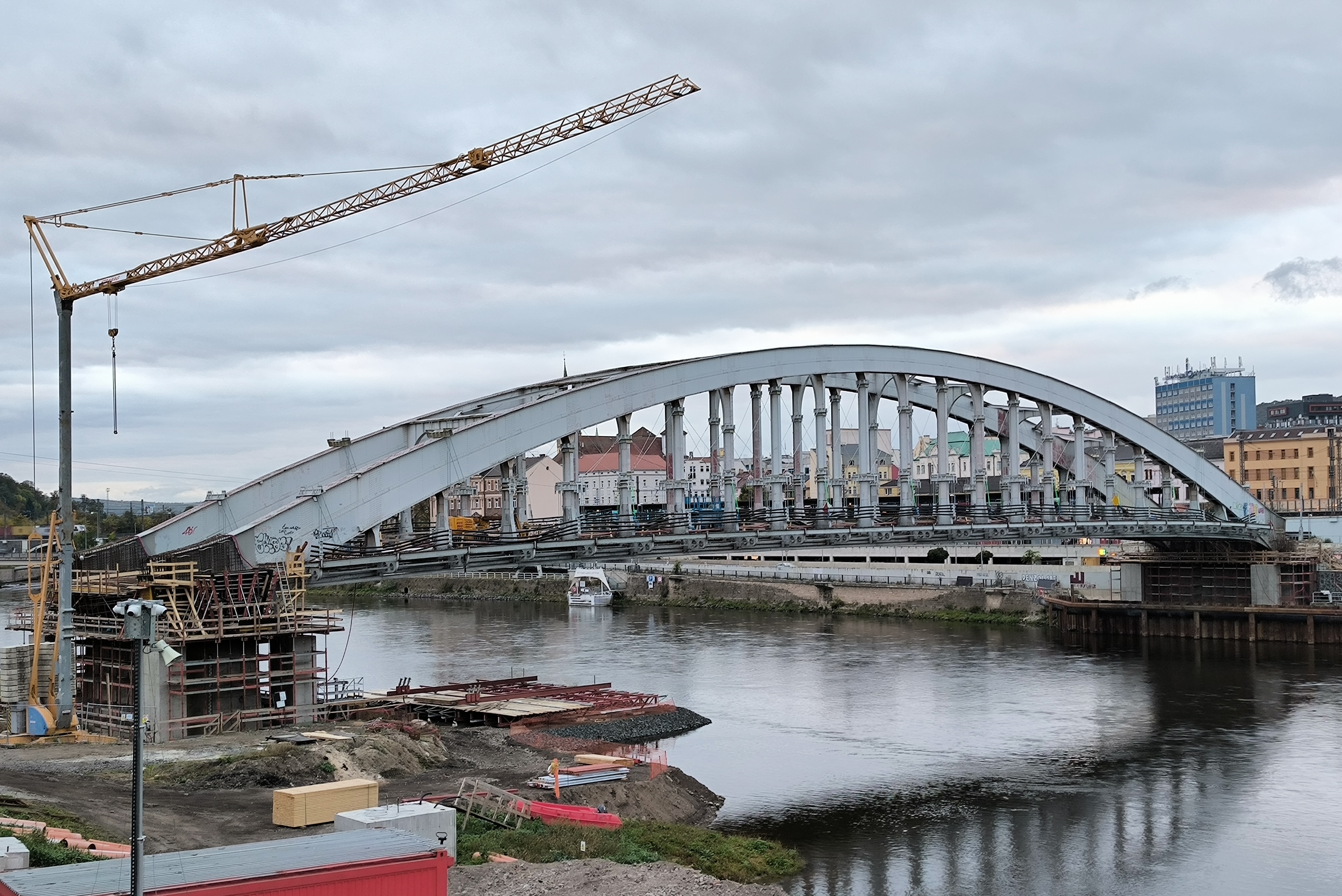
Renovation of the Beneš Bridge in Ústí nad Labem (Aussig) has been underway since spring 2025. This has resulted in significant traffic restrictions, as it is one of only two road bridges spanning the Elbe River in the district capital. It has now been announced that the reopening, originally planned for the end of this year, will no longer be possible.
This was due to unforeseen events. The most significant of these involved the pipes of the Střibrnický potok stream, through which the stream flows into the city. These pipes are located at the bridgehead on the side facing the city center. During the work, it was discovered that the pipes were dilapidated. Since they belong to the city, the renovation had to be coordinated with city officials. All in all, this took 100 days. But that’s not all. With the 100-day delay, the project is now fully entering the cold season, during which many types of work are not possible, such as laying the asphalt layer. Depending on how long the frost period lasts, the time until the opening will be extended by another two months, meaning the bridge won’t open until the end of May 2027.
Until then, drivers will have to continue using the Mariánský Bridge as a detour. Pedestrians and cyclists can use a temporary bridge next to the historic Beneš Bridge.
Not only is the reopening being delayed, but costs are also rising. According to the Ústí district, costs have skyrocketed by about 14 percent to 720 million crowns (30 million euros).
The start of construction on the bridge had already been delayed for so long that it ultimately had to be closed even to heavy vehicles. Buses were only allowed to cross the bridge one at a time. The renovation was long overdue.
The Dr. Edvard Beneš Bridge was built between 1934 and 1936 and was one of the most modern steel structures of its time. With a span of 123.6 meters between the piers, it held the record in Czechoslovakia at the time.
School is starting!
While students in Saxony have already been back in school for two weeks, children in the Czech Republic are still enjoying their summer break. For them, school doesn’t start again until next Tuesday—traditionally on September 1. This will sound familiar to older East Germans, as that used to be the date for the start of the new school year here as well. No annoying back-and-forth with school dates. No school in the sweltering heat of August—or in July, which is at least as hot. OK, so that means school sometimes even when Saxon kids are already stretching their legs in the beach sand in June, during the early summer season.
Still, given the high temperatures, the long summer break seems perfectly reasonable—especially since politicians have already proposed it. People regularly warn that during this long break, children will forget everything they’ve been taught. An argument as yawn-inducingly shallow as the summer news slump. What are children from southern countries supposed to say then?
But beware: Even in the Czech Republic, the debate over long summer vacations flares up again and again. Every year, parents face the same dilemma: What do I do with my kids, who have nine weeks off, while my annual vacation covers just a little more than half that time? So people sometimes move their work-from-home setup to their vacation spot, vacations are often spent at Grandma and Grandpa’s, and summer camps sell out as fast as tickets to an Oasis concert.
It’s no surprise, then, that the Minister of Education recently asked on his social media account whether it might be time to make some changes to the 101-year-old vacation system—such as spreading the long summer break more evenly throughout the year. Given the complaints from no few parents about vacation scheduling, the reactions were surprisingly negative: some suspected the minister of wanting to shorten the vacations, others accused him of wanting to extend them, and everyone declared him crazy. That’s why the minister has now clarified in an interview that absolutely nothing will change and everything will stay exactly as it always has been. The long summer break in the Czech Republic will remain long and will continue to run from July 1 through August 31.