

Meanwhile in Czechia... 35/26
18.09.2026
Prague Displays the Crown Jewels
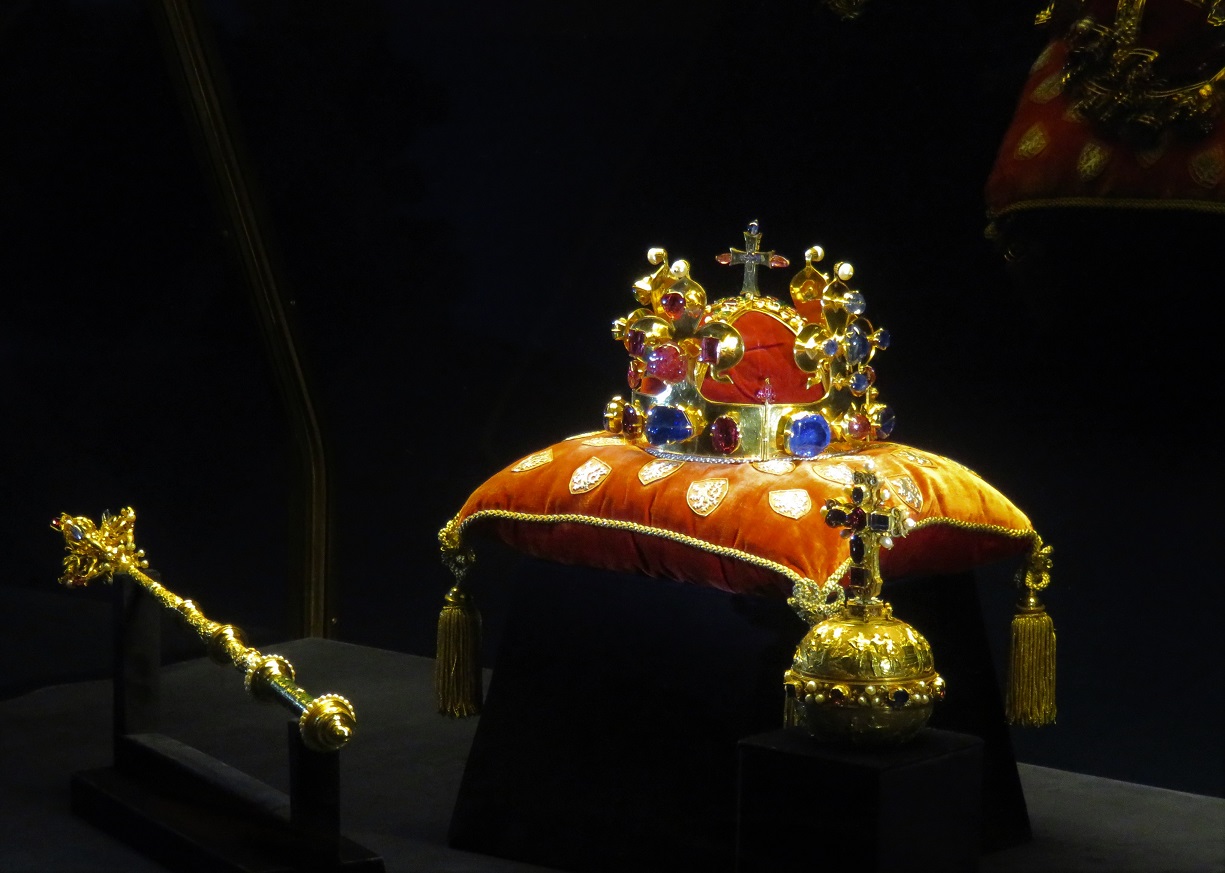
It’s that time of year again, starting Tuesday. The Crown Jewels are on display in the Vladislav Hall at Prague Castle (Hradčany). Since then, school groups have been able to view the precious artifacts. Starting Saturday and running through September 28, the Crown Jewels will be open to the general public. In addition to the Crown of St. Wenceslas, the Crown Jewels also include the Royal Scepter and the Imperial Orb.
The Crown Jewels are kept locked in the Crown Chamber at St. Vitus Cathedral and have rarely been displayed to the public in the past. President Petr Pavel decided to display the jewels for two weeks every year. To open the chamber, all seven key holders must gather at the same time. These are the President of the Republic, the Prime Minister, the Presidents of both chambers of Parliament, the Archbishop of Prague, the Mayor of Prague, and the Dean of the Metropolitan Chapter of St. Vitus in Prague.
Visits to this symbol of Czech statehood are available daily from 9 a.m. to 5 p.m. The last day of the exhibition, September 28, also marks Czech Statehood Day—the day on which the Duke of Bohemia, Saint Wenceslas, was murdered in 935.
60th Birthday of a Brilliant Czech
Outside the Czech Republic, the name Jára Cimrman will be familiar only to a few insiders. Yet he was a world-class genius who made significant contributions to many well-known inventions.
In reality, Cimrman is a complete fabrication, born from the imagination of screenwriters and radio journalists Jiří Šebánek and Zdeněk Svěrák. The name was first mentioned on September 16, 1966, on Czech Radio. A year later, the Jára Cimrman Theater began its first season, and it remains active to this day. Not only were numerous plays created that Cimrman was said to have written—but which were actually penned by Zdeněk Svěrák and Ladislav Smoljak—but Lectures on research about and by Jára Cimrman have also been—and remain—an integral part of every theatrical performance. A Cimrman scholar is known in the Czech Republic as a “Cimrmanologist.”
The plays and quotes from them are part of general knowledge in the Czech Republic, and many quotes have taken on a life of their own. Jára Cimrman, too, has, in a sense, taken on a life of his own. In polls asking who the most famous Czechs are, the Phantom regularly ranks among the top ten, in good company with figures such as Emperor Charles IV, Saint Wenceslas, Johann Amos Comenius, Jan Hus, Tomáš Garrigue Masaryk, Václav Havel, Martina Navrátilová, and Karel Gott.
Cimrman is said to have actually lived sometime in the 19th century. Initially known as a steamroller operator and amateur sculptor, he soon became a genius who, among other things, invented yogurt, founded a puppet theater in Paraguay, missed the North Pole by a mere 7 meters, helped Thomas Alva Edison invent the incandescent light bulb, and rented a room to Gustave Eiffel.
He also left his mark near the Saxon-Czech border. It is said that in the rest stop restaurant at the Komáří vížka (Mosquito Tower), the brilliant idea for a seated barrel came to him while he was in the restroom there. The logic was this: If people drink beer while sitting, why shouldn’t beer also mature in barrels while seated?
One of the largest organs in the Czech Republic is playing again
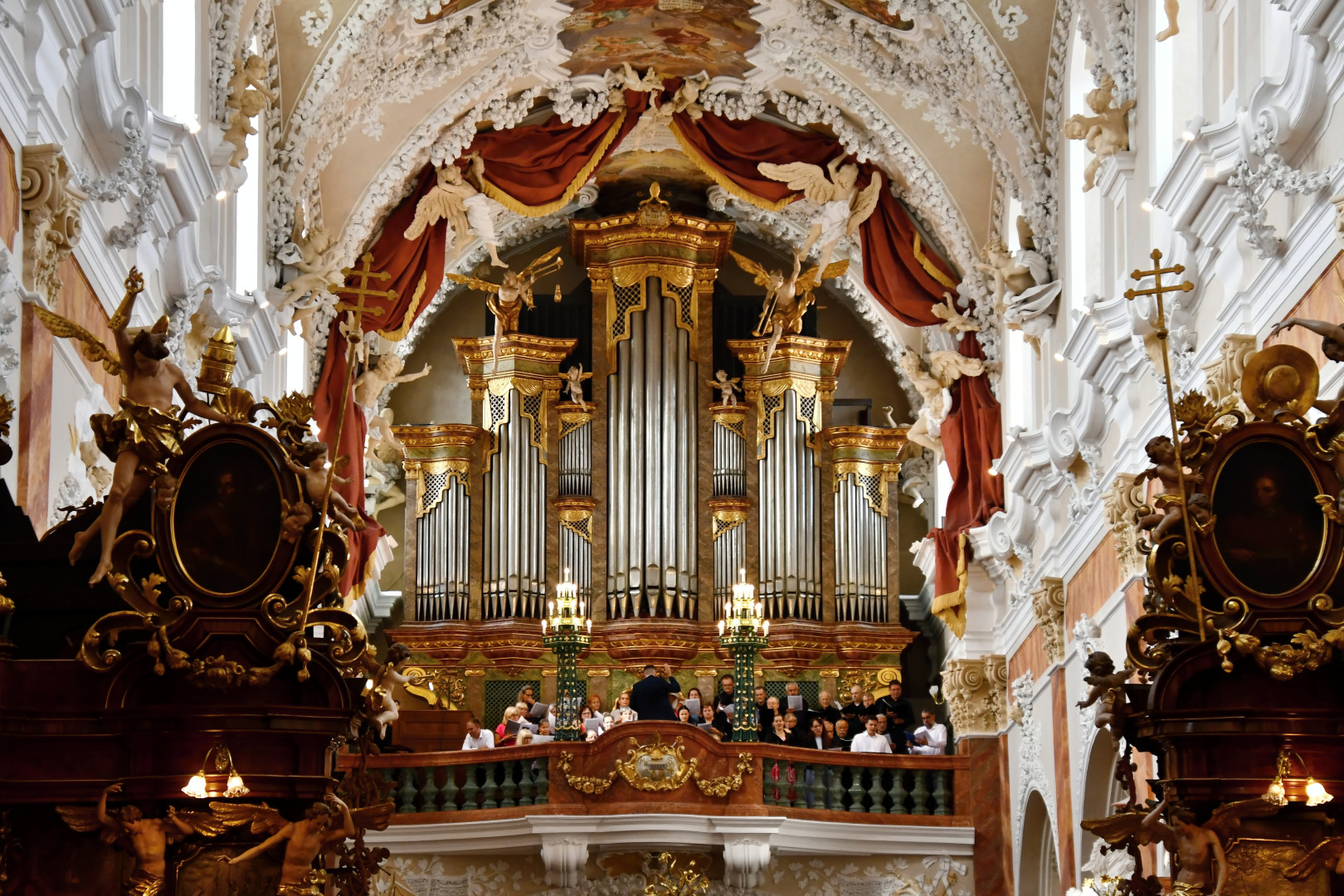
One of the largest organs in the Czech Republic has been playing since early September, very close to Saxony. On September 6, Stanislav Přibyl, Archbishop of Prague and Apostolic Administrator of the Diocese of Litoměřice (Leitmeritz), blessed the organ of the Church of the Assumption of the Virgin Mary at the Osek (Ossegg) monastery during a festive Mass. A festive opening concert took place on the same day. The Czech organist Daniel Knut Pernet performed on the organ.
In fact, it was the first time the organ had been heard in its full glory. When it was built in 1933 by the renowned organ-building firm Rieger Brothers of Krnov (Jägerndorf), only three manuals were completed. Then came the war, followed by the expulsion of the predominantly German population. With the communists’ violent seizure of power in 1948, persecution of the Church and religious orders began, and these were also banned. The Cistercian monastery was turned into an internment camp for nuns and monks. Later, the building’s structure suffered from a lack of use and maintenance. This was also true of the organ.
Following the comprehensive renovation of the monastery church between 2018 and 2021, restoration of the organ began in 2021. This work was once again entrusted to a company from Krnov. The Ponča company won the bidding process. As part of the restoration, the originally planned fourth manual was also installed. This manual is positioned above the church choir and is played remotely from the organ loft. As a result, the organ now has 6,003 pipes, more than the new organ at St. Vitus Cathedral in Prague, which has 5,755 pipes. However, the organ in Prague has 121 stops, while the expanded organ in Osek has 83.
The restoration and expansion of the organ cost 24 million crowns (about 1 million euros). The renovation of the monastery church had previously cost 130 million crowns (5.4 million euros).
Controversy Over War Memorial in Dubí
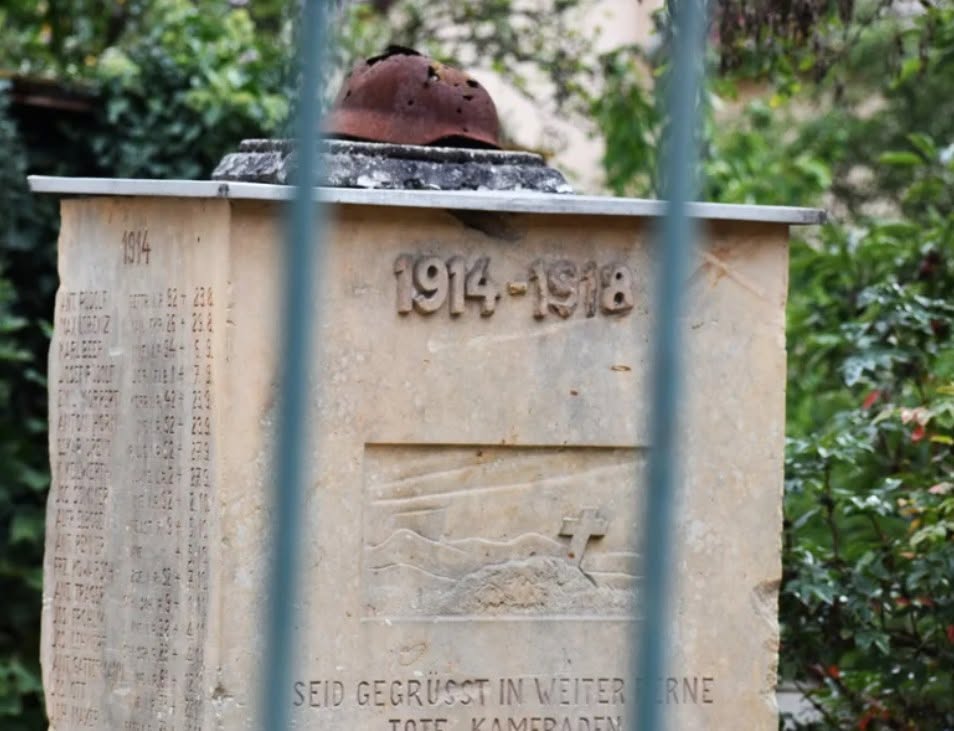
A monument commemorating those who fell in World War I is currently at the center of a major controversy in Dubí (Eichwald). The city had decided to restore the monument and reinstall it at its former location in a small grove above Goethe Park. The memorial has a turbulent history: After the expulsion of the German population following World War II, it was torn down and buried in the ground. In the early 1990s, Lubomír Koudelka and a friend dug it up and placed it in his garden. It consisted of a rectangular block inscribed in German with the names of the fallen from Dubí. On top of the block stood the torso of a soldier. The soldier now stands a few meters away from the monument. Instead, the new monument features a rusty helmet on its pedestal.
The city has already reached an agreement with the owner, Lubomír Koudelka, regarding the donation of the monument, and an agreement is also imminent with the landowner where the monument is to be re-erected.
However, it remains unclear whether the monument will be re-erected at all, as the Czech legionnaires from Teplice have spoken out against the restoration in an open letter. They claim it was created in an atmosphere already inflamed by fascism, although no evidence of this has been found. During World War I, the legionnaires were Czech fighters who did not serve in the Austro-Hungarian army but fought on the side of the Entente—that is, Great Britain, Russia, and France. After World War I, they formed the core of the army of the new state of Czechoslovakia. Later, they were also active in the anti-fascist resistance.
However, the open letter from the Legionnaires appears to stem more from a local political dispute. The Legionnaires are led by Petr Pípal, the former long-time mayor of Dubí, who hopes to return to City Hall in the October elections. The current mayor, Jiří Kašpar, had initiated the monument’s restoration. He argued that the monument is part of history and commemorates citizens of the town who lost their lives—and that these were not only Germans. Furthermore, it is a war memorial registered in the Ministry of Defense’s database, which is why the city has a duty to take care of it. Funds from the ministry are also available to finance the reinstallation.
Historian Jan Grisa points out the unusual behavior of the Legionnaires. Throughout the Czech Republic, war memorials are being re-erected or restored, often with the consent of the local population and not infrequently with the involvement of the Legionnaires—even in areas that were once settled by Germans.
Mourning Architect Ivan Nosek
 St
Architect Ivan Nosek died at the age of 85. He was the designer of St. Wenceslas Chapel in the village of Bílka pod Milešovkou at the foot of Milešovka (Milleschauer) in the Bohemian Uplands. The artistic design of the chapel’s interior was the work of his artist friend Jan Koblasa. Both were active in Germany after their emigration. Nosek also worked for a time for the City of Cologne. After 1989, he returned to the Czech Republic from time to time and spent his summers at his family’s weekend home in Bílka. His father, also an architect, was forced to move with his family to Northern Bohemia in 1948. Nosek therefore grew up in Teplice, graduated from the Secondary School of Industry in Děčín, and went on to study in Prague.
During his time in exile, the historic chapel in Bílka had fallen into disrepair. In the 1990s, he began planning a new chapel. The modern building stands almost exactly where its predecessor once stood. Together with Koblasa, he also made significant contributions to the “Friendship Trail.” This trail winds around the village of Bílka and features a total of 14 works of art by Czech and German artists.
Nosek and his family also established the tradition of the Wenceslas Festival, which is traditionally held around the feast day of St. Wenceslas. He died just a few days before the traditional festival, which takes place this year on September 26.