

Meanwhile in Czechia... 39/26
16.10.2026
Upset in the Municipal Elections in Ústí
Czech Prime Minister Andrej Babiš’s ANO party suffered a defeat in last weekend’s local elections. The party lost its mayors in several major cities. And in places where it had not previously been in power, such as the capital, Prague, it fell far short of expectations. However, ANO suffered its heaviest defeat in Ústí nad Labem (Aussig). There, the opposition coalition Jedno Ústí (One Ústí) scored a sensational victory, winning an absolute majority of the votes. This resulted in an impressive 22 seats in the new city council—three more than needed for an absolute majority. Ústí nad Labem had previously been considered a safe stronghold for ANO, where it had held the mayoral seat—occupied by Petr Nedvědický—for two terms, totaling eight years. Even before that, in 2014, the mayor had come from ANO, and the party continued to exert a decisive influence on city affairs through 2018. In this respect, a 12-year ANO era is coming to an end. But even in parliamentary and regional elections, ANO was usually considered a sure winner in Ústí well in advance. Since 2020, ANO has also held the position of regional governor.

The idea that the Jedno Ústí alliance might still win was perhaps just a faint hope held by the opposition. The victory with an absolute majority, on the other hand, is a sensation. ANO came in second, but with only six seats. Jedno Ústí is also likely to provide several district mayors. The lead candidate, Tomáš Vohryzka, has already been confirmed as the new primator (mayor). The former head of the municipal utilities has proven himself to be a capable campaigner. The real winner, however, is the entire coalition. Without so many parties agreeing on a single list, the opposition might not have succeeded. The list unites the Pirates and the Greens, who are relatively far to the left, through pragmatic centrist parties such as the mayoral party STAN or the Ústí Civic Forum, all the way to liberal-conservative parties such as the Christian Democrats, TOP 09, or the newly founded Naše Česko (Our Czech Republic). Most of the elected representatives of Jedno Ústí have many years of experience, not only in local politics.
But it wasn’t just in Ústí that ANO lost control of city government. In Děčín (Tetschen), too, it is unlikely that an ANO mayor will govern in the future. The incumbent, Jiří Anděl, was able to win the election again with ANO, but secured only 7 seats. Four other lists, led by Volba pro město (Choice for the City), have now joined forces and intend to form a government without ANO.
In other North Bohemian municipalities, the mayors were re-elected by an overwhelming majority. This includes towns such as Česká Kamenice (Böhmisch Kamnitz), Krásná Lípa (Schönlinde), and Dolní Poustevna (Niedereinsiedel), which have been under stable leadership for some time. However, the relatively new mayors in Šluknov (Schluckenau), Varnsdorf (Warnsdorf), Krupka (Graupen), and Dubí (Eichwald) will also remain in office. In Dubí, the young mayor Jiří Kašpar won with an overwhelming majority of 13 out of 17 seats. The former long-time mayor Petr Pípal and his slate secured only 2 seats. Voter turnout across the Czech Republic was 48 percent. In Teplice (Teplitz), the existing coalition of ANO and Volba pro Teplice (Choice for Teplitz), led by Mayor Jiří Štábl, is able and willing to continue its work.
In addition to the municipal elections, citizens also elected one-third of the seats in the Senate, the upper house of the Czech Parliament. Here, too, ANO fell short of expectations. Although runoffs are still pending in most constituencies, it is foreseeable that the current balance of power will be confirmed. The opposition in the lower house thus continues to hold a clear majority and is expected to continue to provide the Senate president in the person of Miloš Vystřčil (ODS). This gives it control over the second-highest office in the state, after the independent president.
Traditionally, these elections also serve as an initial test of public sentiment for the government after nearly a year in office. It wasn’t just ANO that suffered a setback. The two smaller governing parties came away empty-handed in the Senate and also failed to make a significant impact at the municipal level.
Czech Republic’s Tallest Structures Demolished
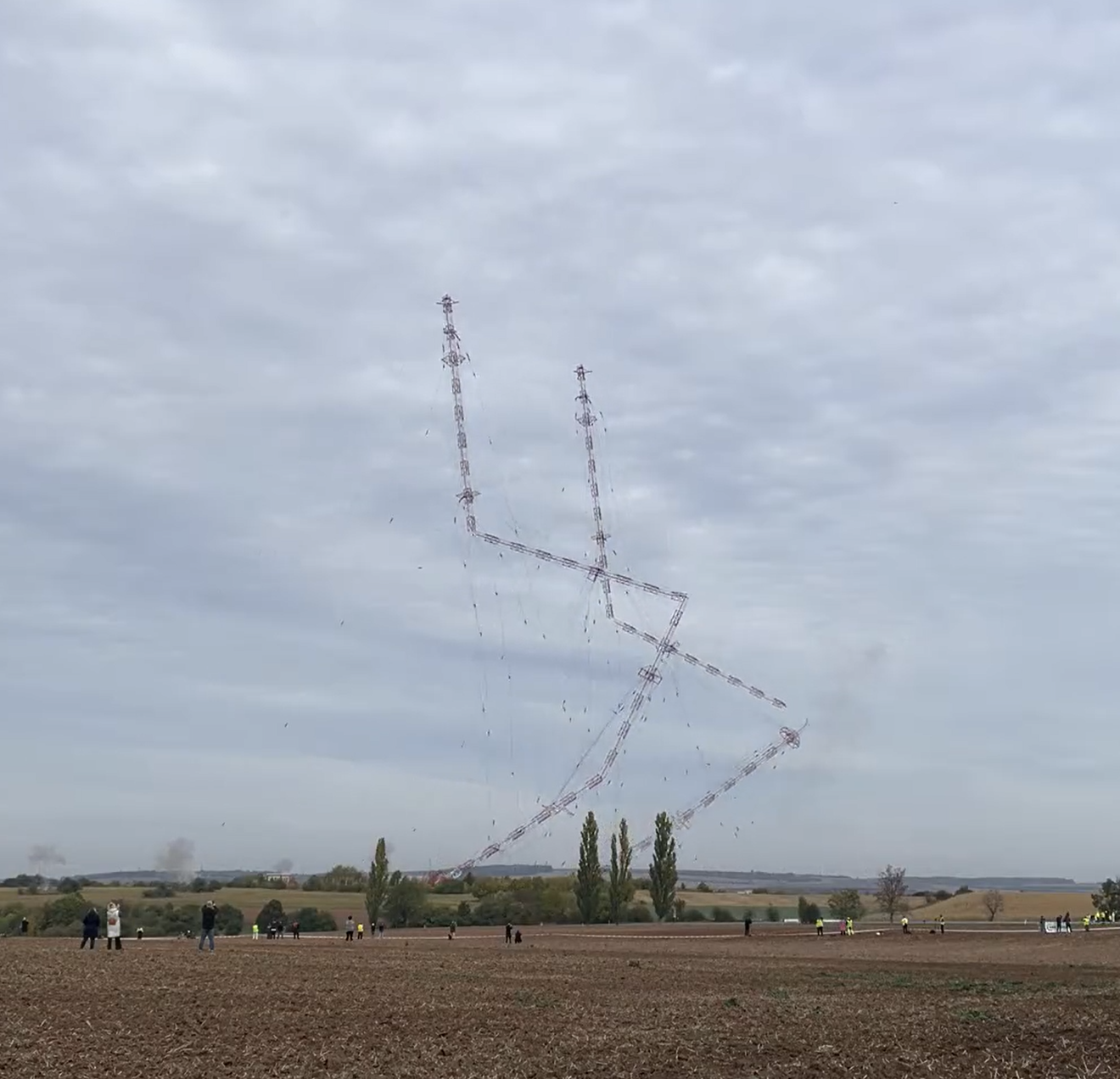
At 355 meters high, they were the tallest structures in the Czech Republic: two transmission towers near Liblice, close to Český Brod, about 30 km east of Prague. They were demolished yesterday morning. The towers served as medium-wave transmitters and had been put into operation in 1976. However, the operator saw no way to continue operating them profitably. In 2021, public broadcasting operations were discontinued, and in recent years, only a single private broadcaster had used them intermittently.
There had been resistance to the demolition, based on the argument that the masts were architectural monuments. Until the very end, fans had tried to save them, including by submitting a petition to the Ministry of Culture, but to no avail. The masts were brought down by detonating several tension cables. A video of the event is also available.
The tallest structure in the Czech Republic is now also a radio tower, located in Krašov near Plzeň (Pilsen). It stands 347 meters tall and also dates back to the 1970s.
Prebisch Gate Under the Spotlight
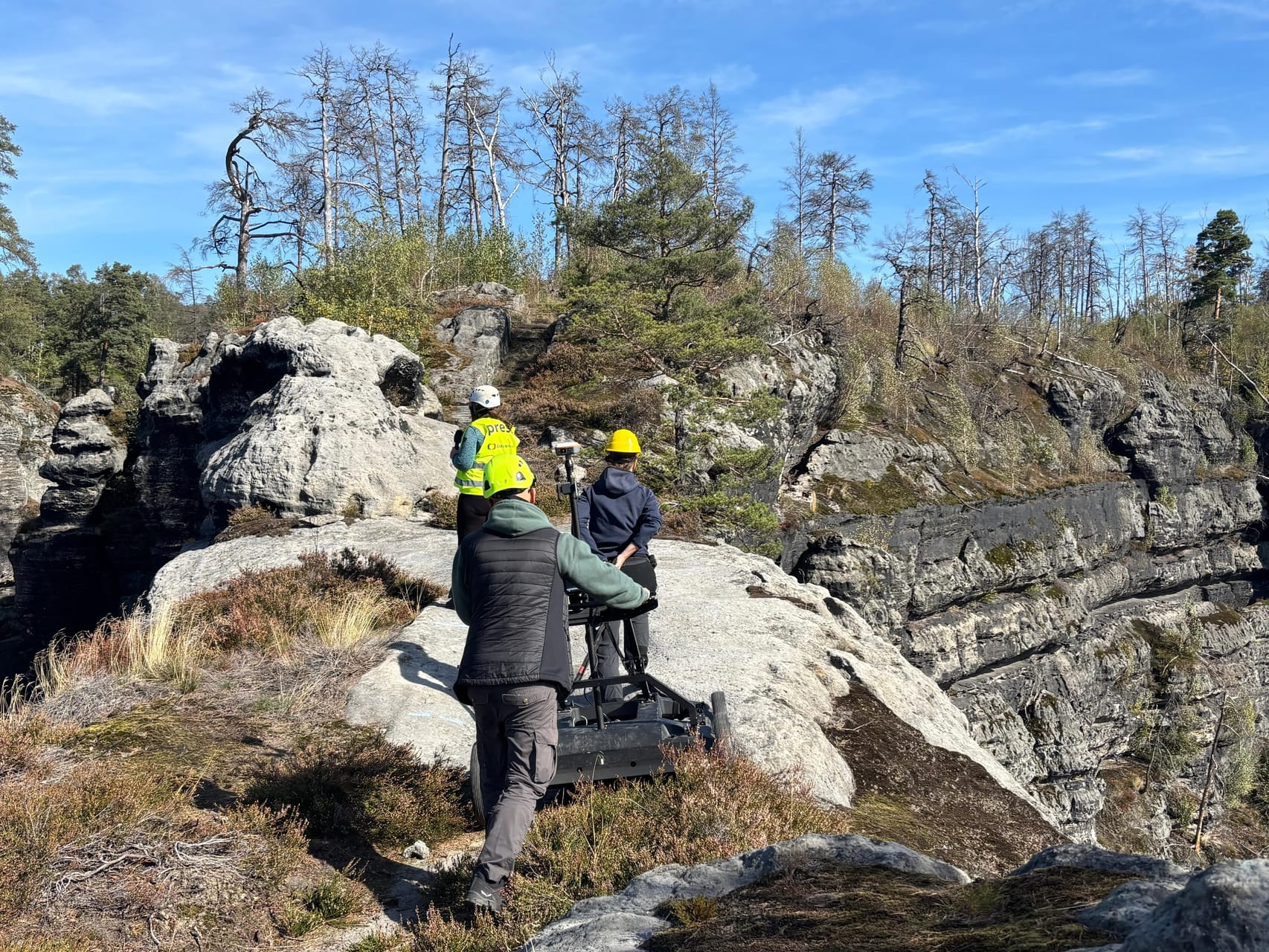
In early October, Czech geologists, together with the Bohemian Switzerland National Park Administration and a private company, examined the Prebischtor. They used radar technology and seismic surveys, which essentially allow a look inside the rocks, comparable to an X-ray at the doctor’s office.
The goal of the investigation is to assess the stability of this landmark of Bohemian Switzerland. Cracks had been discovered several years ago, and changes in these cracks were now being examined. Analyzing the data will take about half a year.
Baťa Shoe Production in the Czech Republic Comes to an End
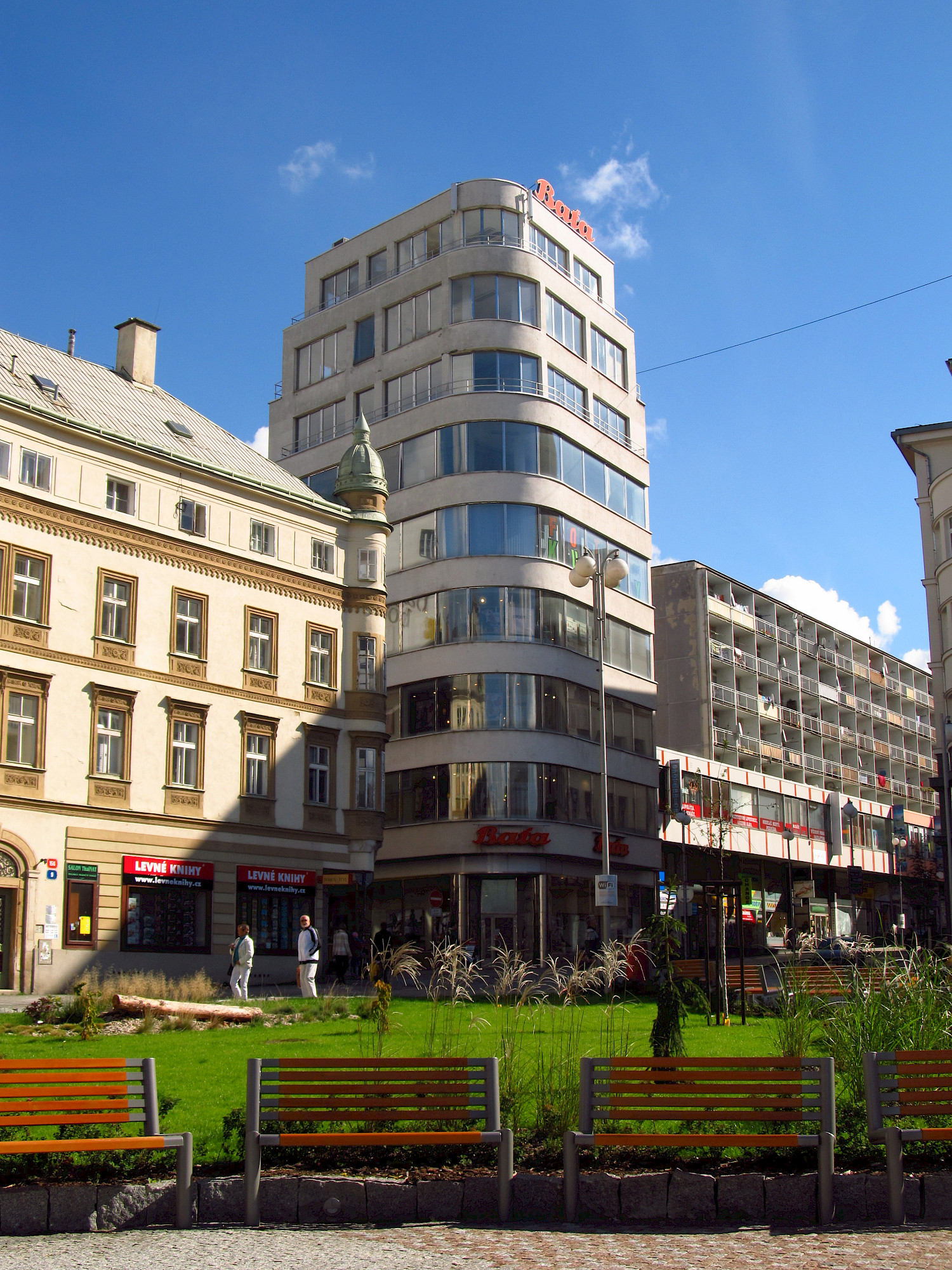
The shoe manufacturer Baťa, headquartered in Zlín, was once one of the most important companies in Czechoslovakia. The brothers Tomáš and, later, Jan Antonín Baťa led the company to worldwide fame during the First Republic. They introduced many new production methods, revolutionized shoe manufacturing, and had a decisive influence on the city of Zlín with their progressive ideas (which is why a visit is well worth it).
During the Protectorate, Jan Antonín Baťa fled to South America, where he founded several cities. After the war, the company was nationalized. Two of Tomáš Baťa’s sons founded a new company under their own name in Canada during World War II and then fought with Jan Antonín Baťa for years over the rights to the name. After the Velvet Revolution, they did not regain ownership of the company but purchased parts of it.
There were, and still are, many shoe stores operating under the Baťa name, often in very prominent locations, such as in Liberec or in Prague at the lower end of Wenceslas Square. However, the shoes were mostly manufactured in low-wage countries in Asia and Africa. Only one production facility in Dolní Němčí, south of Zlín, remained in operation.
Now the company has announced that it will close this production facility, a move that will affect about 100 employees. This marks the end of an important chapter in the Czech Republic’s industrial history.