

Welcome to the Euroregion Elbe/Labe!
News
The "Hunger Stones" can be seen near Děčín
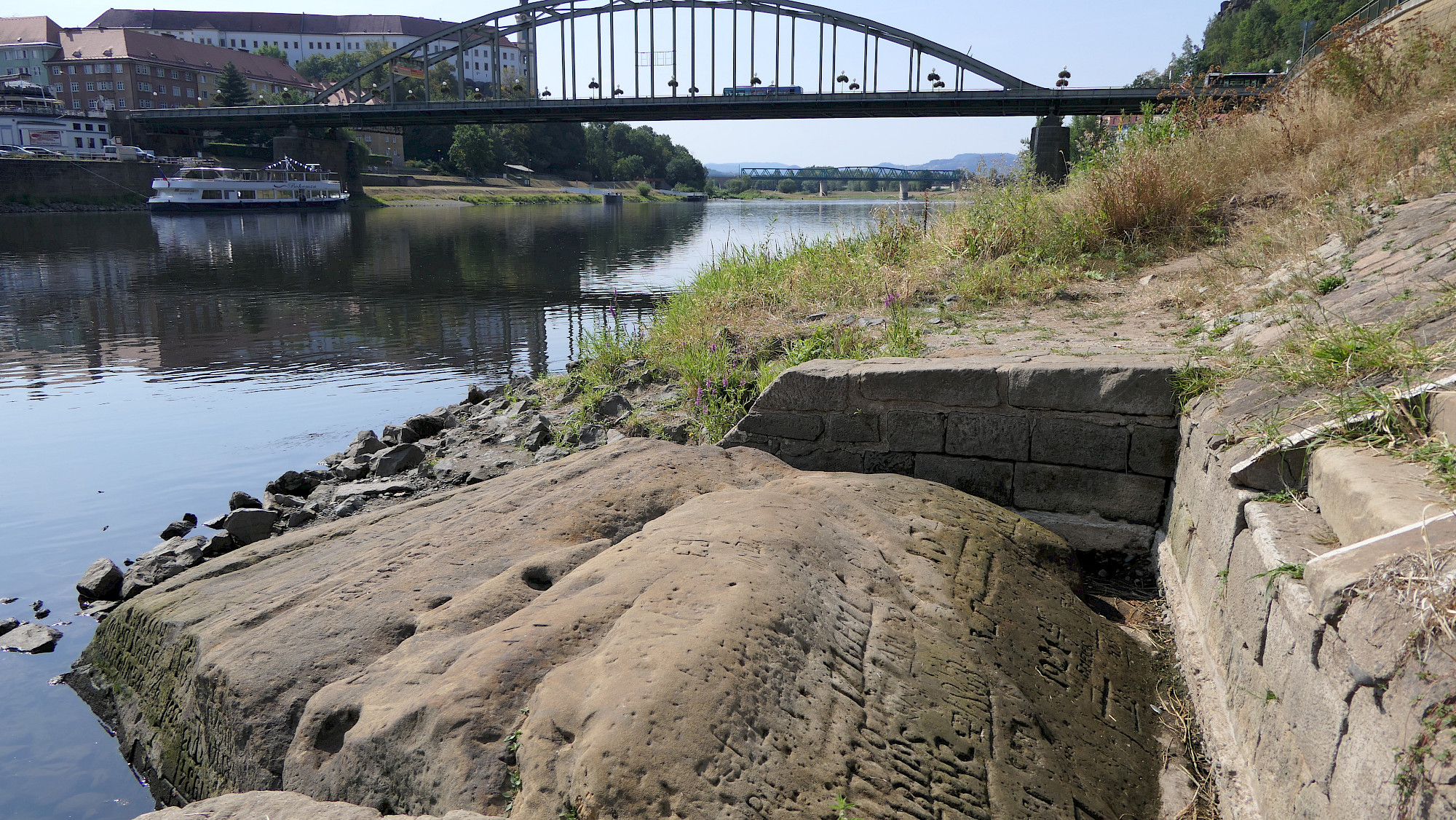
Traditionally, during dry summers, the so-called “Hunger Stones” can be seen along the Elbe near Děčín. These are large stone blocks with engraved inscriptions. Most of these inscriptions record the years when the Elbe’s water level was at its lowest, thereby threatening the local economy. In the past, the Elbe was one of the most important transportation routes, and the people of Děčín were economically dependent on it—hence the name “Hunger Stones.” This phenomenon occurs only on unregulated sections of the river. The last Elbe barrage is located in Ústí nad Labem; although there are modifications downstream (riverbanks, navigation channels), the river flows unregulated beyond that point.
The Elbe Water Authority (Povodí Labe) has now had the stones re-identified and cleaned. In the process, an employee even found a “new” Hunger Stone in Děčín. The stone has actually always been there, but the inscriptions were no longer legible, and the stone had apparently fallen into oblivion. Two dates (1934 and 1947) are engraved on it—two classic drought years that also appear on other stones. In addition, the name of the person who engraved the number 1934 is clearly visible: F. Schade. The year 1947 shows that, despite the expulsion of a large part of the original population after World War II, the “Hungerstein” was still well known. It apparently only fell into oblivion afterward. Such stones can also be found near Hřensko. Employees of Povodí Labe counted a total of 15 stones there.
Today, the economic situation is no longer threatened due to alternative transportation routes. However, the drought is also taking its toll on the Czech Republic. This affects not so much the already decimated cargo shipping traffic as it does agriculture and the flora and fauna. In addition, the first hydroelectric power plants have been shut down to conserve water. The fact that the water level in Děčín does not fall below 115 centimeters is due to the Vltava Cascades. This system of dams is responsible for ensuring a minimum flow rate of 40 cubic meters per second in the Vltava River, primarily to guarantee an adequate water supply for the capital, Prague. As a side benefit, this also supplies water to the Elbe River, allowing steamboats in Dresden to continue operating to a limited extent.
After all, a historic moment is now approaching at the Vltava Cascades, as the Orlík Dam will soon no longer be allowed to be tapped to prevent the water level from falling below the minimum threshold. The next major reservoir, Slapy, will soon take over. According to historians, this happens only once every 50 years. Nevertheless, there is still enough water in reserve at Slapy.
Saxony Informed About Planned Elbe Barrage
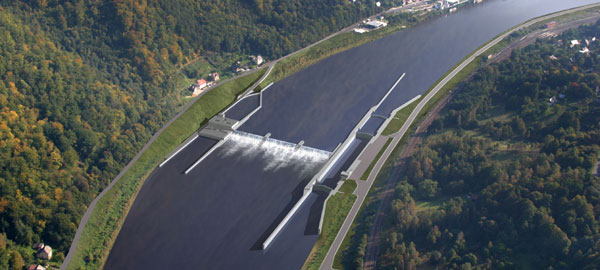
As reported in the last newsletter, the Czech Republic is moving forward with preparations for the construction of a barrage on the Elbe River in Děčín. The required environmental impact assessment is expected to be completed shortly and submitted to the relevant authorities and the public for review.
At the end of July, Czech Environment Minister Igor Červený informed Saxony’s Environment Minister Georg-Ludwig von Breitenbuch, as well as two state secretaries from the Ministries of Transportation and Infrastructure, of this development. According to the Czech daily newspaper Mladá fronta Dnes (MfD), Breitenbuch expressed surprise that the Czech Republic intends to build the barrage after all. Apparently, the Saxon government had not been adequately informed. Saxon media are also reporting significantly less on the Saxon-Czech border region than they did two years ago.
However, according to MfD, both Breitenbuch and Sören Trillenberg, State Secretary at the Ministry of Infrastructure, were impressed by the Czech plans and announced their support. According to the MfD, no details were provided on what form this support might take. This, however, represents a shift in Saxony’s previous policy, which had always viewed the construction of the barrage critically—primarily due to concerns about deteriorating water quality, but also because of its impact on the flora and fauna in the Saxon Elbe region.
The Czech Republic sees the 250-million-euro project as an opportunity to transport more goods by water. The Ministry of Transport cited a figure of up to 4 million metric tons per year. However, this maximum was previously reached only in the 1980s, when there were far more cargo ships than there are today. In the first quarter, a mere 116,000 metric tons were transported on the Elbe. Germany cannot guarantee the water levels demanded by the Czech Republic almost year-round, and the construction of barrages on the German side has been ruled out.
There is also hope that the water table will rise in the area where the water is impounded. The barrage is insignificant for water retention—which is crucial during this drought—because its storage capacity is far too small for that purpose.
The Czech National Audit Office, which oversees the use of taxpayer funds, has also criticized the wisdom of the new construction in the past. Critics view the investment sum of 250 million euros as too low, since the Czech Republic has used this figure in the past, while prices have since risen sharply in almost all sectors.
Majority in Favor of Cell Phone Ban in Schools
Eight out of ten Czechs support a ban on cell phones in schools. This was the finding of an opinion poll conducted by the firm Median for Czech Radio in early August. Of more than 1,000 respondents, 78 percent supported the ban, primarily parents and the older generation. Among young people, the proportion of supporters was just under 50 percent. However, three-quarters of all respondents also agreed with the statement that schools should teach children how to use digital technology.
The Czech Republic plans to implement a cell phone ban starting with the 2027–28 school year. A few weeks ago, the government approved a complete ban on cell phones in kindergartens, elementary schools, and the lower grades of multi-year high schools and conservatories. The ban applies not only during class but also during breaks, after-school care, and in the cafeteria. However, schools may permit the use of digital tools for instructional purposes. The law must now be passed by Parliament and signed by the President.
However, such a ban is already in effect at 90 percent of schools, which is why the opposition has described the law as pure activism. “A blanket ban solves nothing. What matters are individualized, enforceable solutions from schools and cooperation among schools in this area.”
Setback for the Ziegenbahn
The Central Planning Commission of the Ministry of Transportation has spoken out against the renovation and reopening of the final section of the railway line from Děčín to Oldřichov u Duchcova. The costs, estimated at around 300 million crowns (12.5 million euros), would be too high. Due to limited funds, more important lines would have to be renovated first. In contrast, only seasonal tourist service is planned for the line, which is popularly known as the “Goat Railway.”
The section in question is the 8.5-kilometer stretch from Krupka město (Graupen Stadt) to Oldřichov, which is currently not operational. Since 2022, the Ústí District has been operating a tourist service from Děčín initially to Telnice, which was extended to Krupka in 2024. The service is well-utilized, which is why the district expects the opening of the final section to also boost tourism. It also offers a stop in Teplice (Lesní brána Station – Forest Gate) and, with smart connections to other transportation options, would increase the appeal of the Teplice region. Even today, passengers can transfer in Krupka to the chairlift up to the Mückentürmchen.
The Ústí District is therefore not giving up yet. The district government is continuing the policy of the previous administration. And even the Ministry of Transportation has not yet closed the door. Officials noted that renovation is not possible “at this time” but expressed openness to a renovation if the Ústí District were to contribute funding.
Schluckenau Residents Worried About Children’s Hospital

About 55,000 people live in the so-called Šluknov Corner, the land promontory jutting into Saxony that includes towns such as Rumburk, Varnsdorf, Mikulášovice, and Šluknov—the small town that gave the region its name. In recent days, unease has been growing in the region, which is repeatedly threatened with being left behind by the rest of the country. Currently, these fears center on medical care for children, as the pediatric clinic at the hospital in Rumburk is set to close. The daily newspaper *Děčínský deník* reports on this. There has not yet been any official confirmation from the operator, *Krajská zdravotní*, a hospital network under the jurisdiction of the Ústí District. However, staffing shortages are cited as the reasons for a possible closure. The clinic’s long-time director is retiring. Parents would then have to take their children to hospitals in Česká Lípa, Děčín, or Liberec for inpatient treatment.
Mayors are organizing protests against a possible closure. The association responsible for the further development of the Schluckenau region is set to address the issue shortly. Above all, everyone is demanding an explanation from the district.
This is not the first time a clinic at Rumburk Hospital has closed. Years ago, the maternity clinic here ceased operations. At one point, the hospital’s very future was in jeopardy when the then-municipal hospital was forced to file for bankruptcy. It was saved by its integration into the Ústí District Hospital Network, which includes, among others, the hospitals in Teplice, Ústí, and Děčín. Other solutions, such as cross-border healthcare at the nearest Saxon hospital in Sebnitz, have so far failed.
(This is an automatic translation by DeepL Translator.)
Škoda Defies the Trend at Volkswagen
Škoda, the Czech automaker that is part of the Volkswagen Group, increased both revenue and profit in the first half of 2026, while Volkswagen in Germany is suffering losses and has announced massive job cuts. This is according to the half-year financial report published today.
At Škoda, revenue rose from 15 to 16 billion euros, and profit increased from 1.29 to 1.37 billion euros. This was primarily due to the electric models Elroq and Enyaq. Overall, Škoda sold approximately 630,000 vehicles, an increase of about 8% compared to the same period last year.
Volkswagen in Germany is facing a major restructuring due to declines in revenue and profit. Škoda Auto announced this month that this would have no direct impact on its own operations. However, concerns have already been raised in the media that Škoda’s profits could be used to offset Volkswagen’s losses in Germany.
Škoda vs. Škoda
 For historical reasons, there are two companies named Škoda in the Czech Republic: the aforementioned and better-known automaker Škoda Auto, headquartered in Mladá Boleslav, and the company Škoda Transportation, headquartered in Plzeň (Pilsen). The latter primarily manufactures rail vehicles and buses. Both companies have shared the logo featuring the winged arrow until now, but not for much longer. A spokesperson for Škoda Transportation announced this week that, starting in June 2029, this logo will be used exclusively by Škoda Auto. A basic agreement on this was reached in 2022, and the timeline has now been announced. The new logo for Škoda Transportation is set to be unveiled in the spring of 2028.
Czech Republic Found Guilty of Human Rights Violations
The Czech Republic was recently found guilty by the European Court of Human Rights in two cases, both of which concerned the rights of Roma.
One case concerned the death of a 46-year-old Romani man, Stanislav Tomáš, in Teplice during a police operation in 2021. He had been causing a disturbance while under the influence of drugs. An amateur video recording shows that the police officers knelt on the man’s neck for several minutes during the arrest. At the time, the General Inspectorate of Security Forces concluded its investigation, finding that the police officers had not committed any criminal offense. After the Czech Constitutional Court dismissed a complaint in this matter in 2023, lawyers from the European Roma Rights Center (ERRC) and the Forum for Human Rights (FORUM) filed a complaint with the European Court of Human Rights.
The ruling, issued two years later, now states that the police officers restrained a vulnerable person in a potentially life-threatening position without properly monitoring his health or responding quickly enough after he lost consciousness. The authorities had neither established an adequate legal framework for the use of the prone position nor ensured adequate training for police officers. As a result, the police violated the right to life.
The second case concerns an attack on Roma by soccer hooligans in Sokolov in 2021. The European Court of Human Rights found that the investigation was insufficient and inadequate and that the Czech authorities had ruled out a possible racist motive. The case is now being handled by the Ministry of Justice.
President Pavel’s Veto
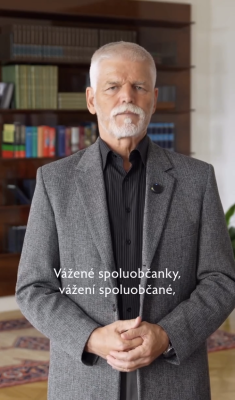
The conflict between the Babiš government and President Pavel, which has been simmering for months, has been reignited. On Wednesday, the president vetoed a bill that would have granted the government broad powers to take on new debt. The president criticizes the bill on several points as going too far and is supported in this assessment by various experts. In a video, Pavel explains his reasons in detail.
The president’s veto has only a suspensive effect and can be overridden by Parliament with a simple majority. This is expected to happen on August 25, which would delay the law by only about a month. Nevertheless, representatives of the ruling parties are criticizing the president extremely harshly and accusing him of abuse of power and demagoguery. This is part of a long series of verbal attacks on the president in recent months, particularly in the dispute over his participation in the NATO summit in Ankara. In this context, the ruling parties are also taking aim at the Constitutional Court, which had provisionally ruled in the president’s favor. Such discrediting of other constitutional institutions is not a good sign in a democracy.
Elbe Barrage Could Be Built Starting in 2029
As the Czech Waterways Administration (ŘVC) recently announced, construction of the barrage near Děčín could begin in early 2029 if the permitting process proceeds according to the planned schedule. The facility could then become operational in 2033. The barrage is intended to improve navigability on the Elbe on the Czech side and will also include a hydroelectric power plant capable of supplying electricity to a large portion of Děčín’s households.
According to ŘVC, navigation conditions on the Elbe are currently extremely unpredictable, as sufficient draft cannot be guaranteed for most of the year, making long-term planning of shipping traffic impossible and leading to a shift in transport to road and rail. A representative of the inland waterway operators explained that in March of this year, they had succeeded in transporting several oversized shipments, some of which had been waiting for transport for nearly two years. However, the situation has reportedly become problematic again since the end of March.
Environmentalists have long protested the construction of the weir. According to ŘVC, however, there are expert studies and analyses demonstrating that the necessary compensatory measures would be technically feasible. In addition to a fish ladder, these include measures to create and preserve natural habitats in the vicinity of the river.
A key point of contention in the entire matter is whether the high investments and environmental impacts are worthwhile, given that the Elbe is often not navigable on the German side anyway. The barrage would only extend navigability on the Czech side by a few kilometers, but it could not guarantee the connection between Czech inland ports and international ports, which the ŘVC cites as its justification.
Sculpture Collapses in Prague
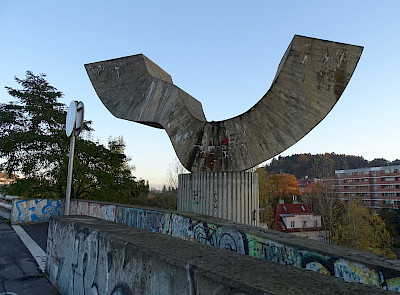 Just like Dresden’s Carolabrücke, the concrete sculpture “Rovnováha” (Equilibrium) in Prague, located next to the Barrandov Bridge, met the same fate last Friday: it collapsed unexpectedly. The sculpture’s lack of stability—despite its name—was already well known, which is why the area beneath it had been cordoned off.
As early as Monday, the Prague City Council decided to reconstruct the work by sculptor Josef Klimeš true to the original and to allocate the approximately 13 million CZK (approx. 530,000 euros) needed for the project. The same construction method used in 1989 will be employed.
Summer Break
Our newsletter is now taking a two-week summer break. You’ll receive the next issue on August 14. Until then, we wish you a wonderful summer.
(This is an automatic translation by DeepL Translator.)
Czech "One-Two Finish" at Wimbledon

In an all-Czech Wimbledon final last Saturday, 21-year-old Linda Nosková defeated her compatriot Karolína Muchová. She is now the third Czech champion at Wimbledon in the last four years and the sixth since 1998. It was the first all-Czech final, as when Hana Mandlíková and Martina Navrátilová faced off in 1986, the latter—who was in the stands this time—was already competing for the U.S.
Nosková created a very emotional moment during the award ceremony when she paid tribute to her mother, who passed away two years ago, and sent a kiss toward the sky.
Exhibition Marking Hurvínek’s 100th Birthday

The well-known and beloved marionette Hurvínek first appeared on stage 100 years ago, on May 2, 1926. To mark the occasion, an exhibition is running in Cheb (Eger) through October 11, 2026, which also features his well-known companions, such as Papa Spejbl, his girlfriend Mánička, and the dog Žeryk. However, the exhibition is primarily dedicated to Gustav Nosek, the creator of these characters and a native of Cheb.
The exhibition features many Hurvínek puppets, including Nosek’s original as well as some that were produced for theaters in the GDR. A visit with children is especially worthwhile, as they can enjoy the experience and even make the puppets dance on stage themselves.
Highway Vignettes Will Not Become More Expensive
The previous Czech government had introduced a mechanism that automatically increased the prices of highway vignettes in line with the inflation rate and the expansion of the highway network. The current government has now introduced a bill that abolishes this mechanism. The bill was approved by Parliament in its first reading.
A change to the vignettes announced by the Minister of Transportation is sure to please some: In the future, the daily vignette will be valid not only until midnight of the same day, but for a full 24 hours.
Czech Republic Lags Behind in Green Electricity

According to new figures from Eurostat, the Czech Republic continues to rank last within the European Union in terms of electricity generation from renewable sources. In the first quarter of 2026, the EU as a whole had a share of green electricity of 46%, while in the Czech Republic it was only 13%. Germany’s share was 50%.
According to the International Energy Agency (IEA), renewables accounted for just 1.6% of the total energy mix in 2024. If biofuels and waste (which are not reported separately) are included, the figure rises to 12.2%. Fossil fuels lead the way here at 66%, followed by nuclear energy at 21%.
Motorists’ Party Chairman Involved in Traffic Accident
Filip Turek, honorary chairman of the motorists’ party “Motoristé sobě,” allegedly caused a serious traffic accident in Prague on Monday that could have political consequences.
Turek was originally slated to become Minister of the Environment in the current government, but President Pavel rejected the appointment, deeming him unsuitable due to his past far-right and xenophobic statements. The months-long dispute ended with Turek being appointed as the representative for the EU’s Green Deal (effectively tasked with its abolition).
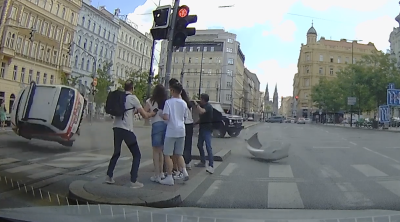
Footage from a traffic camera now shows Turek driving a Mercedes G-Class in the left-turn lane past a line of cars, but then failing to turn at the intersection and instead continuing straight ahead. In doing so, he rammed a blood transport vehicle traveling with its blue lights and siren on, causing it to roll over and leaving its driver with minor injuries. Turek subsequently announced that he would temporarily step aside from his role as Green Deal Commissioner and, if necessary, resign should he be found at fault for the accident.
Turek was once a race car driver and is—among many other things—also controversial because of videos showing him driving at high speeds on public roads.
Far-right extremist Liebich extradited
To conclude the Czech chapter on the escape, arrest, and extradition of right-wing extremist Liebich—who was sentenced to 1.5 years in prison for incitement to hatred, defamation, and insult—: On Wednesday, she was transported from pretrial detention in Litoměřice to Germany in a prison van and handed over to German authorities directly at the border. She was then initially taken to the women’s prison in Chemnitz, where she was actually scheduled to begin serving her sentence in August 2025. Prison officials quickly decided to transfer her to a men’s prison, which is why she is now being held at the Zeithain Correctional Facility.
(This is an automatic translation by DeepL Translator.)
All news you'll find here.
Next events
More events you find here.